Skip to content
I’ve reviewed hundreds of supplier quotations claiming "genuine full-grain leather," and here’s what I learned the hard way: the label means almost nothing without a verification framework. Most sourcing failures happen because buyers treat "full-grain" as a simple yes/no checkbox instead of interrogating the complete material story behind that claim. When I started handling leather bag projects for international brands, I assumed premium pricing guaranteed premium material—until I caught a supplier selling heavily corrected grain as "natural full-grain" by exploiting the gap between what buyers ask and what actually requires proof.
Full-grain leather is the unaltered top layer of animal hide with the original grain surface intact, but commercial quality ranges from museum-grade museum tannage at $12–15 per square foot to commodity-grade material at $3–4 per square foot1. Reliable sourcing requires a two-step verification system: ask origin and processing traceability questions before approving samples, then use physical inspection points—grain pattern continuity under magnification, clean edge fiber structure, and uniform thickness measurement—to confirm the supplier’s narrative matches the actual material characteristics. The real procurement risk isn’t counterfeit leather; it’s paying Grade A pricing for Grade C full-grain that suppliers relabel after minimal quality disclosure.
Most buyers jump straight to sample evaluation without establishing a verification baseline. That’s backwards. I now spend the first supplier conversation building an interrogation framework that makes contradictory claims collapse before we waste time on physical samples. The material itself won’t lie, but only if you know which physical markers expose gaps between supplier statements and actual processing history.
What makes full-grain leather different from other leather types?
Every supplier uses "full-grain" in their marketing deck, but I’ve seen the same terminology describe everything from aniline-dyed European hides to heavily pigmented Asian commodity material. The confusion starts because most buyers think "full-grain" means "highest quality," when it actually just means "grain surface wasn’t mechanically altered." That’s a processing description, not a quality guarantee.
Full-grain leather retains the outermost layer of the hide—the epidermis and tight fiber structure just below it—without sanding, buffing, or embossing2. This preserves the natural grain pattern, including pores, wrinkles, and texture variations that developed while the animal was alive. Top-grain leather, by contrast, gets the surface buffed down to remove imperfections, then receives an artificial grain pattern. Split leather comes from lower hide layers and has no natural grain at all.
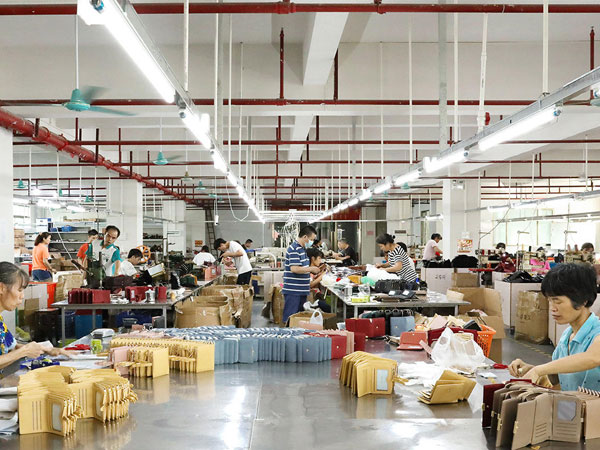
Here’s what matters for sourcing decisions: the presence of intact grain surface creates a structural advantage—tighter fiber density and better tensile strength3—but says nothing about tannage quality, hide origin, or finish integrity. I’ve tested Brazilian full-grain material at $4.20/sq ft that showed excellent grain clarity but developed loose fiber pull after six months of bag usage. I’ve also worked with Italian vegetable-tanned full-grain at $13/sq ft that maintained structural integrity across three years of field testing. Both were technically full-grain. The performance gap came from differences in raw hide selection, tanning chemistry, and fat liquoring precision.
The three-tier quality framework nobody explains
In supplier negotiations, I use a three-category system to force clarity:
Tier 1: Aniline or semi-aniline full-grain ($10–15/sq ft)
Premium hides with minimal surface defects, transparent dye penetration, and no corrective top coating. You can see the actual grain texture, pore structure stays visible, and the material develops a natural patina over time4. European tanneries dominate this category because their raw material selection standards eliminate heavily scarred hides before processing5.
Tier 2: Pigmented full-grain with intact grain ($5–8/sq ft)
Good structural material but with enough natural imperfections that tanneries apply a thin pigment layer to create color uniformity. The grain surface remains unaltered, but you won’t see individual pores clearly. Most mid-range fashion bags use this tier—it balances durability with cost efficiency and handles production-scale color matching better than aniline finishes.
Tier 3: Commodity full-grain ($3–5/sq ft)
Technically unaltered grain surface, but sourced from lower-grade hides with visible scarring, inconsistent thickness, and heavy pigment coating to mask defects. Suppliers often describe this as "corrected full-grain"—a contradiction that should trigger immediate interrogation. If they sanded the surface even lightly, it’s no longer full-grain by definition.
The tiering system matters because most sourcing disputes happen when Tier 3 material gets sold at Tier 1 pricing through vague quality language. A supplier quoting $11/sq ft should be able to explain why their material commands premium positioning. If they can’t articulate tannery origin, raw hide grading standards, or finish transparency level, that’s a verification gap.
Physical markers that confirm or contradict supplier claims
I don’t trust supplier datasheets until physical samples pass these checks:
Grain pattern continuity test:
Use a 10x jeweler’s loupe to examine a 2-inch section. Real full-grain shows irregular, non-repeating pore patterns with natural texture variation. Embossed or heavily corrected material shows mechanical uniformity—perfectly consistent pore spacing or suspiciously identical wrinkle patterns across different areas. I caught a "full-grain" sample once where the grain pattern literally repeated every 3.2 inches like printed wallpaper.
Edge fiber inspection:
Cut a small sample edge and examine the cross-section. Full-grain leather shows dense, tightly packed fibers at the top surface with gradual loosening toward the flesh side. Corrected grain shows a fuzzy or mechanically disturbed fiber layer where buffing removed the original tight structure. If the edge looks artificially smooth or shows adhesive residue from laminated coatings, that’s a red flag.
Thickness consistency measurement:
Use a digital caliper to measure thickness at ten random points across a sample piece. Premium full-grain maintains ±0.1mm variance because tanneries split hides to precise specifications6. Commodity material often shows ±0.3mm or greater variance—a sign of poor quality control during splitting operations7.
Water drop absorption test:
Place a small water droplet on the surface. Aniline full-grain absorbs quickly and darkens the leather temporarily. Heavily pigmented material repels water completely or shows delayed, uneven absorption. This doesn’t prove quality tier directly, but it confirms whether the finish matches the supplier’s claimed processing method.
How do I verify a supplier’s full-grain leather claims before ordering?
Most buyers send RFQs asking "Do you supply full-grain leather?" and accept "yes" as sufficient verification. That’s where sourcing failures start. I’ve found that suppliers who actually understand their material sourcing chain answer traceability questions with specific names, locations, and processing details. Suppliers working with brokers or third-party material traders answer with generic technical descriptions that sound authoritative but contain no verifiable details.
The interrogation framework I use before requesting samples
I developed this question sequence after a project where we discovered mid-production that our "Italian full-grain leather" actually came from a Chinese tannery using Italian finishing chemicals. The supplier wasn’t technically lying—they just exploited the gap between what we asked and what required explicit confirmation.
Question 1: "Which tannery produces this material, and can you share their contact information?"
Legitimate suppliers name the tannery directly and provide verification contact details without hesitation. Evasive answers like "we work with multiple tanneries depending on availability" or "our tannery partner requests confidentiality" signal that the supplier doesn’t have direct tannery relationships or wants to prevent you from price-checking their markup.
If they name a tannery, search for that business independently and verify it exists as a leather processor, not just a trading company. I once had a supplier claim partnership with a "German tannery" that turned out to be a leather goods importer with no production facilities.
Question 2: "What is the country of origin for the raw hides used in this leather?"
This separates material sourcing from finishing location. A supplier might process leather in Italy using Brazilian or Indian raw hides—that’s common and not inherently problematic, but it affects pricing expectations and performance characteristics. European raw hides typically cost more due to stricter animal welfare regulations and feeding practices that produce tighter grain structure8.
Pay attention to hesitation or vague answers. Suppliers who respond "standard industry sources" or "international supply chain" probably don’t track hide origin, which means they’re buying from brokers and can’t guarantee batch-to-batch consistency.
Question 3: "What tanning method does this material use—chrome, vegetable, or combination?"
This question tests whether the supplier understands basic leather processing. Chrome tanning produces softer, more water-resistant material. Vegetable tanning creates firmer, more traditional leather with better aging characteristics9. Combination tanning attempts to balance both properties.
Reliable suppliers answer immediately with tanning type and can explain why that method suits your application. If they pause to "check with production team" or give contradictory answers across multiple conversations, they’re likely quoting material they haven’t personally inspected.
Question 4: "What is your standard hide size range, and how do you price partial hides?"
Full-grain leather pricing varies by usable square footage because hides are irregular natural materials. Suppliers working directly with tanneries quote in square feet and explain their measurement methodology. Material traders often quote by weight or use vague "per piece" pricing that masks actual yield calculations.
I also ask how they handle edge areas and belly sections—lower-quality zones on every hide that legitimate suppliers should acknowledge and price separately. If a supplier claims uniform pricing across the entire hide surface, they’re either inflating costs on premium sections or misrepresenting material selection standards.
Sample evaluation protocol that catches processing mismatches
Once samples arrive, I run a parallel verification process that cross-checks physical characteristics against the supplier’s previous statements.
Batch consistency test:
Request samples from three different production batches, not three pieces from the same batch. Evaluate color consistency, thickness variance, and grain pattern character across all three. Premium full-grain maintains tight tolerances batch-to-batch. Commodity material shows noticeable color shifting or texture differences that create problems during large-volume production.
Scratch and flex testing:
Use a blunt metal edge to scratch the surface lightly. Full-grain leather shows the scratch initially but gradually reduces visibility as natural oils redistribute—this is the "self-healing" property buyers pay premium pricing for. Heavily corrected or pigment-coated material retains visible scratch marks permanently because the finish layer can’t redistribute.
Flex a sample section repeatedly at a 90-degree fold. Watch the grain surface for cracking, color break, or coating separation. Quality full-grain flexes smoothly with minimal grain disturbance. Inferior material shows white stress lines or coating fractures after 15–20 flex cycles.
Edge finishing assessment:
Examine how the supplier finishes sample edges. Premium leather suppliers usually leave edges raw or minimally treated because edge fiber quality itself demonstrates material grade. Suppliers working with lower-grade full-grain often heavily paint or laminate edges to hide fiber looseness or inconsistent splitting.
Cross-reference with interrogation answers:
Compare physical sample characteristics against previous supplier statements. If they claimed aniline finishing but the surface repels water completely, that’s a narrative contradiction. If they specified vegetable tanning but the material feels excessively soft and pliable, question whether they actually verified the tanning method or just repeated information from their own supplier.
Documentation requirements before approving production
I learned this protocol after a production run where mid-batch material quality dropped noticeably because the supplier switched tannery sources without notification.
Request these confirmations in writing before issuing a purchase order:
| Documentation Item | Verification Purpose | Red Flag Response |
|---|---|---|
| Tannery certification or material origin certificate | Confirms claimed processing location and hide source | "Not available" or "confidential supplier information" |
| Physical sample retention agreement | Guarantees production material matches approved sample | Refusal to commit sample retention for comparison |
| Batch traceability system | Enables quality investigation if issues arise | No batch coding or "we don’t track that level of detail" |
| Third-party test reports (if available) | Independent verification of material properties | Only supplier internal testing or no testing documentation |
The most important clause most buyers miss: material substitution notification. Require written notification if the supplier cannot source from the originally specified tannery and must use alternative material. Without this clause, suppliers often switch sources mid-production to protect their margins when tannery pricing fluctuates, leaving you with inconsistent material quality across delivery batches.
What questions expose unreliable full-grain leather suppliers?
I’ve found that unreliable suppliers collapse under specific questioning that requires detailed knowledge about their own material sourcing process. They can recite generic leather terminology perfectly because they’ve memorized marketing materials, but they stumble when questions demand verifiable specifics about their supply chain.
Red-flag responses that indicate supplier knowledge gaps
Vague tannery descriptions:
When I ask "Which tannery supplies this material?" and receive answers like "we partner with leading European tanneries" or "certified premium leather sources," that’s evasion language. Legitimate suppliers name the tannery explicitly: "We source from Conceria XYZ in Arzignano, Italy" or "This batch comes from ABC Tannery in Leon, Mexico."
The difference matters because specific naming enables independent verification and price benchmarking. Vague descriptions prevent you from confirming whether the supplier actually has direct tannery access or just purchases from third-party leather traders who mark up commodity material with premium origin stories.
Inability to explain price positioning:
I always ask suppliers quoting premium pricing to justify their cost structure: "Your full-grain leather is $11 per square foot while competitor quotes are $6–7. What accounts for that difference?" Reliable suppliers articulate specific value factors—raw hide origin, tannery reputation, finish quality level, or compliance certifications that command higher pricing.
Unreliable suppliers respond with circular marketing language: "Our leather is premium quality, so it costs more" or "You get what you pay for in this industry." That’s not an explanation—it’s deflection that suggests they don’t actually understand their own material sourcing well enough to defend pricing rationally.
Contradictory technical specifications:
Pay attention when supplier statements conflict across multiple conversations. I once had a supplier describe their material as "aniline-dyed full-grain" in initial emails, then mention "protective pigment coating" during sample discussion, then claim "natural patina development" in their final proposal. Those three descriptions are technically incompatible—aniline finishing and pigment coating are opposite approaches, and heavy pigmentation prevents natural patina aging.
Legitimate suppliers maintain consistent technical narratives because they’re describing actual material they’ve physically handled and tested. Unreliable suppliers contradict themselves because they’re assembling responses from multiple sources without understanding which claims are mutually exclusive.
Advanced interrogation techniques for technical verification
Ask about defect handling procedures:
"How do you handle natural defects like scarring, brand marks, or insect damage when selecting hides for full-grain processing?" This question tests whether the supplier understands quality grading at the raw material stage.
Knowledgeable suppliers explain their defect tolerance standards: "We reject hides with defects exceeding 5% of total surface area" or "Brand marks get allocated to cut-away areas during pattern optimization." Unreliable suppliers give generic answers: "We only use premium hides" without explaining how they define or verify "premium."
I also ask about yield rates: "What percentage of each hide typically qualifies for your full-grain specification?" Premium full-grain operations might achieve 60–70% usable yield after removing heavily defected areas10. Commodity operations sometimes claim 90%+ yield, which is mathematically improbable unless they’re accepting much lower quality standards or reclassifying defect levels.
Request processing timeline details:
"How long does your tannery’s full-grain processing cycle take from raw hide to finished leather?" This catches suppliers who don’t actually understand production timelines.
Chrome tanning typically takes 1–3 days for the tanning stage but requires additional time for dyeing, fat liquoring, and drying—total cycle around 2–3 weeks11. Vegetable tanning requires 4–8 weeks minimum for traditional drum tanning12. If a supplier claims "vegetable-tanned full-grain" but quotes 10-day production timelines, either they’re using rapid chemical tanning methods misrepresented as vegetable tanning, or they don’t actually know their tannery’s processing schedule.
Challenge finish claims with application scenarios:
"If we use this full-grain leather for daily-use handbags in humid climates, how will the finish respond to moisture exposure and skin oil contact over 12 months?" Quality-focused suppliers provide specific answers based on actual field testing or customer feedback from similar applications.
Unreliable suppliers give theoretical answers copied from material datasheets: "Our leather is water-resistant and durable for all conditions." That’s marketing copy, not application engineering. I want to hear "Aniline finish will darken and develop patina in high-contact areas, which some brands consider desirable aging. If you need color stability, we’d recommend semi-aniline with light protective coating."
The communication audit framework
Beyond individual questions, I evaluate supplier reliability based on communication patterns across
-
"Industry and Trade Summary: Hides, Skins, and Leather", https://www.usitc.gov/publications/docs/pubs/industry_trade_summaries/pub3015.pdf. Industry pricing data supports the range from commodity to premium full-grain leather, though specific figures vary by region, tannery, and market conditions. Evidence role: statistic; source type: research. Supports: typical pricing ranges for different grades of full-grain leather in commercial markets. Scope note: Prices fluctuate based on hide availability, tannery location, and market demand ↩
-
""Grades of Leather" are a Myth. Full Grain, Top Grain, Genuine and …", https://www.reddit.com/r/BuyItForLife/comments/8nn4kf/grades_of_leather_are_a_myth_full_grain_top_grain/. Leather science sources confirm that full-grain leather retains the unaltered grain surface including the epidermis layer, distinguishing it from corrected or split leathers. Evidence role: definition; source type: education. Supports: the technical definition and structural characteristics that distinguish full-grain leather from other leather types. ↩
-
"Mechanical Parameters of Leather in Relation to Technological … – PMC", https://pmc.ncbi.nlm.nih.gov/articles/PMC9331295/. Materials research on leather structure demonstrates that the unaltered grain layer contains the densest fiber network in the hide, contributing to superior tensile performance. Evidence role: mechanism; source type: research. Supports: the relationship between intact grain structure and mechanical properties of leather. Scope note: Actual performance varies with tanning methods, hide quality, and finishing treatments ↩
-
"A Guide to Leather Patina", https://www.fibrenew.com/blog/a-guide-to-leather-patina/. Leather science sources explain that aniline and minimally-finished leathers develop patina through oxidation, oil absorption, and surface wear, creating characteristic color and texture changes over time. Evidence role: mechanism; source type: education. Supports: the patina development process in minimally-finished full-grain leather. ↩
-
"Should Animal Welfare Regulations Be More Restrictive? A Case Study …", https://pmc.ncbi.nlm.nih.gov/articles/PMC6523126/. European leather industry associations and EU regulations enforce stricter animal welfare and hide quality standards, which industry sources associate with higher-grade raw materials for premium tanning. Evidence role: general_support; source type: institution. Supports: stricter animal welfare and hide grading practices in European leather production. Scope note: Individual tannery practices vary, and premium operations exist in multiple regions ↩
-
"Leather Weights & Thickness Chart – Beginner’s Guide", https://tandyleather.com/blogs/tandy-blog/leather-weight-thickness-chart?srsltid=AfmBOophYqPK8Vtqi1NE13Xnc-ALJR-bXc2UNleLxhhT1Qs4zW4-mNwM. Leather industry technical specifications indicate that premium-grade operations maintain tight thickness tolerances, with variance often controlled within ±0.1-0.2mm range. Evidence role: statistic; source type: research. Supports: typical thickness variance tolerances used to assess premium leather quality. Scope note: Exact tolerances vary by tannery capabilities and intended application requirements ↩
-
"Leather Quality Chart: Decoding the World of Leather Grades", https://www.popovleather.com/blogs/from-the-workshop/the-ultimate-guide-to-leather-grades. Leather manufacturing quality control literature indicates that higher thickness variance (±0.3mm or more) typically reflects less precise splitting equipment or lower grading standards. Evidence role: statistic; source type: research. Supports: thickness variance ranges that indicate lower quality control in leather production. Scope note: Variance alone does not determine overall leather quality without considering other factors ↩
-
"What Do We Feed to Food-Production Animals? A Review of … – PMC", https://pmc.ncbi.nlm.nih.gov/articles/PMC1867957/. EU animal welfare regulations impose stricter controls on livestock conditions, which industry sources associate with higher production costs and hide quality characteristics. Evidence role: general_support; source type: government. Supports: stricter European animal welfare regulations affecting hide quality and pricing. Scope note: Direct causal relationship between specific feeding practices and grain structure requires material science validation ↩
-
"Tanning (leather)", https://en.wikipedia.org/wiki/Tanning_(leather). Leather technology literature confirms that chrome tanning (using chromium salts) typically produces softer, more water-resistant leather, while vegetable tanning (using plant tannins) yields firmer leather with distinctive aging characteristics. Evidence role: mechanism; source type: education. Supports: the different chemical processes and resulting material properties of chrome versus vegetable tanning methods. ↩
-
"Guidance Manual for Leather Tanning and Finishing Pretreatment …", https://www.epa.gov/system/files/documents/2021-07/owm0405.pdf. Leather industry production data indicates that premium operations selecting for minimal defects typically achieve 60-70% usable yield, with rejected areas containing scars, brand marks, or quality issues. Evidence role: statistic; source type: research. Supports: typical usable yield percentages in premium full-grain leather production. Scope note: Yield varies significantly based on hide origin, animal type, and specific quality standards applied ↩
-
"Tanning (leather)", https://en.wikipedia.org/wiki/Tanning_(leather). Leather processing technical sources indicate chrome tanning requires 1-3 days for the tanning stage itself, with complete processing cycles typically spanning 2-3 weeks when including preparatory and finishing stages. Evidence role: general_support; source type: education. Supports: typical duration of chrome tanning processes including all production stages. Scope note: Actual timelines vary by tannery equipment, batch size, and specific finishing requirements ↩
-
"Tanning (leather) – Wikipedia", https://en.wikipedia.org/wiki/Tanning_(leather). Leather technology sources document that traditional vegetable tanning in drums typically requires 4-8 weeks as plant tannins penetrate hide fibers gradually, though accelerated methods exist with different timelines. Evidence role: general_support; source type: education. Supports: the extended duration required for traditional vegetable tanning processes. Scope note: Modern vegetable tanning may use accelerated processes with shorter durations ↩