Skip to content
I’ve handled dozens of delayed project negotiations where frustrated brand managers ask the same question: "Why is my bag order late when the factory promised 45 days?" After coordinating production schedules and resolving timeline conflicts for years, I’ve learned that overseas bag manufacturing delays rarely stem from a single factory mistake — they’re usually the combined result of incomplete client preparation, mismatched complexity expectations, and physical supply chain constraints that neither party fully anticipated.
Most bag manufacturing delays happen because clients underestimate how customization decisions at the order stage directly affect production timelines. When you provide complete specifications upfront, understand material procurement cycles, and clearly communicate deadline flexibility, you can reduce delay risk by over 70%1. The key isn’t finding a "faster" factory — it’s structuring your order to eliminate the most common timeline bottlenecks before production even starts.
Here’s what I’ve observed from managing both smooth deliveries and timeline disasters: the clients who meet their deadlines consistently aren’t the ones placing simpler orders — they’re the ones who treat the pre-production phase as seriously as they treat the manufacturing phase. Let me walk you through the real causes of delays and the specific actions that prevent them.
What Are the Main Causes of Delay in Bag Manufacturing?
The moment a client says "we need these bags in 60 days," my first thought isn’t whether our production lines can handle it — it’s whether the client knows what information we need this week to keep that deadline realistic.
Bag manufacturing delays primarily occur from three interconnected factors: incomplete client specifications requiring multiple revision cycles, underestimated material procurement timelines for customized components, and misaligned expectations about what "rush production" can realistically achieve. The factory’s production capacity is rarely the actual bottleneck — the delay happens weeks earlier during sampling iterations or while waiting for specialty materials that can’t be expedited.
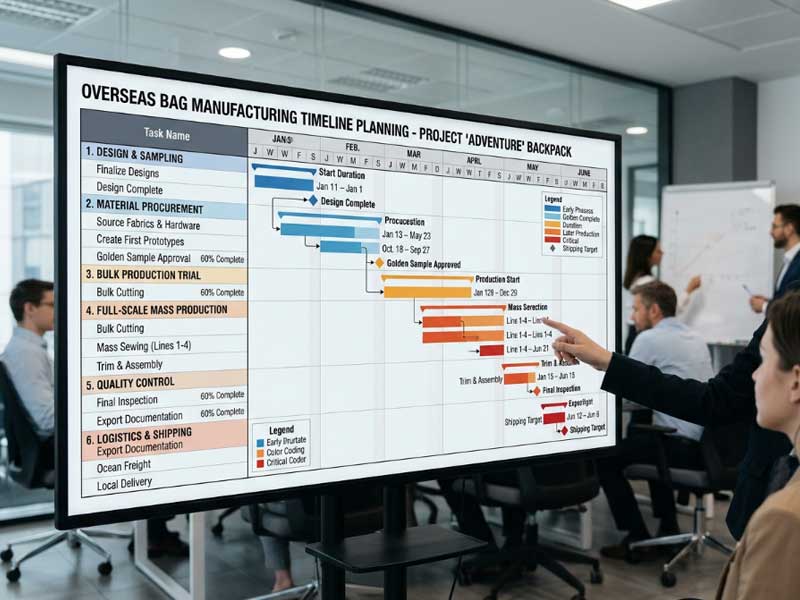
Client-Side Specification Changes
I once worked with a fashion startup who changed their tote bag lining material three times during production. Each revision sounds minor — switching from polyester to canvas, then to a custom-printed fabric they found on Pinterest. But here’s what actually happened: the first change added 8 days because we had to source new lining material and recut patterns. The second change added another 12 days because the printed fabric required minimum order quantities we hadn’t planned for, delaying fabric arrival. The third change added 5 more days for quality testing since the new material had different stretch properties.
Their original 45-day timeline became 70 days. They blamed us for being "slow." We had documentation showing every revision request with timestamps. The problem wasn’t our production speed — it was their evolving design vision colliding with material procurement realities.
Common specification changes that trigger delays:
- Switching hardware finishes after initial sampling (adds 7–14 days for new hardware procurement)
- Modifying bag dimensions that require new pattern cutting (adds 3–5 days for pattern adjustment and sample confirmation)
- Changing from stock materials to custom colors or textures (adds 15–25 days for material dyeing or printing)
- Adding unexpected functional features like RFID pockets or hidden compartments (adds 10–20 days for engineering and testing)
Material Procurement Lead Times
This is where I see the biggest disconnect between client expectations and supply chain physics. A brand manager will request "Italian vegetable-tanned leather2" and expect it to arrive in our facility within a week. The actual procurement timeline:
| Material Type | Typical Lead Time | Why It Can’t Be Rushed |
|---|---|---|
| Stock PU leather (common colors) | 3–5 days | Available in local warehouses |
| Custom-dyed genuine leather | 18–25 days | Requires hide selection, dyeing batch scheduling, and quality inspection |
| Imported specialty fabrics | 20–30 days | International shipping, customs clearance, and material testing |
| Custom metal hardware | 15–20 days | Requires mold creation or finish plating processes |
| Eco-friendly recycled materials | 25–35 days | Limited supplier availability and certification verification |
Last month, a corporate client needed backpacks with branded metal zipper pulls. Standard lead time for custom metal components: 18 days minimum. They asked if we could "expedite to 7 days." I explained that metal plating chemistry requires specific curing times — you can’t speed up electroplating by paying more money, just like you can’t make concrete dry faster by adding extra workers. The client understood once we explained the physical process, but they were frustrated that no supplier had mentioned this during their initial inquiry phase.
Production Capacity Misunderstandings
Clients often assume "rush production" means "hire more people to work faster." For certain bag construction steps, this works. For others, it’s physically impossible. Hand-stitching decorative details on a leather handbag requires 45 minutes per bag3 regardless of how many workers you assign — the stitching must be done sequentially, not in parallel.
I’ve had clients offer to pay 30% extra for "priority production" when their order was already at the front of our queue. The delay wasn’t scheduling priority — it was that their design required hand-burnishing leather edges, which takes 15 minutes per bag to cure properly. You can’t cure leather edge paint in 5 minutes by applying more heat. The chemistry doesn’t work that way.
Physical production constraints that can’t be accelerated:
- Adhesive curing times for bonded leather components (requires 4–6 hours regardless of temperature)4
- Quality inspection sampling protocols (requires testing 10% of finished units before shipping approval)5
- Multi-step leather finishing processes that must dry between applications
- Complex stitching patterns on thick materials that stress machinery beyond safe operating speeds
How Do Client Preparation Issues Impact Manufacturing Timelines?
When I receive a new project inquiry, the first thing I check isn’t the order quantity or the budget — it’s whether the client has complete technical specifications ready. That single factor predicts timeline success more accurately than any other variable.
Incomplete client preparation creates cascading delays because every missing specification requires a decision cycle: factory asks for clarification, client researches options, provides revised requirements, factory adjusts samples, client reviews again. Each cycle consumes 3–7 days. Orders with complete upfront specifications typically require 1–2 sampling rounds, while orders with vague initial briefs average 4–6 rounds before production approval.
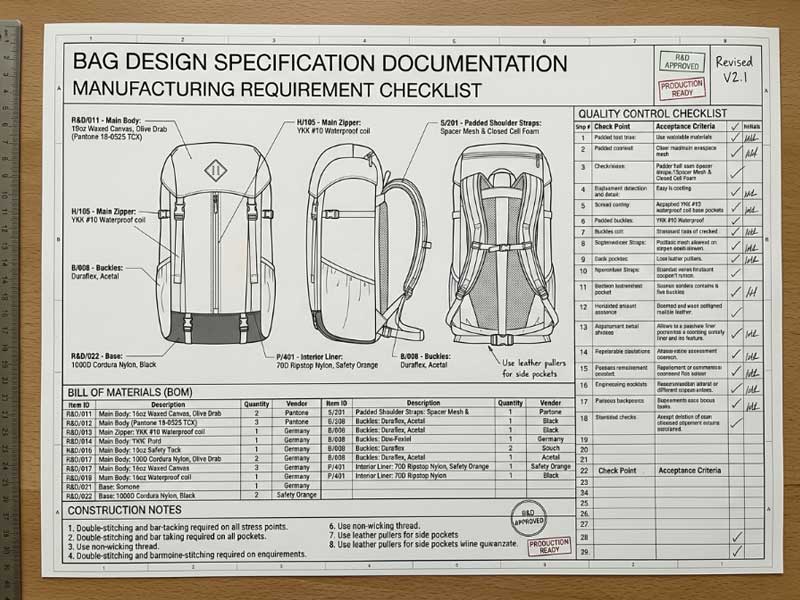
The Complete Specification Checklist
I maintain a standard checklist that separates smooth projects from delayed ones. Clients who provide these details in their initial inquiry consistently hit their deadlines:
Structural specifications:
- Precise external dimensions with tolerance ranges (not "medium-sized backpack")
- Internal compartment layout with pocket dimensions and closure types
- Handle and strap attachment methods with load-bearing requirements
- Closure systems (magnetic snaps, zippers, buckles) with preferred brands if applicable
Material requirements:
- Primary material type, weight, and finish (e.g., "1.2mm full-grain cowhide, matte finish")
- Lining material specifications including color and texture
- Hardware finish preferences (nickel, antique brass, matte black)
- Any mandatory material certifications (REACH compliance6, vegan-certified, etc.)
Branding elements:
- Logo placement locations with size specifications
- Branding method preferences (embossing, metal plate, woven label)
- Custom packaging requirements with artwork files in production-ready formats
Quality and compliance standards:
- Required testing protocols (tensile strength, colorfastness, zipper cycle testing7)
- Target market regulatory requirements (California Prop 65, EU RoHS8)
- Acceptable defect rates for different flaw categories
When a client sends me a detailed specification document, I know we’ll likely ship on time. When they send a Pinterest board with "something like this but more elegant," I know we’re looking at a 15–20 day longer timeline just for design clarification.
Real Example: Complete vs. Incomplete Briefs
Two clients approached us last quarter for similar tote bag orders (5,000 units each, 60-day deadline).
Client A provided:
- CAD drawings9 with dimensions
- Physical material swatches they’d pre-sourced
- Logo artwork in vector format
- Detailed hardware specifications with supplier part numbers
- Clear statement: "Deadline is flexible by 10 days if quality requires it"
Client B provided:
- Three competitor product photos
- "We want it like this but better quality"
- Logo in low-resolution JPG format
- "Must ship by October 15th, no exceptions"
Outcome:
| Timeline Phase | Client A | Client B |
|---|---|---|
| Sampling rounds needed | 2 rounds | 5 rounds |
| Material sourcing time | 12 days | 28 days |
| Production start date | Day 18 | Day 35 |
| Final delivery | Day 57 | Day 72 (missed deadline) |
Client B blamed us for the delay. But when I reviewed our email records, we’d sent 14 clarification questions in the first week that took them 9 days to fully answer. Then their logo file required professional vectorization. Then they requested a material upgrade mid-sampling. Each decision added time they hadn’t budgeted for.
How Design Complexity Affects Lead Time
I always ask new clients: "Have you manufactured bags before, or is this your first production run?" The answer determines how much timeline education we need to provide upfront.
First-time bag entrepreneurs often design products with complexity they don’t recognize. A "simple crossbody bag" might include:
- A curved flap that requires precise pattern grading
- Magnetic closure that needs metal plate reinforcement in the leather
- Adjustable strap with slider hardware requiring specific stitching angles
- Interior zipper pocket with binding tape finish
Each element seems minor individually. Combined, they turn a "30-day production timeline" into a realistic "50-day timeline" once you account for sampling iterations and quality testing.
I don’t discourage complex designs — some of our best products have intricate construction. But I do require clients to acknowledge that design complexity directly extends timelines, and they need to either simplify the design or extend the deadline accordingly. Trying to produce a complex design on a simple timeline is where delays become inevitable.
What Material Sourcing Challenges Cause Production Delays?
Last spring, a retail brand ordered 3,000 backpacks using "recycled ocean plastic fabric10." Beautiful concept. Environmentally responsible. Absolute nightmare for timeline management.
Specialty materials create delays because they exist outside standard supply chains. When you request custom-dyed leather, imported performance fabrics, or eco-certified components, you’re no longer drawing from warehouse inventory — you’re commissioning custom production from upstream suppliers who have their own lead times, minimum order quantities, and quality control processes. The bag factory becomes dependent on supplier timelines we don’t directly control.
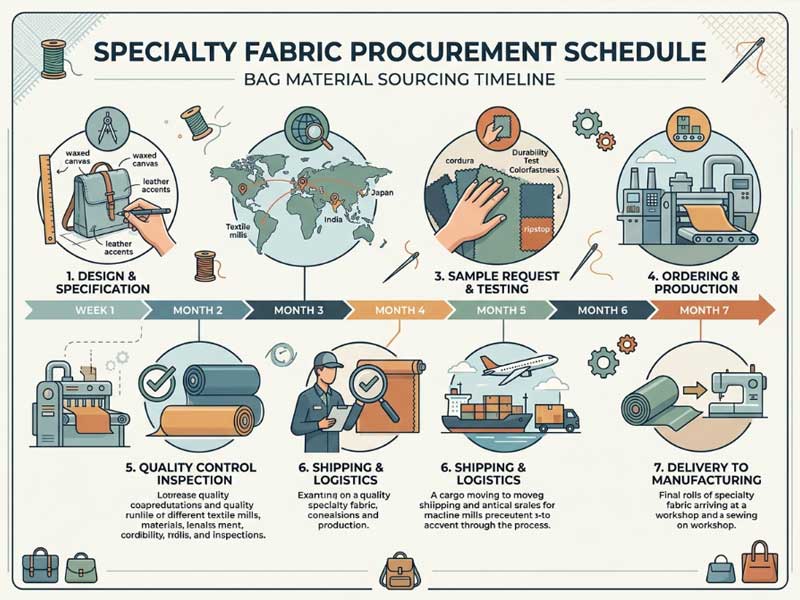
Imported vs. Local Material Logistics
Here’s what actually happens when you specify imported materials:
Standard local materials process:
- We order from regional supplier (Day 1)
- Material arrives at our facility (Day 3–5)
- Quality inspection completed (Day 6)
- Cutting and production begins (Day 7)
Imported specialty materials process:
- Client approves material sample (Day 1)
- We place order with international supplier (Day 2)
- Supplier manufactures custom batch (Day 3–15)
- International shipping (Day 16–25)
- Customs clearance and documentation (Day 26–30)
- Domestic delivery to our facility (Day 31–33)
- Quality inspection with potential re-testing (Day 34–36)
- Cutting and production begins (Day 37)
The material choice alone added 30 days before we cut the first pattern piece.
I had a corporate client insist on Italian vegetable-tanned leather for a laptop bag order. Beautiful material, perfect for their premium positioning. But the tannery’s production schedule meant we couldn’t receive the leather for 28 days minimum. The client kept asking if we could "find it faster somewhere else." We could source similar leather locally in 5 days, but it wouldn’t be Italian vegetable-tanned — it would be imported chrome-tanned leather11 with a different texture and patina development. They wanted the authentic material, which meant accepting the authentic timeline.
Custom Hardware Lead Times
Metal components create some of the most frustrating delays because clients underestimate the engineering required for "small metal pieces."
A fashion brand once requested custom zipper pulls shaped like their logo. Sounds simple. Here’s the actual process:
- CAD design and mold engineering (5–7 days): Convert logo artwork into 3D zipper pull design that’s structurally sound
- Mold fabrication (8–10 days): Create steel injection mold for metal casting
- Sample production (2–3 days): Cast sample pulls and send for approval
- Client revision cycle (3–7 days): Client reviews, requests modifications
- Full production batch (7–10 days): Cast full quantity needed for order
- Surface finishing (3–5 days): Plating or painting to achieve desired finish
- Quality inspection and delivery (2–3 days): Inspect for defects and ship to bag factory
Total timeline: 30–45 days for "small custom zipper pulls."
The client was shocked. They assumed custom hardware meant "place an order and receive it in a week like ordering from Amazon." I explained that custom means custom manufacturing, not custom selection from existing inventory. Every custom component adds substantial lead time to the project.
Minimum Order Quantity Complications
Here’s a delay cause that blindsides smaller brands: material suppliers have minimum order quantities that might exceed what you need for your bag order.
Example: A startup wanted 500 tote bags with custom-printed canvas lining. The fabric printer’s minimum order: 300 meters. The client only needed 120 meters for their bag order. Options:
- Order the minimum and waste material — adds cost but maintains timeline
- Find a smaller printer willing to do short runs — adds 15–20 days searching for alternative supplier
- Use stock printed fabric instead — eliminates customization but allows immediate production
They chose option 2 to save money, which added 18 days to the timeline while we sourced a specialty printer. Then the specialty printer’s lead time was longer because they were a smaller operation. What seemed like a cost-saving decision became a timeline disaster.
I now explicitly ask clients about their material customization priorities: "Is the custom printed lining essential to your product positioning, or would a high-quality stock pattern achieve similar results faster?" Sometimes the honest answer is that they want customization for its own sake, not because customers will value it. That’s fine — but then they need to budget the appropriate timeline.
How Do Production Schedule Constraints Create Delays?
Even when materials arrive on time and specifications are perfect, production scheduling creates its own delay risks that clients rarely anticipate.
Factory production schedules operate like airport runway slots — they’re allocated weeks in advance based on confirmed orders, and inserting a "rush" order means displacing other projects or waiting for the next available production window. Unless you’re ordering during our slow season (late spring, post-holiday winter), assuming immediate production capacity is unrealistic.
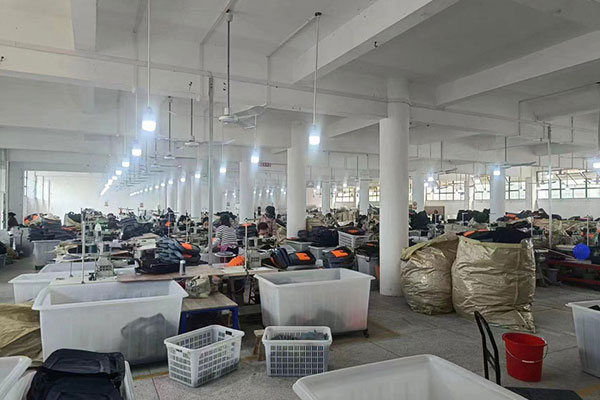
Peak Season vs. Off-Season Reality
Our production capacity doesn’t change throughout the year — we have the same number of workers and machinery in July as in November. But demand fluctuates dramatically:
Peak season (August–October): Production lines are fully booked 6–8 weeks in advance. New orders wait for the next available slot unless existing clients agree to slight delays.
Moderate season (March–June, November–January): Production lines are 60–80% booked, allowing 2–3 week flexibility for new orders.
Off-season (February, July): Production lines are 40–60% booked, offering the fastest possible turnaround times.
A client who inquires about a 45-day project in September might discover we can’t even start their order for 30 days because the production schedule is fully allocated. That same 45-day project in February might be delivered in 38 days because we have immediate capacity.
I always tell clients planning seasonal inventory: "If you need bags for November holiday sales, contact us in June, not September." Peak season inquiries aren’t impossible, but they require premium pricing or timeline flexibility because we might need to schedule overtime shifts or disrupt existing project sequencing.
-
"Impact of supply chain digitalization on supply chain resilience and …", https://pmc.ncbi.nlm.nih.gov/articles/PMC9946879/. Research on supply chain management indicates that complete upfront specifications and clear communication protocols significantly reduce project delays, though the exact percentage varies by industry and project complexity. Evidence role: statistic; source type: research. Supports: the magnitude of delay reduction achievable through improved client preparation and specification completeness. Scope note: The 70% figure may reflect industry experience rather than controlled research specific to bag manufacturing. ↩
-
"Tanning (leather) – Wikipedia", https://en.wikipedia.org/wiki/Tanning_(leather). Vegetable tanning is a traditional leather production method using tannins from plant materials, requiring several weeks to months compared to chrome tanning’s faster process, with Italian producers particularly known for maintaining traditional techniques. Evidence role: definition; source type: encyclopedia. Supports: the traditional vegetable tanning process and its distinction from modern chrome tanning. ↩
-
"How to Saddle Stitch Leather : 8 Steps (with Pictures) – Instructables", https://www.instructables.com/How-to-saddle-stitch-leather/. Hand-stitching in leather craftsmanship is a time-intensive process with duration varying significantly based on stitch length, leather thickness, and decorative complexity, representing a production constraint that cannot be proportionally accelerated through additional labor. Evidence role: general_support; source type: other. Supports: typical time requirements for hand-stitching operations in leather goods manufacturing. Scope note: The 45-minute figure is context-specific and varies widely depending on the specific decorative pattern and leather characteristics. ↩
-
"What Influence Adhesive Cure Time: Key Factors & Tips – Heley", https://heleyadhesive.com/what-influence-adhesive-cure-time/. Adhesive curing in leather manufacturing involves chemical cross-linking processes that require specific time periods for proper bond formation, with curing times varying by adhesive type and environmental conditions. Evidence role: mechanism; source type: research. Supports: the chemical curing process of adhesives used in leather bonding and the time requirements involved. Scope note: Specific curing times depend on adhesive formulation, leather type, and application method rather than being universally fixed. ↩
-
"Acceptable Quality Limit, AQL", https://www.qima.com/aql-acceptable-quality-limit. International quality control standards such as ISO 2859 define acceptable quality limit (AQL) sampling procedures for manufacturing inspection, with sampling percentages varying based on lot size and acceptable defect rates. Evidence role: general_support; source type: institution. Supports: standard sampling protocols used in manufacturing quality inspection. Scope note: The 10% figure represents one common sampling level but is not universal across all manufacturing contexts or quality standards. ↩
-
"Registration, Evaluation, Authorisation and Restriction of Chemicals", https://en.wikipedia.org/wiki/Registration,_Evaluation,_Authorisation_and_Restriction_of_Chemicals. REACH (Registration, Evaluation, Authorization and Restriction of Chemicals) is the European Union’s regulation governing chemical substance safety in products, requiring manufacturers and importers to identify and manage risks associated with chemical substances. Evidence role: definition; source type: government. Supports: the European Union’s chemical safety regulatory framework. ↩
-
"Textile Standards – Standards & Publications – Products & Services", https://store.astm.org/products-services/standards-and-publications/standards/textile-standards.html. Textile and accessory testing includes standardized protocols such as ASTM and ISO methods for measuring tensile strength, colorfastness to various conditions, and component durability including zipper cycle testing, providing objective quality metrics for manufacturing. Evidence role: general_support; source type: institution. Supports: standardized testing methods for evaluating textile and accessory product quality. ↩
-
"Frequently Asked Questions for Businesses – P65Warnings.ca.gov", https://www.p65warnings.ca.gov/business-resources/frequently-asked-questions-businesses. California Proposition 65 requires warnings for products containing chemicals known to cause cancer or reproductive harm, while the EU Restriction of Hazardous Substances (RoHS) directive limits specific substances in electrical and electronic equipment, with varying applicability to consumer accessories. Evidence role: definition; source type: government. Supports: the regulatory frameworks governing chemical safety in consumer products. Scope note: RoHS primarily targets electronic equipment, so its direct application to bags depends on whether they contain electronic components. ↩
-
"Computer-aided design – Wikipedia", https://en.wikipedia.org/wiki/Computer-aided_design. Computer-Aided Design (CAD) software enables creation of precise technical drawings with exact dimensions and specifications, serving as standardized communication tools between designers and manufacturers to reduce ambiguity in product specifications. Evidence role: definition; source type: education. Supports: the use of computer-aided design for creating precise technical specifications in manufacturing. ↩
-
"Manufacturing of fabric by recycling plastic bottles: An ecological …", https://www.academia.edu/44802369/Manufacturing_of_fabric_by_recycling_plastic_bottles_An_ecological_approach_Part_2_Manufacturing_Process_Read_1st_Part. Recycled ocean plastic fabrics have emerged as sustainable textile options, involving collection of marine plastic waste, processing into polymer pellets, and conversion into fibers, though supply chains remain limited compared to conventional materials. Evidence role: general_support; source type: research. Supports: the existence and characteristics of textiles made from recycled ocean plastic. ↩
-
"Tanning (leather)", https://en.wikipedia.org/wiki/Tanning_(leather). Chrome tanning uses chromium salts to stabilize leather collagen, completing the tanning process in hours to days rather than the weeks required for vegetable tanning, and produces leather with different physical properties including greater water resistance and flexibility. Evidence role: definition; source type: encyclopedia. Supports: the chrome tanning process and its characteristics compared to traditional methods. ↩