Skip to content
I’ve watched hundreds of brand owners contact factories for the first time, and I can always tell within three messages who will end up with a successful partnership and who will waste weeks chasing dead ends. The difference isn’t luck—it’s asking the right questions in the right order. Most buyers treat manufacturer inquiries like a price-shopping exercise, firing off "What’s your cheapest tote bag?" emails to twenty factories and expecting meaningful responses. That approach almost never works.1
The real challenge isn’t finding a handbag manufacturer—it’s asking questions that reveal whether this factory can actually execute your specific project. You need to uncover their true production capacity, quality systems, pricing structure, and compliance capabilities before you discuss samples or sign anything. Skip the wrong question at the inquiry stage, and you’ll discover mismatched expectations after you’ve already paid a deposit.
Here’s what most people miss: your first inquiry isn’t about getting the lowest price quote. It’s about qualifying whether this manufacturer matches your order size, timeline, and product complexity. I’m going to walk you through the exact questions that separate professional buyers from amateurs—and explain what the answers actually mean for your project’s success.
What Are the Critical Questions to Ask a Handbag Manufacturer?
You’re about to invest thousands of dollars and months of time into a production partnership. One bad question sequence can lock you into a factory that can’t deliver.
The critical questions fall into five categories: production capability assessment, quality control systems, financial terms, logistics infrastructure, and compliance verification. Ask these in sequence—capability first, pricing last—because knowing a factory’s MOQ and lead time determines whether their pricing even matters to your project.
From fifteen years of processing inquiries, I’ve identified the questions that predict project success. Buyers who ask about production capacity and quality systems before discussing price almost never face delivery failures.2 Buyers who lead with "What’s your lowest price?" waste everyone’s time because they haven’t verified the factory can even handle their order.
The Strategic Question Sequence That Actually Works
Start with capability verification: Can this factory produce the specific bag type, material combination, and complexity level you need? Ask for photos of similar completed projects and monthly production volume for that exact product category. If they’ve never made leather crossbody bags before, their tote bag experience doesn’t transfer directly—different construction techniques, different quality control requirements3.
Next, clarify your engagement model: Do you have finished technical drawings and just need production (OEM), or do you need the factory to handle product development from concept sketches (ODM)? This distinction completely changes the timeline, cost structure, and intellectual property terms. I’ve seen buyers request quotes without specifying their design stage, then act shocked when the factory assumes they have production-ready tech packs.
Then verify production capacity alignment: What’s their minimum order quantity, and can they scale to your projected growth? A factory specializing in 10,000-unit runs for retail chains won’t prioritize your 500-unit test order. Conversely, a small workshop can’t suddenly manufacture 5,000 bags per month if your product takes off. Match their capacity sweet spot to your actual volume needs.
Only after these fundamentals should you discuss pricing and payment terms. Why? Because you might discover the factory requires 50% deposits on first orders, which changes your cash flow planning. Or their MOQ is 2,000 units when you budgeted for 500—making their per-unit price irrelevant.
The Questions Most Buyers Forget—And Why That Causes Problems
Sampling policy and timeline: How much do samples cost, how long until delivery, and are sample fees deductible from production orders? I’ve watched buyers wait six weeks for samples, only to learn the factory charges $500 per sample with no refund policy. That information should come up in your first message exchange.
Quality inspection protocols: What’s their defect tolerance rate, do they perform pre-shipment inspections, and can you hire third-party QC auditors? Factories without clear quality standards will give you vague answers like "We check everything carefully." Professional manufacturers will cite specific inspection procedures and defect rate percentages.
Return and rework policies: What happens if 10% of your order arrives defective—who pays for replacement production and re-shipping? Many factories have zero written policies on defects, which means you’re negotiating remedies after the problem occurs, when you have the least leverage.
If you skip these questions during the inquiry phase, you’ll discover the answers at the worst possible moment—after you’ve committed money and time to a factory that can’t meet your actual requirements.
What Kind of Materials Do You Use to Make Handbags?
Material selection isn’t just about aesthetics—it determines durability, price point, and your product’s competitive positioning. Get this conversation wrong and you’ll end up with bags that don’t match your brand promise.
Professional manufacturers work with multiple material categories: genuine leather (cowhide, goat, sheep), synthetic leather (PU, PVC), technical fabrics (nylon, polyester, canvas), and sustainable alternatives (recycled materials, plant-based leather). The materials they regularly source, not the ones they claim they "can work with," reveal their true manufacturing specialty.
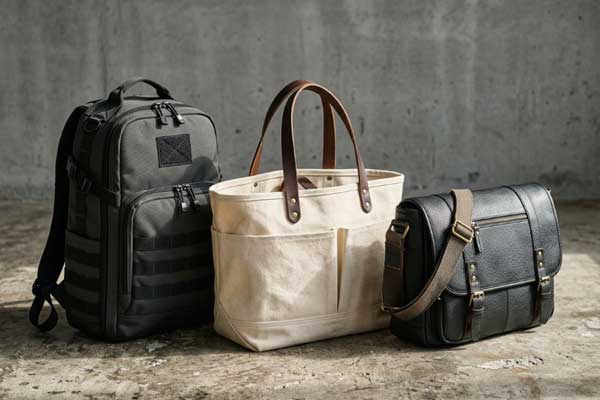
Don’t just ask "What materials do you use?" Ask what materials they’ve used in their last fifty production runs. The difference matters because occasional materials require special sourcing relationships and testing protocols. A factory that makes PU bags 95% of the time will struggle with full-grain leather construction—different cutting tools, different stitching requirements, different quality control standards.
Understanding Material Categories and What They Signal
Genuine leather capabilities indicate higher-end manufacturing infrastructure. Leather requires climate-controlled storage, specialized cutting equipment to minimize waste, and skilled stitching operators4 who understand how to handle natural material variations. If you’re building a premium brand, ask which leather grades they regularly use: full-grain, top-grain, corrected-grain, or bonded leather. Each has dramatically different quality levels and pricing.
When I talk to buyers targeting mid-market price points, I often recommend high-quality PU leather (polyurethane synthetic leather) because it offers consistent appearance, lower cost, and easier maintenance than genuine leather. But PU quality varies enormously. Ask about the base fabric construction—woven or knitted—and whether they use water-based or solvent-based coating processes. Water-based PU is more environmentally friendly and increasingly required by European buyers.5
Canvas and technical fabrics require different expertise again. A factory might excel at structured leather handbags but struggle with technical backpack fabrics that need water-resistant coatings and reinforced stress point construction. Ask to see production photos of bags using your target material, not just generic "we can do it" assurances.
The Material Questions That Reveal Manufacturing Depth
Material sourcing relationships: Do they maintain direct relationships with tanneries or fabric mills, or do they purchase through middlemen? Direct sourcing usually means better pricing, faster material replacement if issues arise, and greater flexibility on custom colors or finishes.
Material testing and certification: Can they provide material test reports for colorfastness, abrasion resistance, and chemical safety? This becomes critical if you’re selling in regulated markets. California Proposition 65, European REACH regulations, and various retail chain requirements all mandate chemical testing documentation.6 Factories without testing protocols will cost you time and money later when retailers demand compliance proof.
Custom material development: If you want unique textures, embossing patterns, or proprietary color matching, can they support that? Or do they only work with stock materials? Understanding their customization limits up front prevents disappointment after you’ve already invested in design development.
The material conversation should happen before you finalize your product design, because material capabilities and minimums directly impact what’s feasible at your price point and order quantity.
How Many Handbags Can You Make in a Month?
Production capacity isn’t a single number—it’s a multi-variable equation that determines whether this factory can actually fulfill your order on schedule.
Monthly production capacity depends on product complexity, material type, current order backlog, and seasonal workforce fluctuations. A factory that can produce 20,000 simple tote bags per month might only handle 5,000 complex crossbody bags with multiple compartments and hardware. Always ask for capacity specific to your product type, not generic facility output.
I’ve watched too many buyers ask "How many bags do you make monthly?" and accept answers like "We can make 50,000 bags." That’s meaningless without context. What bag styles? In what materials? During which season? A factory running at 90% capacity with large retail contracts has no room for your order, regardless of their theoretical maximum output.
Decoding Production Capacity Claims
Ask about current capacity utilization: What percentage of their production lines are occupied with confirmed orders over the next 90 days? This reveals whether they have actual capacity available or whether they’re hoping to squeeze your order into gaps between larger commitments. Factories operating above 85% capacity often experience quality control slips and delivery delays because they’re rushing to meet multiple deadlines.
Clarify product-specific capacity: If your bag requires leather, metal hardware, and complex stitching, ask how many of that specific construction style they complete monthly. Construction complexity is the real capacity constraint. A factory might have twenty sewing machines, but if only five operators know how to properly stitch leather gussets, that’s your actual bottleneck.
Understand seasonal fluctuations: Many Chinese factories experience workforce reductions around Chinese New Year (January/February) and National Day holidays (October).7 If your deadline falls near these periods, production capacity effectively drops by 20-30% as workers return to home provinces. Ask how holidays affect their delivery schedules for orders placed in Q4 or Q1.
The Red Flags That Indicate Capacity Problems
Vague or inflated numbers: If the factory can’t give you specific monthly output for your product type, they’re either inexperienced with that style or trying to sound bigger than they are. Professional manufacturers track production metrics by product category because that’s how they manage workflow.
Unwillingness to share current workload: Factories that won’t discuss their current order backlog are either struggling with too few orders (financial instability warning) or overbooked with too many (delivery delay warning). Either way, it’s information you need before committing.
Immediate availability claims: If a factory has zero lead time and unlimited capacity, they probably have very few orders. That might mean they’re new, inexperienced, or have quality issues that caused other buyers to leave. Established factories have some baseline order volume that creates realistic lead times.
From my experience, the sweet spot is a factory operating at 70-80% capacity8—busy enough to be financially stable and experienced, but with enough flexibility to prioritize your order and handle unexpected changes without massive delays.
Can You Show Me Some Handbags You’ve Made Before?
Portfolio review isn’t about admiring pretty bags—it’s about verifying the factory’s proven capability to execute projects similar to yours in complexity, material, and style.
Request photos of completed production orders in your target product category, not just samples or prototypes. Production run photos reveal real manufacturing competency: consistent stitching across hundreds of units, proper hardware alignment in bulk production, and material quality control at scale. Samples are meaningless if the factory can’t replicate that quality 5,000 times.
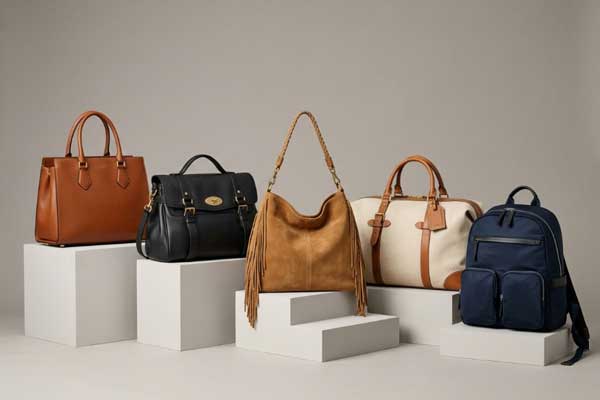
When buyers ask to "see my work," I send photos organized by product category and material type—leather crossbody bags, canvas tote bags, nylon backpacks—because that’s how buyers should evaluate capability match. A portfolio full of simple tote bags doesn’t prove competency in structured leather handbags with metal frame construction. The product types need to align.
What to Look for in Factory Portfolio Photos
Construction complexity match: Does their previous work demonstrate the techniques your product requires? If you need internal zipper pockets, laptop compartments, or adjustable straps, you should see those features in their portfolio. Factories often overestimate their ability to handle new construction techniques they haven’t actually mass-produced before.
Material handling quality: Zoom in on stitching consistency, how edges are finished, whether hardware sits flush or crooked, and if color matching is consistent across different production batches. These details are impossible to fake in production photos and reveal the factory’s actual quality standards.
Volume evidence: Ask if the photos show 100-unit orders or 10,000-unit orders. Scaling production without quality deterioration is a specific skill. Many small workshops produce beautiful 200-unit runs but collapse under 2,000-unit orders because they lack workflow systems and quality control processes for volume manufacturing.
Portfolio Questions That Uncover Experience Gaps
Client references: Can they connect you with two or three previous buyers who ordered similar products? Professional manufacturers maintain relationships with satisfied customers. If they refuse references, that’s a significant warning sign.
Repeat customer rate: What percentage of their clients place multiple orders? High repeat rates indicate consistent quality and reliable delivery. Low repeat rates suggest buyers experienced problems and switched manufacturers.
Brand name work: Have they produced for recognized brands or retail chains? This isn’t just status checking—major brands audit factory capabilities thoroughly before awarding contracts, so their presence indicates the factory passed rigorous quality and compliance reviews.
Be skeptical of portfolios showing only glamour shots and no production environment photos. Real manufacturing involves organized chaos—cutting tables with material scraps, assembly lines with partially completed bags, quality control stations with inspection tools. If you only see perfect finished products on white backgrounds, you might be looking at someone else’s work or stock photos.
What Does It Cost to Customize a Handbag?
Customization cost isn’t a single price—it’s a cost structure determined by your design choices, order quantity, and modification complexity. Understanding this structure prevents budget shock later.
Customization costs break into three categories: development fees (pattern making, sample production, mold costs for custom hardware), per-unit variable costs (premium materials, special treatments, unique components), and setup costs (production line configuration, quality control fixtures, custom packaging). Many buyers focus only on per-unit costs and get blindsided by upfront development fees.
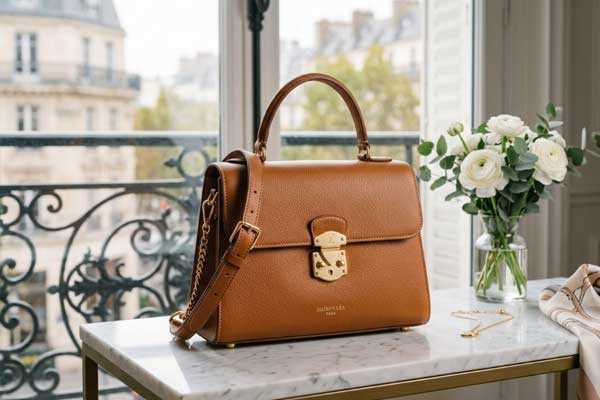
I price customization projects by first identifying which elements diverge from standard production capabilities. A bag using stock materials in a standard construction requires minimal customization—maybe just logo embossing and custom packaging. That’s low-cost customization. A bag requiring custom metal hardware molds, unique leather embossing patterns, and proprietary internal structure needs significant development investment before the first unit ships.
Understanding What Drives Customization Costs
Design complexity and development time: Pattern making for simple tote bags might cost $200-500. Multi-compartment backpacks with ergonomic straps and specialized closures can require $1,500-3,000 in pattern development9 because the technical complexity demands more engineering time. This is a one-time cost, but it hits before you see any finished products.
Custom component costs: Stock zippers, hardware, and linings add minimal cost. Custom metal plaques, proprietary buckles, or branded hardware require tooling molds that range from $500 for simple stamped pieces to $5,000+ for complex die-cast components.10 These costs amortize across your order quantity—bearable at 5,000 units, potentially cost-prohibitive at 500 units.
Material minimums and waste factors: Leather tanneries and fabric mills typically have minimum order quantities (MOQs).11 If you want a custom color leather that requires 500 square feet but your 300-bag order only needs 200 square feet, you’re paying for 500 square feet anyway. Material MOQs often force buyers to either increase order quantities or accept stock materials.
The Pricing Questions That Prevent Budget Surprises
Is sample development refundable? Some factories deduct sample costs from production orders above certain quantities. Others charge sample fees as pure development costs. This distinction matters when you’re spending $300-800 per sample and might need three revision rounds.
What’s included in the per-unit price quote? Does it include custom packaging, individual dust bags, hang tags, and QC inspection, or are those additional line items? I’ve seen buyers negotiate what they thought was a complete per-unit price, only to discover packaging costs another $2-3 per unit.
How do costs change with volume? Request a tiered pricing structure: 500 units, 1,000 units, 2,500 units, 5,000 units. This reveals the economies of scale and helps you plan future reorders. Sometimes doubling order quantity only increases total cost by 60% because fixed setup costs don’t repeat.
What payment milestones trigger what deliverables? Typically: 30-50% deposit before production starts, balance before shipping.12 But customization projects sometimes require deposits before sample production, then additional payments before mass production begins. Map out the cash flow schedule so you’re not caught needing to pay $15,000 before seeing any product.
The buyers who succeed with customization approach it as a total project cost, not a per-unit price comparison. A slightly higher per-unit cost from a factory that includes development support and quality control often delivers better total value than rock-bottom pricing with hidden fees and quality problems.
-
"B2B Survey Best Practices — Ensuring Data Quality in Market Research", https://glg.com/articles/b2b-survey-best-practices-data-quality. Procurement research indicates that supplier selection processes focused primarily on price comparison without capability assessment are associated with higher rates of partnership failure and supply chain disruptions. Evidence role: general_support; source type: research. Supports: Research on supplier selection and procurement processes supports that price-focused approaches without qualification criteria correlate with lower partnership success. Scope note: The source addresses general procurement practices rather than specifically the handbag manufacturing context ↩
-
"Supplier Performance Evaluation", https://scm.ncsu.edu/scm-articles/article/supplier-performance-evaluation. Studies in supply chain management demonstrate that systematic supplier qualification including capacity assessment and quality system evaluation is positively correlated with on-time delivery performance and reduced supply disruptions. Evidence role: general_support; source type: research. Supports: Supply chain management research on the relationship between comprehensive supplier qualification processes and delivery performance. Scope note: Research addresses general supplier qualification rather than the specific question sequencing strategy described ↩
-
"Leather Goods Design and Manufacturing Guide | PDF", https://www.scribd.com/presentation/499038755/Basic-Leather-Goods-Design-and-Manufacturing. Leather goods manufacturing references describe distinct construction methodologies for different product categories, with crossbody bags requiring specific gusset stitching and hardware attachment methods that differ from tote bag assembly processes. Evidence role: mechanism; source type: education. Supports: Technical documentation on leather goods manufacturing explaining construction method variations. ↩
-
"RCRA in Focus: Leather Manufacturing", https://www.epa.gov/sites/default/files/2015-01/documents/k00002.pdf. Leather industry technical guidance specifies that genuine leather requires controlled humidity environments (typically 50-60% relative humidity) to prevent material degradation, and that leather cutting requires specialized equipment and training due to natural material variations and high material costs that incentivize waste minimization. Evidence role: mechanism; source type: education. Supports: Technical requirements for leather material handling in manufacturing. ↩
-
"The difference between water based and solvent based polyurethane", https://www.sanding.co.uk/flooring-guide/the-difference-between-water-and-oil-based-polyurethane. Environmental assessments indicate that water-based polyurethane coatings eliminate volatile organic compound (VOC) emissions associated with solvent-based processes, and European environmental regulations increasingly favor water-based formulations for textile and leather goods production. Evidence role: general_support; source type: research. Supports: Environmental and regulatory advantages of water-based polyurethane coatings. ↩
-
"About Proposition 65 – OEHHA – CA.gov", https://oehha.ca.gov/proposition-65/about-proposition-65. California’s Proposition 65 requires warnings for products containing chemicals known to cause cancer or reproductive harm, while the EU’s REACH regulation mandates registration and testing of chemical substances in consumer products, both requiring documented compliance for products sold in these markets. Evidence role: general_support; source type: government. Supports: Official regulatory requirements for chemical testing and disclosure. ↩
-
"Chunyun", https://en.wikipedia.org/wiki/Chunyun. Research on Chinese manufacturing labor patterns documents significant workforce reductions during Chinese New Year as migrant workers return to home provinces, with factories typically experiencing 20-40% workforce decreases during this period. Evidence role: historical_context; source type: research. Supports: Documentation of seasonal labor migration patterns in Chinese manufacturing. ↩
-
"Industrial Production and Capacity Utilization", https://www.federalreserve.gov/releases/g17/capnotes.htm. Operations management literature indicates that manufacturing facilities operating at 70-85% capacity typically achieve optimal balance between resource utilization and flexibility, with higher rates associated with increased quality issues and reduced ability to handle variations. Evidence role: expert_consensus; source type: research. Supports: Operations management research on optimal capacity utilization rates. Scope note: This represents general manufacturing principles rather than handbag-specific research ↩
-
"What’s a fair price for production-ready patterns?", https://www.reddit.com/r/PatternDrafting/comments/1kymjot/whats_a_fair_price_for_productionready_patterns/. Manufacturing industry cost surveys indicate that pattern development for leather goods and bags ranges from a few hundred dollars for simple single-compartment designs to several thousand dollars for complex multi-compartment products requiring engineering for structural integrity and ergonomic features. Evidence role: statistic; source type: other. Supports: Industry data on pattern development costs for bag manufacturing. Scope note: Costs vary significantly by region, factory capabilities, and specific design requirements ↩
-
"Die casting", https://en.wikipedia.org/wiki/Die_casting. Metal fabrication industry sources indicate that tooling costs for custom metal components vary widely based on manufacturing method and complexity, with simple stamping dies costing several hundred dollars while complex die-cast molds requiring precision engineering can exceed five thousand dollars. Evidence role: statistic; source type: other. Supports: Industry pricing for custom metal component tooling. Scope note: Actual costs depend on component specifications, production volume, and supplier location ↩
-
"Minimum Order Quantities (MOQ) – Everything You Need To Know!", https://sewport.com/learn/what-is-moq-minimum-order-quantities. Textile and leather industry sources indicate that material suppliers typically implement minimum order quantities due to production setup costs and inventory management requirements, with MOQs varying based on material customization level and supplier scale. Evidence role: general_support; source type: other. Supports: Industry practice of minimum order quantities in textile and leather supply chains. ↩
-
"Methods of Payment", https://www.trade.gov/methods-payment. International trade sources document that manufacturing payment terms commonly follow a deposit-balance structure, with initial deposits typically ranging from 30-50% to cover material procurement and production setup, with remaining balance due before shipment or upon delivery. Evidence role: general_support; source type: other. Supports: Standard payment term practices in manufacturing sourcing. Scope note: Payment terms vary based on buyer-supplier relationship, order size, and negotiated agreements ↩