Skip to content
An RFID leather wallet looks like any traditional wallet on the outside, but something inside changes how your cards interact with contactless readers. After 15 years handling OEM orders and fielding questions from buyers evaluating supplier claims, I can tell you most confusion about these wallets starts with misunderstanding what actually blocks signals—and what’s just marketing wrapped around ordinary leather.
An RFID leather wallet contains a thin shielding layer (usually conductive fabric, aluminum foil, or steel mesh) embedded between the leather exterior and interior lining. This layer blocks radio frequency signals from reaching your contactless cards, preventing unauthorized readers from accessing card data without your knowledge.1 The leather itself does not block signals—the effectiveness depends entirely on the shielding material’s coverage and integration quality.
Most buyers I work with assume the "leather" part matters for blocking. It doesn’t. The real work happens in layers you can’t see from product photos. Understanding this difference helps you evaluate supplier claims, ask better questions, and avoid paying premium prices for wallets that don’t actually shield your cards.
What Makes a Wallet "RFID-Blocking"?
I remember the first time a European distributor asked me, "Can you add RFID blocking to this genuine leather design?" I explained we’d need to source the shielding fabric separately and integrate it during assembly. They were surprised—they thought we just used "special leather."
The Shielding Layer Does All the Work
RFID blocking happens when a conductive material creates a barrier around your cards. This material absorbs or reflects radio waves before they reach your card’s chip. Common shielding materials include:
- Conductive fabric – Woven with metallic threads (usually silver, copper, or nickel-coated fibers)
- Aluminum foil laminate – Thin aluminum layer sandwiched between fabric or polymer layers
- Steel mesh – Fine metal screen embedded in synthetic lining
- Carbon fiber composite – Carbon-infused material with inherent conductive properties
None of these materials are leather. The leather (or PU leather, canvas, nylon—whatever exterior you choose) serves as the wallet’s outer shell. The shielding layer sits between the outer shell and the interior pocket lining, usually bonded during the cutting and stitching process.
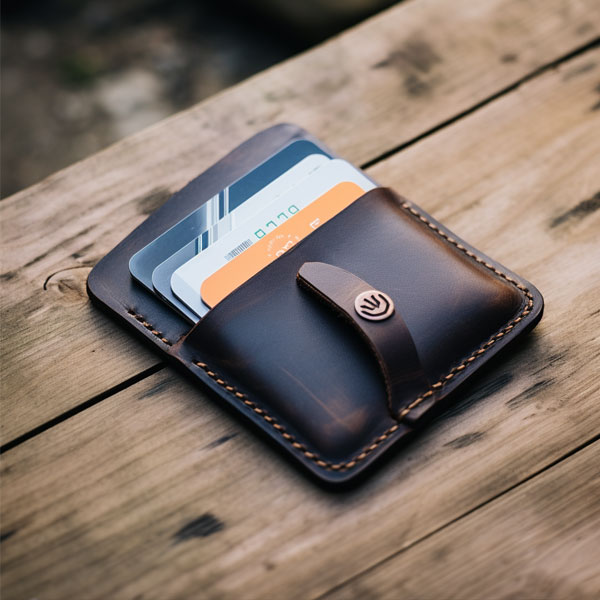
What RFID Blocking Actually Prevents
Contactless payment cards and access badges contain chips that respond to radio signals from nearby readers.2 When you tap your card at a payment terminal, the reader sends a signal, your card powers up, and they exchange encrypted data. This happens within a few centimeters.3
Theoretically, someone with a portable reader could attempt to activate your card while it’s in your pocket or bag. The shielding layer prevents this by blocking the reader’s signal from reaching your card’s antenna. No signal reaches the card, so the card never powers up or transmits data.
I say "theoretically" because in 15 years of handling client questions, I’ve never had a buyer report actual theft via RFID skimming4. The concern exists more as a preventive measure—similar to choosing a wallet with a zipper instead of an open pocket. You’re reducing a potential vulnerability, not responding to a widespread problem.
Why Buyers Get Confused About Material Quality
Here’s a conversation I have at least once a month:
Buyer: "We want RFID-blocking wallets in genuine leather. Does real leather block better than synthetic?"
Me: "The leather doesn’t block anything. The shielding fabric inside does all the blocking."
Buyer: "But your competitor says their Italian leather wallets have superior RFID protection."
Me: "Ask them for test reports. If they don’t have frequency-specific blocking data, they’re selling you leather quality, not shielding effectiveness."
The confusion comes from marketing that highlights luxury materials without explaining the functional component. A wallet lined with poorly installed conductive fabric will block signals inconsistently, even if the exterior uses premium full-grain leather. A wallet with properly integrated aluminum laminate will block consistently, even if the exterior uses budget PU leather.
When you evaluate suppliers, separate these questions:
- What material is the outer shell? (This affects durability, appearance, and price.)
- What shielding material is used inside? (This affects blocking performance.)
- How is the shielding integrated? (This affects consistency and longevity.)
Most supplier spec sheets blur these distinctions.
How Do You Know If RFID Blocking Actually Works?
I’ve seen buyers receive sample wallets, test them with their own credit cards, and conclude "it works" or "it doesn’t work" based on whether their card still taps at a payment terminal. This isn’t a reliable test. Payment terminals use higher power than portable skimmers5, and your hand position changes shielding effectiveness.
What to Ask Your Supplier
When I prepare OEM orders, clients who know what to ask always get better products. Here’s what matters:
Request shielding test reports. Legitimate manufacturers test blocking effectiveness across frequency ranges relevant to contactless cards. These reports come from third-party labs or in-house RF testing equipment. The report should show signal attenuation (how much the shielding reduces signal strength) at specific frequencies.6
I don’t run these tests myself—we send samples to certification labs when clients require documentation. But I know which suppliers have reports on file and which ones dodge the question. If a supplier says "all our wallets block signals" without offering test data, assume they’re using untested materials or copying marketing claims from other vendors.
Ask about shielding coverage. Some wallets only shield the main card pocket. If you carry cards in multiple slots, check whether every pocket has shielding or just the primary compartment. Partial coverage costs less but only protects cards in specific positions.
We’ve manufactured both approaches—full coverage for clients selling to security-conscious markets (government contractors, IT professionals), partial coverage for clients prioritizing price point over comprehensive protection. Neither is "wrong," but buyers should know what they’re getting.
Understand material trade-offs. Conductive fabric flexes easily and integrates smoothly during stitching, but quality varies widely by thread density and coating durability. Aluminum laminate blocks consistently but can crack along fold lines if the wallet design has sharp creases. Steel mesh offers the strongest blocking but adds weight and thickness.
I’ve had orders where clients switched from steel mesh to conductive fabric mid-production because the thickness made the wallet too bulky for their target retail positioning. The blocking effectiveness was similar, but the final product felt different in hand. These decisions depend on your market—airport security professionals prioritize maximum blocking, fashion-forward buyers prioritize slim profiles.
| Shielding Material | Blocking Consistency | Durability | Weight | Cost Impact |
|---|---|---|---|---|
| Conductive Fabric | Good (varies by density) | Moderate | Minimal | Low |
| Aluminum Laminate | Excellent | High (avoid sharp folds) | Minimal | Low to moderate |
| Steel Mesh | Excellent | Very high | Moderate | Moderate |
| Carbon Fiber Composite | Good | High | Minimal to moderate | High |
Testing Gaps I’ve Seen in Production
Unstable blocking—where cards in the same wallet position sometimes tap successfully, sometimes don’t—usually traces back to one of these issues:
Incomplete shielding overlap. During cutting, if the shielding fabric piece doesn’t extend past the pocket opening, cards near the edge aren’t fully covered. This happens when suppliers use undersized fabric pieces to save material cost. The wallet looks identical from the outside, but the functional gap reduces effectiveness.
Poor bonding during assembly. Shielding fabric needs to stay flat against the interior lining. If it wrinkles, shifts, or separates during stitching, you create unshielded gaps. We’ve rejected production batches where quality checks found fabric bunching at pocket corners—the wallet still assembled correctly, but the shielding integrity was compromised.
Shielding stops at the card slot. Some designs line the pocket but don’t extend the shielding to individual card slots. If you stack multiple cards, only the one closest to the shielding layer gets full protection. The outer cards have minimal coverage.
I ask clients during the spec confirmation stage: "Do you want continuous shielding across all pockets, or primary pocket only?" Most buyers don’t realize there’s a difference until I explain the construction detail. This isn’t a question about leather quality or stitching style—it’s about how much shielding material we cut and how we position it during assembly.
Why Do You Need an RFID Leather Wallet?
The honest answer: most people don’t need one in the urgent sense of addressing a daily threat. You need one if you want to eliminate a specific vulnerability as part of your overall approach to card security.
Practical Scenarios Where RFID Blocking Helps
I think about this from the buyer’s perspective—the people who order 5,000 units from us aren’t just filling a trend, they’re solving a customer problem. The markets where RFID wallets sell consistently include:
Frequent travelers. Airports, train stations, and crowded tourist areas create close-proximity situations where someone could theoretically position a reader near your bag or pocket.7 Travelers carry multiple cards and access badges, increasing the number of vulnerable items in one location.
Corporate environments. Companies issuing RFID access badges to employees sometimes recommend shielded wallets to prevent accidental badge activation or reduce the risk of unauthorized duplication.8 I’ve handled orders from corporate distributors who bundle wallets with security training programs.
High-value card holders. If you carry business credit cards with high limits or premium reward balances, the potential loss from unauthorized access increases. Some buyers treat RFID blocking as insurance—low cost relative to the asset it protects.
People who prefer tangible security controls. Some customers simply feel more comfortable with physical barriers. They use password managers, enable two-factor authentication, and choose RFID-blocking wallets—not because each individual measure stops a common attack, but because layered precautions reduce overall risk.
None of these scenarios involve epidemic-level RFID skimming. They involve reducing a theoretical risk to near-zero through a one-time purchase. The buyer decides whether that peace of mind justifies the wallet price.
When RFID Blocking Doesn’t Matter
If you carry one or two cards and rarely visit crowded public spaces, the vulnerability is minimal. If your bank already issues cards with encrypted contactless transactions (most modern cards), unauthorized skimming becomes even harder9—the attacker would need to break encryption, not just read the signal10.
I’ve had buyers ask, "Should we market these wallets as ‘essential security’?" I always push back against fear-based positioning. The wallets work, the shielding is real, but framing them as defense against imminent theft overstates the threat. Better positioning focuses on proactive protection for travelers or professionals who handle multiple access credentials.
How Do RFID Wallets Fit Into Your Product Line?
When private-label entrepreneurs approach us about adding RFID wallets to their catalog, they usually ask, "Will this increase my cost significantly?" and "How do I explain the value to customers?"
Cost Impact of Adding RFID Shielding
Adding RFID blocking to a wallet design doesn’t double the production cost. The shielding material itself costs a few cents to a few dollars per unit (depending on material type and order volume), and integration adds minimal labor time if we design the shielding layer into the cutting and stitching workflow from the start.
Where costs increase:
- Testing and certification. If you need lab reports for retail compliance or marketing claims, third-party testing adds upfront cost (usually a few hundred dollars per design, amortized across your order quantity).
- Material upgrades. Buyers sometimes choose higher-grade shielding materials (steel mesh instead of basic conductive fabric) to differentiate their product or meet specific blocking standards.
- Design complexity. Full-coverage shielding across multiple pockets requires more material and careful positioning during assembly. Simplified designs (single main pocket shield) reduce material cost but limit protection.
I’ve seen clients add RFID blocking for less than 10% additional cost over the non-shielded version when we integrate shielding into standard production runs. The markup comes from positioning and branding, not from exotic materials or complicated manufacturing.
Positioning RFID Wallets Without Overhyping the Threat
The most successful private-label clients position RFID wallets as proactive convenience features, not emergency security devices. Marketing language like "blocks unauthorized scanning" works better than "prevents identity theft." One emphasizes control, the other implies imminent danger.
Here’s positioning language I’ve seen work:
- "Keeps your contactless cards secure in crowded spaces"
- "Prevents accidental card activation when you’re carrying multiple badges"
- "Gives you control over when your cards can be read"
- "Reduces one more vulnerability for frequent travelers"
This framing acknowledges the feature’s purpose without suggesting customers face daily skimming attempts. It positions the wallet as a thoughtful upgrade, similar to choosing water-resistant materials or reinforced stitching—features that add value even if you don’t encounter the specific scenario every day.
What Should You Ask Before Ordering RFID Wallets?
I always tell new clients: treat RFID blocking as a testable spec, not a marketing buzzword. If you’re building a private-label line or evaluating suppliers for wholesale orders, these questions separate reliable manufacturers from vendors copying descriptions without understanding the product.
Supplier Verification Questions
"Can you provide shielding test reports for this design?"
Legitimate manufacturers either have test reports on file or can arrange testing for your order. If the supplier says "we don’t have reports, but the wallets definitely block signals," you’re buying on faith, not verified performance.
"What shielding material do you use, and what’s the coverage area?"
Generic answers like "RFID-blocking fabric" aren’t useful. Ask for material composition (silver-coated nylon? aluminum laminate? steel mesh?) and whether shielding covers all card pockets or just the main compartment.
"How do you integrate the shielding during production?"
This reveals whether they’ve actually manufactured RFID wallets or plan to subcontract your order. Details about cutting overlap, bonding methods, and quality checks indicate hands-on experience. Vague answers suggest they’re sourcing from another supplier and marking up the price without adding manufacturing value.
"Can I see a pre-production sample with the shielding layer visible?"
Request a sample where we cut open one pocket so you can see shielding placement and integration quality. We do this for clients who want to verify construction before committing to full production. Any supplier confident in their shielding setup will accommodate this request.
"What happens if the shielding fails after [X months] of use?"
Shielding materials degrade over time depending on usage, bending, and environmental factors.11 A supplier who’s manufactured RFID wallets at scale will have data or feedback about longevity. New entrants won’t have this experience yet—not necessarily a dealbreaker, but you need to know you’re working with someone learning alongside you.
Design Considerations for Your Brand
If you’re developing a private-label wallet line, think about these choices early:
Shielding scope: Full coverage across all pockets, or primary compartment only? Full coverage costs more but appeals to security-conscious buyers. Partial coverage keeps price competitive while still offering the feature.
Material pairing: Does your market prioritize luxury appearance (genuine leather exterior with basic shielding) or maximum blocking (steel mesh with synthetic exterior)? The best approach aligns exterior material with your brand positioning and pairs it with shielding that meets your blocking requirements.
Testing documentation: Will you market RFID blocking as a headline feature or a secondary spec? If it’s a primary selling point, invest in third-party test reports to back your claims. If it’s a value-add feature, supplier test data may be sufficient.
Price positioning: Are you targeting budget-conscious buyers who want RFID blocking at the lowest possible price, or premium buyers who’ll pay more for verified, high-grade shielding? This decision shapes material choices, testing investment, and retail markup.
I’ve worked with clients across this entire spectrum. The corporate distributor who needed 10,000 units for employee welcome kits chose basic conductive fabric with partial coverage—blocking worked well enough, cost stayed low. The fashion brand launching a premium travel line chose aluminum laminate with full coverage and paid for third-party testing to support their "engineered security" positioning.
Both approaches work. The mistake happens when buyers choose materials and testing levels without aligning them to their market positioning and price point.
Frequently Asked Questions
Does genuine leather block RFID signals better than synthetic leather?
No. The outer material (whether genuine leather, PU leather, or canvas) does not block RFID signals. Blocking comes from the conductive shielding layer inside the wallet—usually fabric, aluminum, or steel mesh. Genuine leather affects durability and appearance, not signal blocking. Choose your exterior material based on your quality standards and brand positioning, then verify the shielding layer separately.
-
"Faraday cage", https://en.wikipedia.org/wiki/Faraday_cage. Conductive materials block electromagnetic signals through reflection and absorption, preventing radio waves from penetrating the shielded area—a principle applied in RFID-blocking products. Evidence role: mechanism; source type: research. Supports: how conductive materials create electromagnetic barriers that block radio frequency signals. Scope note: General electromagnetic shielding principles apply to RFID blocking, though specific effectiveness depends on material properties and frequency ranges ↩
-
"Contactless payment", https://en.wikipedia.org/wiki/Contactless_payment. Contactless smart cards contain embedded chips with antennas that receive power and communicate data through radio frequency signals emitted by card readers, enabling wireless transactions. Evidence role: mechanism; source type: encyclopedia. Supports: how RFID chips in contactless cards operate by responding to radio frequency signals. ↩
-
"ISO/IEC 14443", https://en.wikipedia.org/wiki/ISO/IEC_14443. Contactless payment cards operate using near-field communication (NFC) technology, typically effective within 4 centimeters, and employ encryption protocols to secure transaction data. Evidence role: mechanism; source type: institution. Supports: the operational range and encryption protocols used in contactless payment systems. ↩
-
"RFID skimming", https://en.wikipedia.org/wiki/RFID_skimming. Security researchers and law enforcement data indicate that RFID skimming remains largely a theoretical concern, with few documented cases of actual theft compared to other payment fraud methods. Evidence role: general_support; source type: research. Supports: the low incidence of RFID skimming as a practical security threat. Scope note: Unreported incidents may exist, and the threat landscape evolves as technology changes ↩
-
"ISO/IEC 14443", https://en.wikipedia.org/wiki/ISO/IEC_14443. Commercial payment terminals typically operate at optimized field strengths within regulatory limits for reliable card detection, while portable readers may have variable power outputs depending on design and intended use. Evidence role: general_support; source type: research. Supports: the difference in electromagnetic field strength between commercial payment terminals and portable readers. Scope note: Specific power levels vary by device manufacturer and regulatory jurisdiction ↩
-
"A study of techniques for measuring the electromagnetic shielding …", https://www.govinfo.gov/content/pkg/GOVPUB-C13-8faab9035026083f0c4ce4dfb82f27f3/pdf/GOVPUB-C13-8faab9035026083f0c4ce4dfb82f27f3.pdf. Electromagnetic shielding effectiveness is quantified by measuring signal attenuation in decibels (dB) across relevant frequency ranges, using standardized test methods to evaluate how much a material reduces electromagnetic field strength. Evidence role: mechanism; source type: institution. Supports: how electromagnetic shielding effectiveness is measured through signal attenuation testing. ↩
-
"RFID Security and Privacy: A Research Survey", https://www.acsu.buffalo.edu/~mblanton/cse708/rfid-survey.pdf. Security researchers have demonstrated that RFID cards can be read at close range (typically within 10 centimeters for standard readers), making crowded environments theoretically conducive to unauthorized scanning attempts, though practical exploitation faces multiple technical barriers. Evidence role: general_support; source type: research. Supports: the theoretical possibility of unauthorized RFID reading in close-proximity situations. Scope note: Laboratory demonstrations do not necessarily reflect real-world attack frequency or success rates ↩
-
"Guidelines for Securing Radio Frequency Identification (RFID …", https://nvlpubs.nist.gov/nistpubs/legacy/sp/nistspecialpublication800-98.pdf. Some organizations incorporate RFID shielding recommendations into their physical security policies as a preventive measure to protect access credentials from unauthorized reading or accidental activation. Evidence role: case_reference; source type: institution. Supports: organizational security practices regarding RFID access credential protection. Scope note: Practices vary widely by organization and industry sector ↩
-
"The Risks of Contactless Payment Are High Despite Security", https://www.amu.apus.edu/area-of-study/business-administration-and-management/resources/the-risks-of-contactless-payment-are-high-despite-security/. Modern contactless payment cards typically implement EMV security standards, including encryption and dynamic authentication codes that change with each transaction, making unauthorized duplication significantly more difficult. Evidence role: general_support; source type: institution. Supports: the widespread adoption of encryption and tokenization in modern contactless payment cards. ↩
-
"Contactless payment", https://en.wikipedia.org/wiki/Contactless_payment. Modern contactless payment systems employ cryptographic protocols including dynamic authentication and tokenization, requiring attackers to defeat multiple security layers beyond signal interception to conduct fraudulent transactions. Evidence role: mechanism; source type: research. Supports: how encryption in contactless payment systems protects against unauthorized data use. ↩
-
"Research Progress with Membrane Shielding Materials for …", https://pmc.ncbi.nlm.nih.gov/articles/PMC10054763/. Electromagnetic shielding materials can experience degradation through repeated flexing, oxidation of metallic components, delamination of composite structures, and wear from physical handling, potentially reducing shielding effectiveness over extended use. Evidence role: mechanism; source type: research. Supports: how physical stress and environmental factors affect electromagnetic shielding materials over time. Scope note: Degradation rates vary significantly based on specific materials, construction methods, and usage conditions ↩