Skip to content
I’ve sat through dozens of client meetings where someone slides a Pinterest screenshot across the table and says, "We want this exact bag, but at half the price." The expectation gap between what "luxury canvas tote bag" means on Instagram versus what it means in a factory quote sheet is massive. After years managing sample confirmations and bulk order negotiations, I’ve learned that achieving genuine luxury in canvas tote bags isn’t about throwing money at heavy fabric—it’s about understanding which production decisions create perceived value and which just inflate your invoice.
Luxury in canvas tote bags comes from deliberate material selection, precise construction standards, thoughtful print/finishing execution, and economically structured order volumes. Most buyers overspend on fabric weight while ignoring the stitching, lining, and edge treatments that actually signal quality. The key is knowing which customization choices deliver visible impact per dollar spent, and which supplier claims will collapse when you move from a hand-finished sample to a 5,000-unit production run.
Many corporate buyers assume that specifying "luxury" canvas totes means ordering the thickest fabric available and adding a screen-printed logo. Then they’re shocked when the supplier quote comes back 40% higher than expected, or when the bulk shipment shows inconsistent print alignment and weak handle attachment. The gap emerges because luxury isn’t a single ingredient—it’s a system of coordinated production choices where one weak link (cheap thread, rushed edge folding, inadequate quality checkpoints) destroys the entire premium impression.
What Materials Actually Define Luxury Canvas Totes?
I’ve reviewed hundreds of fabric samples where clients insisted on 16oz canvas because "heavier equals better," only to discover that their target retail customers couldn’t perceive the weight difference when holding the finished bag.
Luxury canvas tote material selection balances fabric weight, weave tightness, surface finish, lining structure, and hardware quality. The optimal specification depends on whether you’re creating corporate gifts meant to impress executives or retail merchandise that needs shelf appeal at a competitive price point.
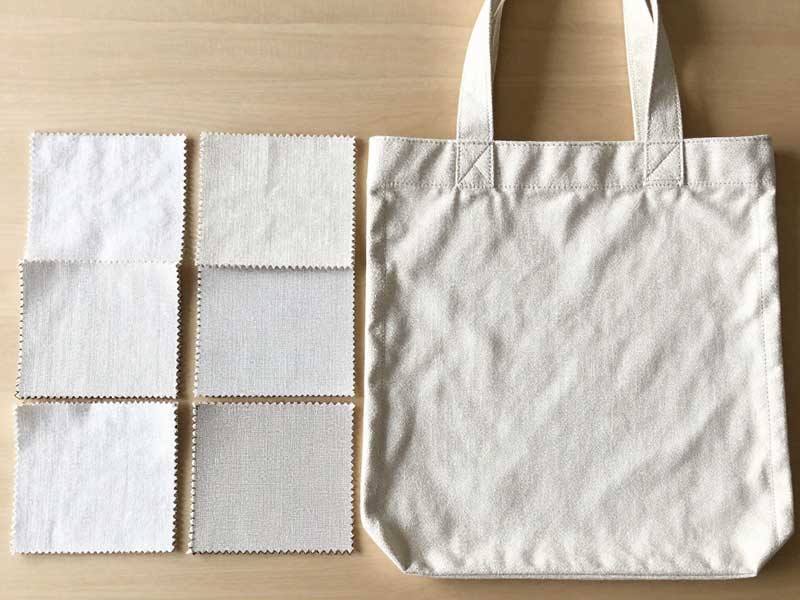
The Fabric Weight Myth and Real Performance Indicators
Canvas weight (measured in ounces per square yard)1 creates a tangible selling point, but in projects I’ve managed, the biggest client regrets came from over-specifying fabric thickness without considering use case.
Real luxury perception factors in canvas:
- Weave tightness (thread count): A tight weave in 12oz canvas feels more structured than a loose weave in 16oz2, yet costs less. Buyers should request fabric samples and compare hand-feel, not just spec sheets.
- Pre-washed vs. raw canvas: Pre-washed canvas adds $0.30–$0.60/unit3 but delivers a soft, broken-in luxury feel that raw canvas (which feels stiff and industrial) never achieves. Corporate clients ordering executive gifts should default to pre-washed; budget promotional orders can skip it.
- Lining construction: An unlined canvas tote at 16oz feels cheaper than a lined tote at 10oz canvas with 5oz cotton lining. The lining hides interior seams, adds rigidity, and provides a clean branded interior—yet many buyers allocate budget to exterior fabric while skimping on lining.
| Fabric Specification | Cost Impact | Perceived Luxury | Recommended Use Case |
|---|---|---|---|
| 10oz canvas + 5oz lining | Baseline | High (clean finish) | Retail branded merchandise |
| 16oz unlined canvas | +25% | Medium (industrial feel) | Promotional giveaways |
| 12oz pre-washed + lining | +40% | Highest (soft luxury) | Corporate executive gifts |
From sample confirmations I’ve handled, the most cost-effective luxury upgrade is not thicker canvas but adding a contrast-color lining—it costs $0.40–$0.80/unit and transforms the perceived value by $5–$10 in customer perception.
Hardware and Trim Decisions That Signal Quality
In my experience reviewing bulk production samples, cheap hardware destroys luxury positioning faster than any fabric choice.
Critical hardware specifications:
- Handle attachment method: Riveted handles (metal grommets reinforcing strap junction) cost $0.20–$0.40/unit more4 than simple stitching but eliminate the #1 warranty failure point—torn handle seams5.
- Zipper quality (if specified): YKK or equivalent branded zippers add $0.50–$0.80/unit6 but buyers must specify this; generic zippers fail within weeks of regular use.
- Metal vs. plastic hardware: Antique brass rivets, D-rings, or snap closures add $0.30–$1.20/unit but create tactile luxury that photos can’t capture. Budget promotional bags should stick to all-fabric construction; premium orders should specify metal accent points.
I once managed an order where the client approved a sample with YKK zippers, then the factory substituted generic zippers in bulk production to recover margin. The client only discovered the swap during their own quality inspection—800 units already shipped. Always specify hardware brands by name in your PO and inspection checklist.
How Does Stitching Quality Impact Luxury Perception?
Most buyers never discuss stitching specs with suppliers, assuming "good quality" is a given. Then bulk orders arrive with uneven seam allowances, puckered corners, and loose thread ends that scream "cheap."
Stitching quality is the most visible luxury indicator once a customer handles the bag. Specify stitch density (stitches per inch), thread grade, reinforcement areas, and edge finishing methods in your technical package—or the factory will default to mass-market construction standards.
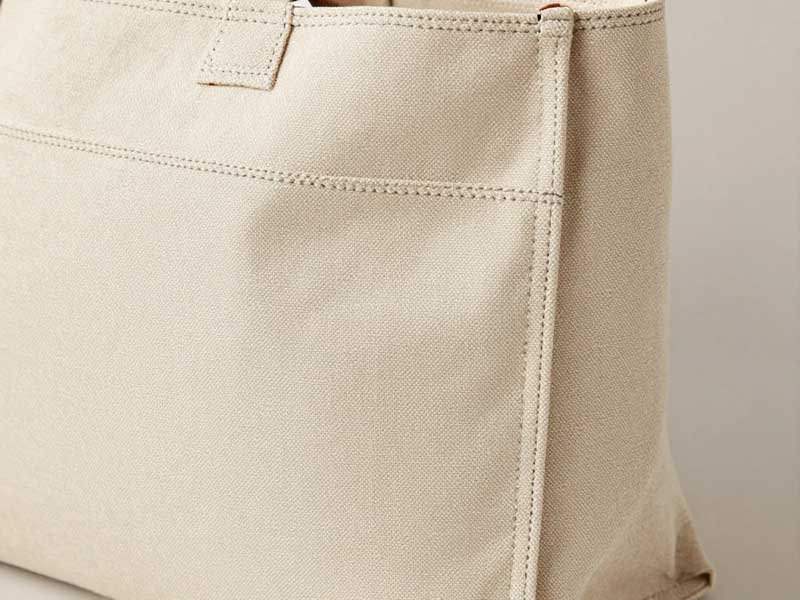
Thread Grade and Stitch Density Requirements
In projects where clients complained about "cheap-looking" bags despite using premium canvas, I traced the issue to thin thread (cotton thread instead of polyester) and low stitch density (6 SPI instead of 10 SPI).
Professional-grade stitching specifications:
- Thread material: 100% polyester thread (higher tensile strength, color-fast)7 costs negligibly more than cotton thread but prevents seam failure and color bleed through washing.
- Stitch density: Luxury bags require 8–12 stitches per inch (SPI) on structural seams8. Budget bags use 5–6 SPI. This affects machine time and labor cost, so suppliers will default to 6 SPI unless you specify otherwise.
- Contrast or matching thread: Contrast topstitching (e.g., white thread on navy canvas) adds visual detail for $0.10–$0.15/unit. Matching thread hides construction but requires less precision.
| Stitching Element | Standard Spec | Luxury Spec | Cost Delta |
|---|---|---|---|
| Thread material | Cotton | Polyester | +$0.05/unit |
| Stitch density | 6 SPI | 10 SPI | +$0.20/unit |
| Edge folding | Single-fold | Double-fold | +$0.30/unit |
| Handle reinforcement | Box stitch | Box + X stitch | +$0.15/unit |
Edge Finishing and Corner Construction
The most underspecified area in canvas tote orders is edge treatment. Raw-cut edges (where canvas is simply sewn without folding) look unfinished and fray within months. Double-folded edges with topstitching cost $0.30–$0.50/unit more but are non-negotiable for luxury positioning.
Critical edge specifications:
- Bottom gusset corners: Square corners require precise sewing and pattern cutting; factories default to rounded corners (easier to sew) unless you specify and provide corner radius samples.
- Top hem finish: A 1.5" double-folded hem with contrast topstitching costs $0.25/unit but adds structure and prevents sagging. Budget bags use a 0.75" single fold.
- Interior seam finishing: French seams or serged edges (where raw seam edges are enclosed)9 add $0.40–$0.60/unit but prevent interior threads from showing—essential if you’re adding a lining.
I’ve seen clients approve samples with hand-finished French seams, then receive bulk orders with raw interior seams because the factory couldn’t replicate the hand method on production sewing machines. Always specify which finishing methods must scale to mass production.
What Print and Finishing Techniques Elevate Canvas Totes?
Clients often present multi-color gradient designs and ask, "Can you print this?" The answer is always yes—but the follow-up question (which suppliers avoid) is: "At what minimum order quantity and unit cost?"
Print complexity directly determines cost structure and minimum viable order volumes. Screen printing requires setup fees ($50–$200 per color)10, digital printing has per-unit costs ($1.50–$4.00), and embroidery has stitch count limits. Luxury branding works best when you match print method to your production volume and design complexity, not when you force an expensive technique onto a small order.
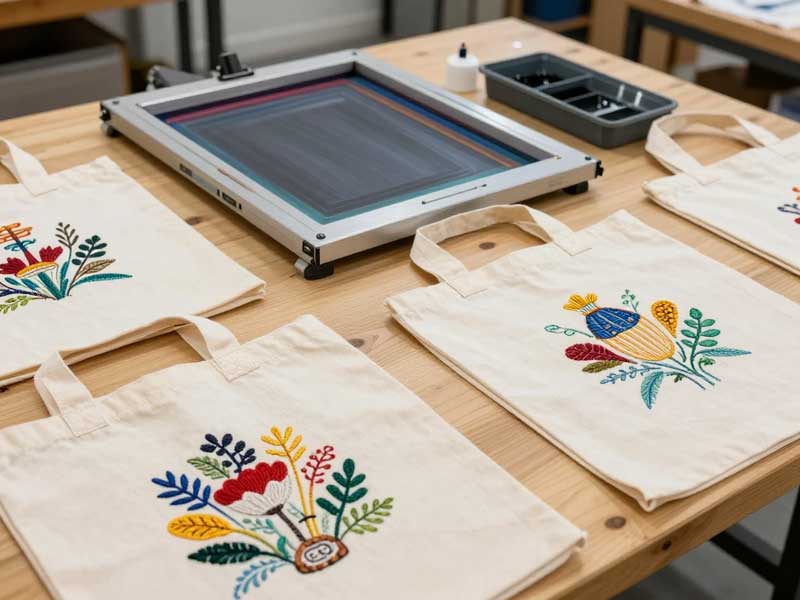
Screen Printing vs. Digital Printing Economics
I’ve worked through countless quoting sessions where clients chose the wrong print method because they didn’t understand the break-even volumes.
Screen printing:
- Setup cost: $50–$200 per color for screen creation (one-time per design)
- Unit cost: $0.40–$0.80 per color after setup
- Break-even point: 300–500 units for 1–2 color designs
- Best for: Simple logos, solid colors, large quantities
- Limitations: Each color requires a separate screen; gradients and photographic images require expensive halftone screens
Digital printing (DTG or heat transfer):
- Setup cost: $0–$50 (minimal setup)
- Unit cost: $1.50–$4.00 per bag (full-color)
- Break-even point: Never competitive for 500+ units
- Best for: Full-color designs, photographic images, small batches (100–300 units)
- Limitations: Less durable than screen printing; colors may fade faster
From projects I’ve managed, the most common mistake is ordering 200 totes with a 4-color screen-printed design—clients pay $800 in setup fees ($200 × 4 colors) for an order that would cost less with digital printing.
Embroidery, Woven Labels, and Metal Badging
Embroidery creates unmatched tactile luxury but has strict technical limits that suppliers won’t explain until after you’ve approved a sample.
Embroidery considerations:
- Stitch count limits: Most production embroidery machines cap at 15,000–20,000 stitches per design11. Complex logos require digitizing fees ($50–$150) and may need simplification.
- Placement constraints: Embroidery on thick canvas (14oz+) requires industrial machines; not all suppliers have this capacity.
- Cost structure: $1.50–$3.50/unit for standard logo sizes (3"×3"), scaling with stitch count.
Woven label alternatives:
- Woven damask labels: $0.15–$0.40 each, sewn into seams or attached as exterior patches. Best for small, detailed logos that exceed embroidery stitch limits.
- Leather patches: $0.80–$2.50 each, create premium touch points. Specify genuine leather vs. PU leather (cost difference is 3–4×).
- Metal badges: $1.20–$4.00 each, require attachment hardware (rivets or adhesive). Add undeniable luxury but limit washability.
I managed an order where a client insisted on embroidering a detailed crest with 28,000 stitches. The embroidery vendor couldn’t execute it on their machines, forcing a $400 emergency redesign and 2-week delay. Always request a stitch count estimate during design approval.
How to Structure Orders for Cost-Effective Luxury?
The biggest budget disasters I’ve witnessed came from clients who didn’t understand how MOQ (minimum order quantity), setup fees, and sampling costs cascade through small orders.
Luxury canvas tote economics favor volume tiers where fixed costs (molds, plates, sampling, setup fees) spread across enough units to keep per-unit costs rational. Orders below 300 units incur disproportionate overhead; orders above 1,000 units unlock factory efficiencies. Buyers must map total project cost (not just unit price) across volume scenarios to identify the optimal order structure.
Fixed Cost Components That Crush Small Orders
In every quoting process, I break down the total cost into fixed (one-time) and variable (per-unit) components so clients understand why doubling order quantity doesn’t double total cost.
Typical fixed costs in canvas tote orders:
- Sampling fees: $80–$200 for initial prototype (often waived if you proceed to bulk)
- Screen printing setup: $50–$200 per color
- Custom mold/pattern fees: $100–$300 for non-standard bag dimensions
- Embroidery digitizing: $50–$150 per design
- Quality inspection (third-party): $200–$400 flat fee
| Order Quantity | Fixed Costs | Variable Costs (@$4/unit) | Total Cost | Effective Unit Cost |
|---|---|---|---|---|
| 100 units | $600 | $400 | $1,000 | $10.00 |
| 300 units | $600 | $1,200 | $1,800 | $6.00 |
| 500 units | $600 | $2,000 | $2,600 | $5.20 |
| 1,000 units | $600 | $4,000 | $4,600 | $4.60 |
This is why I always tell clients: if your budget allows 150 units at $10 each ($1,500 total), you’re better off ordering 300 units at $6 each ($1,800 total)—you get twice the inventory for 20% more spend.
Sample-to-Bulk Consistency and Inspection Protocols
The most painful client experiences I’ve managed involved bulk shipments that didn’t match approved samples. This happens because samples are often hand-assembled by senior technicians, while bulk production runs through junior line workers under time pressure.
Protecting sample-to-bulk consistency:
- Specify tolerance ranges in PO: "All dimensions ±0.25 inches, print placement ±0.5 inches." Without written tolerances, suppliers interpret "match the sample" subjectively.
- Request pre-production samples (PPS): Before full production starts, ask for 2–3 units made on the actual production line. These reveal which sample details won’t scale.
- Define AQL inspection standards: Acceptable Quality Limit (AQL) 2.5 is industry standard for promotional products12; luxury orders should specify AQL 1.5 or lower.
- Conduct mid-production inspection: For orders above 1,000 units, inspect 30% completion point to catch systematic defects early.
In one project, a client approved a sample with perfect corner stitching, then 80% of the bulk order had puckered corners. We traced it to a different sewing machine operator. The lesson: samples prove design feasibility, not production capability.
Hidden Fees and Payment Structure Negotiation
Suppliers rarely volunteer the full cost breakdown upfront. I’ve learned to ask specific questions during quoting to surface hidden fees:
Questions that expose hidden costs:
- "Does your quote include sampling fees, or are those separate?"
- "Are screen printing setup fees one-time or per production run?"
- "If we reorder in 6 months, do we pay setup fees again?"
- "Does the quoted unit price include custom packaging, or is that extra?"
- "What’s your policy on defect replacements—do we pay shipping for replacement units?"
Payment structure optimization:
Factories typically want 30% deposit, 70% before shipment. For first-time orders with unproven suppliers, I negotiate: 30% deposit, 40% at mid-production inspection, 30% before shipment. This ties payment to quality milestones.
I once worked with a client who paid 100% upfront to a new supplier (against my advice). The supplier disappeared. Never pay full price before inspection for first orders.
-
"Canvas Weight & Oz Rating: A Guide to Fabric Density", https://www.selvane.co/it/blogs/knowledge/canvas-weight-and-oz-rating-a-guide-to-understanding-fabric-density. Canvas fabric weight is conventionally measured in ounces per square yard in the textile industry, representing the weight of fabric covering one square yard of area. Evidence role: definition; source type: education. Supports: the standard unit of measurement for canvas fabric weight. ↩
-
"Effect of Weave and Weft Type on Mechanical and Comfort …", https://pmc.ncbi.nlm.nih.gov/articles/PMC11012718/. Textile engineering principles demonstrate that fabric structure and hand-feel result from multiple variables including thread count, weave pattern, and fiber properties, not solely from fabric weight, with tighter weaves generally producing firmer, more stable fabrics. Evidence role: mechanism; source type: education. Supports: how weave density and thread count influence fabric hand-feel and structural properties independent of weight. ↩
-
"Painting Canvas | Art Canvas | Unprimed | Wholesale Fabric", https://www.bigduckcanvas.com/painting-canvas/unprimed-artist-canvas. Fabric pre-washing adds processing steps including washing, drying, and potential shrinkage compensation, which increase material handling, energy consumption, and production time, thereby affecting per-unit costs. Evidence role: statistic; source type: other. Supports: the approximate cost impact of fabric pre-washing processes in textile manufacturing. Scope note: Actual cost impacts vary based on fabric type, washing method, production volume, and facility capabilities ↩
-
"Rivets for Bag Making", https://www.etsy.com/market/rivets_for_bag_making. Metal hardware components and their installation add material costs and require specialized equipment or manual labor for attachment, contributing to per-unit cost increases in bag production. Evidence role: statistic; source type: other. Supports: the incremental cost of adding metal rivet reinforcement in bag manufacturing. Scope note: Specific costs depend on hardware quality, installation method, order volume, and labor rates ↩
-
"Why Handbag Handles Fail: Reinforcement Methods …", https://hydhandbags.com/why-handbag-handles-fail-reinforcement-methods-explained/. Product durability studies of textile bags identify handle attachment points as high-stress areas subject to repeated loading, making them common failure locations when construction methods or materials are inadequate for intended use. Evidence role: general_support; source type: research. Supports: handle attachment as a common stress point and failure mode in bag products. ↩
-
"How Much do YKK Zippers Matter? And Why? : r/onebag – Reddit", https://www.reddit.com/r/onebag/comments/rlv5fz/how_much_do_ykk_zippers_matter_and_why/. Industry analyses of component costs in textile manufacturing indicate that branded fasteners typically command price premiums over generic alternatives, though exact differentials vary by order volume and supplier relationships. Evidence role: statistic; source type: research. Supports: the approximate cost premium for branded zippers in garment and bag manufacturing. Scope note: Specific per-unit costs fluctuate based on order quantities, supplier negotiations, and market conditions ↩
-
"Is polyester thread really that stronger than cotton thread?", https://www.reddit.com/r/sewing/comments/p02kyw/is_polyester_thread_really_that_stronger_than/. Textile engineering research demonstrates that polyester fibers exhibit higher tensile strength and superior dye retention compared to natural cotton fibers due to their synthetic polymer structure and chemical composition. Evidence role: mechanism; source type: research. Supports: the superior tensile strength and color retention properties of polyester thread compared to cotton. ↩
-
"Understanding SPI in Garment Manufacturing", https://www.linkedin.com/posts/madhur-singh-b41389251_garmentmanufacturing-spi-textileengineering-activity-7328037242621304832-6yoQ. Textile manufacturing guidelines typically specify higher stitch densities for premium products to ensure seam strength and aesthetic finish, with structural seams requiring denser stitching than decorative elements. Evidence role: general_support; source type: education. Supports: industry-standard stitch density ranges for quality textile products. Scope note: Specific SPI requirements vary by product type, fabric weight, and intended use ↩
-
"Seam (sewing) – Wikipedia", https://en.wikipedia.org/wiki/Seam_(sewing). French seams are a seam-finishing technique where fabric edges are enclosed within the seam itself through a two-step stitching process, while serging uses an overlock stitch to encase raw edges, both methods preventing fraying and creating clean finishes. Evidence role: definition; source type: encyclopedia. Supports: the construction methods and purposes of French seams and serged edge finishing. ↩
-
"how much should screenprinting cost", https://www.reddit.com/r/SCREENPRINTING/comments/spzlhp/how_much_should_screenprinting_cost/. Screen printing operations incur per-color setup costs for screen preparation and registration, with fees varying based on design complexity, screen size, and production facility capabilities. Evidence role: statistic; source type: other. Supports: typical setup fee ranges for screen printing in textile manufacturing. Scope note: Actual costs vary significantly by geographic region, supplier scale, and order specifications ↩
-
"What is a high lifetime stitch count on a machine?", https://www.reddit.com/r/Machine_Embroidery/comments/1tjyn7i/what_is_a_high_lifetime_stitch_count_on_a_machine/. Commercial embroidery machines have design complexity limits determined by memory capacity, processing power, and production efficiency considerations, with practical constraints on maximum stitch counts per design. Evidence role: general_support; source type: other. Supports: typical stitch count capacities and limitations of commercial embroidery equipment. Scope note: Specific capabilities vary widely by machine model, manufacturer, and technology generation ↩
-
"Explaining AQL 2.5 for Quality Inspections – HQTS", https://www.hqts.com/2-5-aql/. Acceptable Quality Limit (AQL) standards, derived from statistical sampling methods, are widely adopted in manufacturing quality control, with specific AQL levels selected based on product category, price point, and customer expectations. Evidence role: general_support; source type: institution. Supports: the application of AQL sampling standards in promotional product manufacturing. Scope note: Industry practice varies; AQL 2.5 represents one common specification level but is not universally mandated ↩