Skip to content
I’ve worked with eco-friendly handbag materials for over a decade, and I’ve seen sourcing managers make the same expensive mistake repeatedly: they treat sustainability as a binary choice—green versus conventional—when it’s actually a complex optimization problem. You’re balancing durability requirements, certification costs, supply chain stability, and environmental claims that will survive customer scrutiny. Most purchasing decisions fail because buyers conflate recycled content with biodegradability, or assume all GRS-certified materials perform equally under real-world stress.
Eco-friendly handbag materials fall into four main categories: recycled textiles (GRS-certified polyester and nylon), plant-based leather alternatives (pineapple leaf fiber, mushroom mycelium, cactus leather), bio-based synthetics (corn-derived PU), and high-grade natural fibers (organic cotton, hemp canvas). The optimal material depends on your durability requirements, construction methods, budget constraints, and the specific environmental claims your brand can legally defend. Recycled content certification guarantees traceability—not product lifespan—so buyers must separately validate tensile strength, abrasion resistance, and material-specific failure modes through supplier testing protocols before committing to production volumes.
I’m about to walk you through each material category with the same technical lens I use when evaluating samples in our QC lab. You’ll see exactly where performance gaps exist, which certifications actually matter for your market, and how material choice constrains your construction options—knowledge that will prevent costly production delays and warranty claims.
What recycled textiles should you specify for handbag production?
Every sourcing manager I work with asks about recycled polyester first. It’s the most mature eco-material in our industry, backed by established supply chains and verifiable certifications.
Recycled polyester (rPET) and recycled nylon are mechanically recycled from post-consumer plastic bottles or post-industrial textile waste, then spun into new yarn. GRS (Global Recycled Standard) certification guarantees at least 20% recycled content1 (though most commercial grades contain 50–100%), full supply chain traceability, and compliance with environmental and social criteria during processing. The certification does not, however, guarantee that your finished handbag will match virgin polyester’s durability.
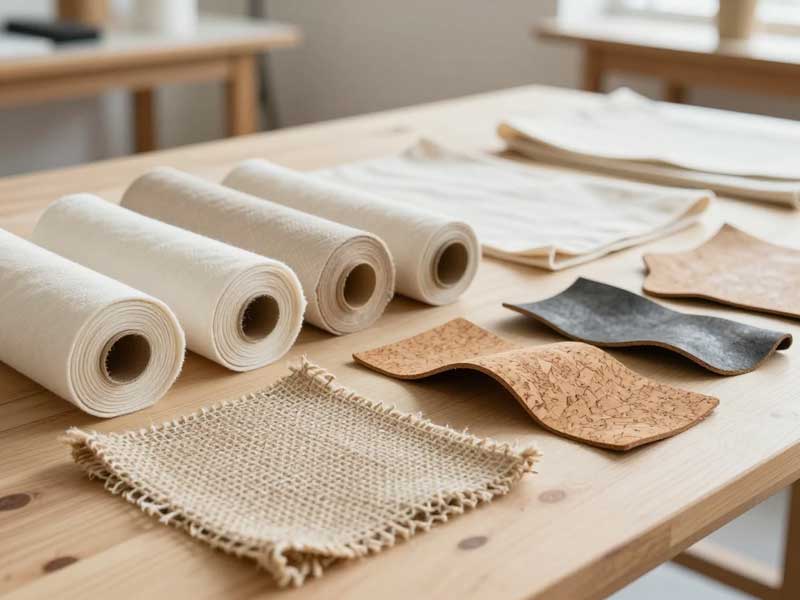
In our QC testing over the past five years, we’ve evaluated dozens of GRS-certified fabrics. Here’s what I’ve learned: high-grade recycled microfiber and 600D recycled polyester can match virgin material performance if you specify higher-density weaves and reinforced stitching. We routinely subject GRS-certified fabrics to 20,000-cycle Martindale abrasion tests2 before approving them for client orders. The top-tier recycled materials pass with minimal pilling or fiber loss—identical to virgin polyester benchmarks. But lower-grade recycled fabrics often fail around 12,000–15,000 cycles, showing visible wear at stress points like shoulder strap attachments and bottom corners.
Performance specifications you must verify
When evaluating recycled textile samples, demand these test results from your supplier:
- Tensile strength: Minimum 80–100 N for woven fabrics, 120–150 N for coated materials
- Tear strength: At least 30 N using the tongue tear method (ISO 13937-2)
- Abrasion resistance: 20,000+ Martindale cycles with no visible fiber damage
- Colorfastness: Grade 4+ for washing, rubbing, and light exposure (ISO 105 standards)
- Seam slippage: Less than 4mm displacement under 200 N load
I’ve seen buyers skip these specifications and approve materials based solely on GRS certification. Six months later, they’re managing warranty returns because bag bottoms wore through prematurely or strap seams pulled apart under load.
Construction adjustments for recycled textiles
Recycled polyester behaves differently under needle penetration than virgin material. The fiber structure is slightly less uniform due to the recycling process, which means:
- Use smaller needle sizes (Groz-Beckert 90/14 or 100/16) to prevent visible needle holes
- Increase stitch density from standard 5 stitches/inch to 6–7 stitches/inch at stress points
- Pre-test adhesive compatibility if you’re using laminated or coated recycled fabrics—some adhesive chemistries react poorly with recycled material coatings
We learned this the hard way on a 2,000-unit order three years ago. The buyer specified a GRS-certified coated canvas without testing our standard PU adhesive compatibility. The adhesive degraded the coating during heat activation, leaving visible discoloration along every seam. We had to rework the entire batch with a modified water-based adhesive, which delayed shipment by two weeks.
Are plant-based leather alternatives durable enough for commercial handbags?
Plant-based leather alternatives generate enormous marketing appeal, but they also create significant technical challenges that most buyers underestimate. I’m talking about pineapple leaf fiber (Piñatex), mushroom mycelium leather, cactus leather (Desserto), and apple leather.
These materials deliver strong environmental narratives—they’re biodegradable or compostable (depending on backing materials)3, require minimal water compared to animal leather4, and use agricultural waste streams. But in our production testing, their mechanical properties lag 2–3 generations behind synthetic alternatives.
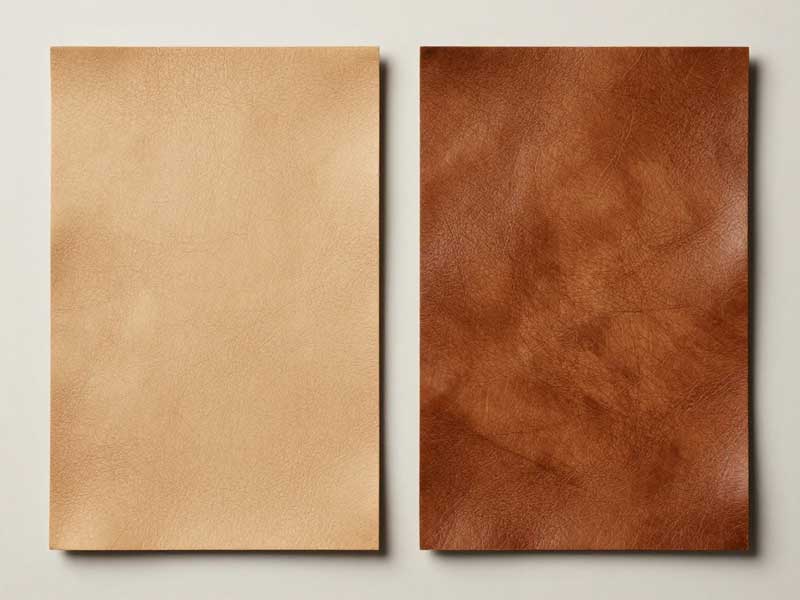
Plant-based leather alternatives work best for small accessories (wallets, cardholders, cosmetic pouches) or as decorative panels on hybrid bags where structural loads are carried by reinforced textile bases. I’ve produced successful runs using Piñatex for tote bag exteriors, but only after adding internal nylon webbing to carry the actual weight load and using doubled seams at handle attachment points.
Material-specific performance limitations
Here’s what I’ve documented across multiple plant-based leather projects:
| Material | Tensile Strength | Abrasion Resistance | Water Resistance | Best Applications |
|---|---|---|---|---|
| Piñatex (pineapple) | 40–60 N | Low (5,000–8,000 Martindale) | Requires coating | Wallets, clutches, decorative panels |
| Mushroom mycelium | 30–50 N | Very low (3,000–5,000 Martindale) | Poor (absorbs moisture) | Fashion-forward accent pieces |
| Cactus leather | 50–70 N | Moderate (8,000–12,000 Martindale) | Good with PU backing | Small crossbody bags, card holders |
| Apple leather | 45–65 N | Moderate (7,000–10,000 Martindale) | Good with PU backing | Zip pouches, passport covers |
Compare these numbers to full-grain cowhide leather (tensile strength 200+ N, abrasion resistance 100,000+ cycles)5 or high-grade microfiber leather (120–150 N tensile, 50,000+ cycles abrasion). The performance gap is real and measurable.
Construction method constraints
Plant-based leathers impose strict limits on traditional bag-making techniques. This is critical: most plant-based alternatives cannot tolerate high-heat edge-painting (油边工艺) because the heat degrades the fiber matrix or backing adhesive. We use turned-and-topstitched seam finishing instead, which adds 15–20% to labor costs but prevents edge delamination.
Similarly, you cannot use solvent-based adhesives that are standard in conventional bag manufacturing. The organic fibers absorb solvents, weakening the material structure. We’ve switched to water-based PU adhesives for all plant-based leather projects, which requires longer curing times (24–48 hours versus 4–6 hours) and affects production scheduling.
I had a client last year who insisted on using mushroom leather for a full-size tote bag, ignoring my recommendation to limit it to decorative panels. We prototyped three samples, each failing at different stress points—first the handles tore away from the body, then the bottom delaminated, finally the shoulder strap stretched beyond usable dimensions after simulated load testing. We eventually redesigned the bag with mushroom leather on the exterior panels only, backed by a load-bearing nylon interior structure. The final product worked, but MOQ had to increase from 500 to 800 units to absorb the additional construction complexity.
How do bio-based synthetic materials compare to petroleum-based alternatives?
Bio-based synthetic materials—primarily corn-derived or sugarcane-derived polyurethane (PU)6—offer a middle ground between conventional synthetics and plant-based leathers. They mimic the performance characteristics of petroleum-based PU while reducing carbon footprint by using renewable feedstocks.
The material science here is straightforward: instead of petroleum-derived polyols, manufacturers use bio-polyols extracted from corn starch, sugarcane, or castor oil. The final polymer structure remains functionally similar to conventional PU, which means processing equipment, construction techniques, and quality control protocols transfer directly.

Bio-based PU performs within 5–10% of petroleum-based PU across all key metrics when you source from established suppliers. In our in-house testing, bio-based PU samples show tensile strength of 100–120 N, abrasion resistance of 30,000–40,000 Martindale cycles, and identical colorfastness to conventional PU. The material accepts edge-painting, heat embossing, and all standard adhesives without modification.
Certification and traceability challenges
The difficulty with bio-based synthetics lies not in performance but in verification. Unlike GRS certification for recycled content, there’s no single global standard for bio-based content verification. Suppliers use different certification schemes:
- USDA BioPreferred7 (United States): Verifies minimum bio-based content percentage using radiocarbon testing
- DIN CERTCO (Germany/Europe): Bio-based content certification aligned with European standards
- Vincotte OK biobased (Belgium): Third-party verification with star rating system (1–4 stars based on bio-content percentage)
I recommend specifying minimum 20% bio-based content verified by any of these three certifications. Higher percentages (40–60%) are available but come with 15–25% price premiums that rarely justify the marginal environmental benefit for most buyers.
Supply chain stability considerations
Bio-based PU supply chains are less mature than recycled textile networks. Lead times run 2–3 weeks longer because fewer mills produce bio-based variants, and inventory buffers are smaller. I’ve had bio-based PU orders delayed by raw material shortages twice in the past three years—never an issue with conventional PU.
If your product launch timeline is critical, build 4–6 week buffer periods into your production schedule when using bio-based synthetics, or maintain backup specifications using conventional PU from the same supplier. We keep parallel material approvals for exactly this reason.
What natural fibers work for eco-friendly bag construction?
Organic cotton, hemp canvas, and linen represent the most established category of eco-friendly bag materials. These materials carry GOTS (Global Organic Textile Standard)8 or OEKO-TEX certifications, have proven durability records spanning decades, and integrate seamlessly into conventional production workflows.
I work with organic cotton and hemp more than any other eco-material because they eliminate the performance uncertainty that plagues newer alternatives. The tradeoffs are well-documented, supply chains are stable, and buyers can confidently predict product lifespan.
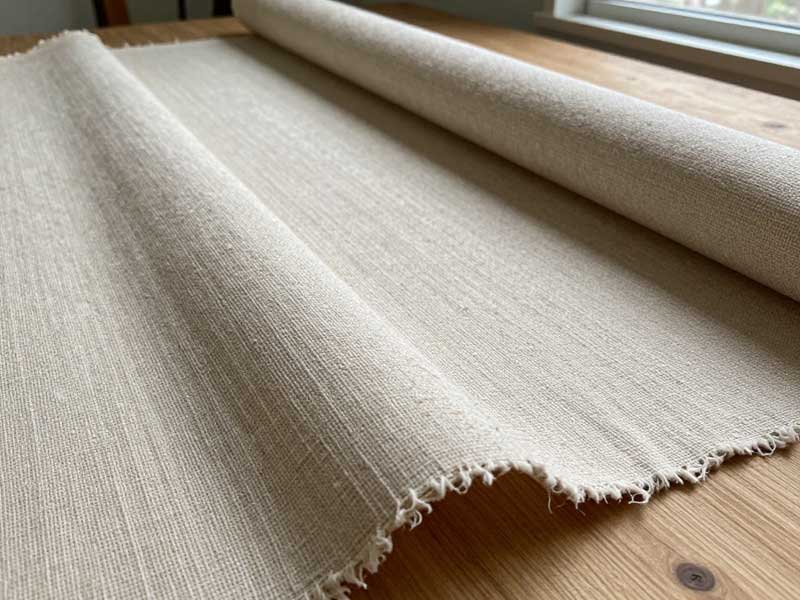
Heavy-duty organic cotton canvas (12–16 oz weight) and hemp canvas (10–14 oz weight) match or exceed conventional cotton durability while offering clear environmental advantages: no synthetic pesticides, reduced water consumption (especially for hemp), and natural biodegradability at end-of-life. We’ve produced thousands of tote bags, backpacks, and messenger bags using GOTS-certified organic cotton with zero durability-related returns when properly constructed.
Performance advantages of natural fibers
Natural fibers offer specific technical benefits that synthetic alternatives struggle to match:
- Breathability: Natural fiber linings prevent moisture buildup and odor development in daily-use bags
- Dye uptake: Better color saturation and wider color gamut compared to synthetic materials
- Repair-friendly: Worn areas can be patched or darned, extending product lifespan
- UV resistance: Better long-term colorfastness under sun exposure than many synthetic dyes
The weakness is water resistance. Untreated organic cotton and hemp absorb water readily, which adds weight and can promote mildew growth if bags remain damp. We address this three ways:
- Wax coating: Traditional canvas treatment that adds water repellency while maintaining breathability
- PU backing: Thin polyurethane coating on interior surface (reduces biodegradability but provides complete waterproofing)
- DWR treatment: Durable Water Repellent finish using fluorocarbon-free chemistry (meets OEKO-TEX standards)
Certification cost structure for natural fibers
GOTS certification operates differently than GRS for recycled materials. GOTS requires facility-level certification, not just material traceability. This matters for your sourcing strategy.
If you’re ordering from a GOTS-certified manufacturer like our facility, the certification cost is already amortized across all clients. You simply pay the material premium (typically 20–30% over conventional cotton) plus a small documentation fee ($50–100 per order for transaction certificates).
If you’re working with a non-certified factory and require GOTS certification, you’re asking the supplier to undergo facility certification ($2,000–5,000 initial audit, $1,500–3,000 annual renewals). This cost gets allocated across your order volume. At 500 units, you’re adding $4–10 per bag. At 5,000 units, the per-unit impact drops to $0.40–1.00. For buyers with annual volumes below $300k, choosing pre-certified suppliers is far more cost-effective than requiring certification.
Does material choice affect your compliance documentation requirements?
This is where I see the most confusion from international buyers. Eco-friendly materials don’t automatically simplify compliance—in many cases, they complicate it because certification standards vary by material type and certification bodies operate independently from product safety regulations.
Your finished handbag must still comply with all destination market requirements: REACH (Europe), CA65 (California), CPSIA (US children’s products if applicable)9, and various retailer-specific RSL (Restricted Substance Lists). Material eco-certifications like GRS and GOTS address environmental and social criteria but don’t replace chemical compliance testing.
At Diriana, our ISO 9001-backed IQC (Incoming Quality Control) process10 catches non-compliant materials before cutting begins. Every material lot receives inspection against the approved specification, including physical testing and documentation review. For eco-certified materials, we verify:
- Current certification transaction certificate matching the material lot number
- Third-party test reports confirming REACH SVHC compliance (below 0.1% for all listed substances)11
- CA65-specific lead and phthalate content below California thresholds (lead <90 ppm, DEHP/DBP/BBP/DIBP <1,000 ppm)12
- Formaldehyde content below OEKO-TEX limits (if applicable)
Hidden compliance risks in eco-materials
Some eco-materials introduce compliance risks that conventional materials don’t:
Plant-based leather backing adhesives: Many plant-based leathers use PU or PVC backing layers to improve mechanical strength. If your supplier sources backing material from non-compliant mills, the final product can fail REACH or CA65 testing despite the plant-based surface layer being clean. Always require full material composition disclosure down to backing and adhesive layers.
Natural fiber dyes: "Natural dyes" sound environmentally friendly, but some traditional natural dyes contain heavy metals (indigo can contain lead, certain red dyes contain arsenic compounds) that fail CA65 testing. We only approve natural dyes that come with third-party heavy metal analysis showing compliance.
Recycled material contamination: Post-consumer recycled content carries contamination risk because the source material history is unknown. GRS certification requires sorting and cleaning, but chemical testing is still essential. I’ve rejected GRS-certified recycled polyester lots that failed REACH testing for legacy brominated flame retardants from the source waste stream.
-
"Recycled Claim Standard (RCS) + Global …", https://textileexchange.org/recycled-claim-global-recycled-standard/. The Global Recycled Standard, administered by Textile Exchange, establishes minimum thresholds for recycled content in certified products and supply chain requirements. Evidence role: definition; source type: institution. Supports: the minimum recycled content percentage required for GRS certification. ↩
-
"Quantitative Assessment of Woven Fabric Surface Changes …", https://pmc.ncbi.nlm.nih.gov/articles/PMC12348827/. The Martindale abrasion test (ISO 12947) provides standardized methodology for evaluating textile wear resistance, with cycle counts indicating expected durability under repeated friction. Evidence role: general_support; source type: institution. Supports: standardized abrasion testing methods and typical cycle thresholds for textile durability assessment. Scope note: Standards define test methodology but do not prescribe specific cycle requirements for handbag applications, which vary by intended use. ↩
-
"Bio-Based and Sustainable Alternatives to Conventional and …", https://pmc.ncbi.nlm.nih.gov/articles/PMC13027542/. Plant-derived materials demonstrate biodegradability under appropriate conditions, though decomposition rates and requirements vary significantly based on material processing, backing layers, and environmental factors. Evidence role: mechanism; source type: research. Supports: the biodegradation potential of plant-based materials under specific environmental conditions. Scope note: Biodegradability depends heavily on backing materials, coatings, and disposal conditions; commercial composting facilities may not accept these materials. ↩
-
"(PDF) Water footprint of Bangladeshi leather: Identification …", https://www.academia.edu/9441715/Water_footprint_of_Bangladeshi_leather_Identification_of_Environmental_hotspot. Lifecycle assessment studies indicate that conventional leather production involves substantial water consumption for livestock raising and tanning processes, though comparative data for emerging plant-based alternatives remains limited. Evidence role: statistic; source type: research. Supports: comparative water consumption between conventional leather and plant-based alternatives. Scope note: Comprehensive LCA data for newer plant-based leather alternatives is still emerging, and water impact varies significantly by specific production methods. ↩
-
"Mechanical Parameters of Leather in Relation to Technological … – PMC", https://pmc.ncbi.nlm.nih.gov/articles/PMC9331295/. Full-grain leather exhibits high tensile strength and abrasion resistance due to its intact fiber structure, with performance varying based on tanning methods, leather grade, and thickness. Evidence role: statistic; source type: research. Supports: typical mechanical performance characteristics of full-grain leather. Scope note: Performance values vary significantly across leather types, tanning processes, and testing conditions; cited values represent approximate ranges rather than universal standards. ↩
-
"Efficient utilization of renewable feedstocks: the role of catalysis and …", https://pmc.ncbi.nlm.nih.gov/articles/PMC5719221/. Bio-based polyurethanes utilize polyols derived from renewable resources including corn, sugarcane, and vegetable oils through chemical conversion processes, partially or fully replacing petroleum-derived polyols in polymer synthesis. Evidence role: mechanism; source type: research. Supports: the chemical pathways for producing polyurethane from renewable plant-based feedstocks. ↩
-
"Applying for Certification – BioPreferred® Program", https://www.biopreferred.gov/BioPreferred/faces/pages/ApplyingForCert.xhtml. The USDA BioPreferred program certifies bio-based content in products using ASTM D6866 radiocarbon analysis, which distinguishes renewable carbon from petroleum-derived carbon. Evidence role: definition; source type: government. Supports: the verification methodology used by the USDA BioPreferred program for bio-based content. ↩
-
"Global Standards – Global Standards – Voluntary …", https://global-standards.org/. The Global Organic Textile Standard (GOTS) provides internationally recognized certification for organic fiber textiles, requiring facility-level compliance with environmental and social criteria throughout the supply chain. Evidence role: definition; source type: institution. Supports: the certification scope and facility-level requirements of the Global Organic Textile Standard. ↩
-
"Children’s Products | CPSC.gov", https://www.cpsc.gov/Business–Manufacturing/Business-Education/Childrens-Products. Consumer textile products including handbags are subject to chemical safety regulations such as REACH (EU), California Proposition 65, and CPSIA for children’s products, which restrict hazardous substances and require compliance testing. Evidence role: general_support; source type: government. Supports: regulatory frameworks governing chemical content and safety in consumer textile products. ↩
-
"Incoming Inspection: Do we have to inspect everything? – ISO 9000 Store", https://the9000store.com/iso-9001-2015-requirements/iso-9001-2015-operational-requirements/incoming-inspection/. ISO 9001 establishes quality management system requirements including control of externally provided processes, products, and services, which encompasses incoming inspection and verification activities. Evidence role: general_support; source type: institution. Supports: quality management system requirements that encompass incoming material control. Scope note: ISO 9001 specifies requirements for quality management systems but does not prescribe specific IQC testing protocols, which are determined by organizational procedures. ↩
-
"REACH Substances of Very High Concern (SVHC) Services", https://www.intertek.com/assuris/chemicals/regulatory/reach-svhc/. Under REACH Article 33, substances of very high concern (SVHC) present above 0.1% weight by weight in articles trigger information disclosure requirements to recipients and consumers. Evidence role: definition; source type: government. Supports: the concentration threshold for SVHC notification requirements under REACH. ↩
-
"Proposition 65 No Significant Risk Levels (NSRLs … – OEHHA", https://oehha.ca.gov/proposition-65/general-info/proposition-65-no-significant-risk-levels-nsrls-and-maximum-allowable-dose-levels-madls. California’s Safe Drinking Water and Toxic Enforcement Act (Proposition 65) establishes safe harbor levels for certain chemicals in consumer products, with enforcement focusing on lead and phthalate content in accessible components. Evidence role: statistic; source type: government. Supports: specific concentration limits for lead and phthalates under California Proposition 65. Scope note: Specific numerical thresholds are established through regulatory guidance and settlements rather than statute; limits may vary by product category and exposure pathway. ↩