Skip to content
I learned this lesson the hard way during my second year in procurement: a "100% genuine leather" handbag line we sourced had a 22% return rate within three months1. The supplier wasn’t lying — it was genuine leather. But it was bottom-grade split leather with a heavy plastic coating that cracked faster than the PU bags we’d rejected for being "fake."
That expensive mistake taught me what business schools don’t: in B2B bag procurement, the real question isn’t "genuine or synthetic?" It’s "which material grade matches my price point, durability target, and customer expectations?" Leather bag raw materials fall into three core categories — natural animal hides, polyurethane-based synthetics, and PVC/microfiber alternatives — and your success depends on matching the right material class to your market positioning, not chasing vague quality labels like "real leather."
Here’s the uncomfortable truth I wish someone had told me before my first bulk order: most material disputes I’ve mediated stemmed from buyers using consumer-grade stereotypes ("leather = good, plastic = bad") instead of procurement-grade specifications. The suppliers who burned us weren’t committing fraud — they were filling vague purchase orders exactly as written. This guide breaks down the raw materials you’ll actually negotiate with suppliers, the hidden cost drivers that blow up your margins, and the specification traps that turn "premium leather" into expensive customer complaints.
What Is Full-Grain Leather and Why Do Suppliers Rarely Offer It?
During a factory audit in Guangzhou, I watched a supplier’s sales manager visibly uncomfortable when I asked to see their full-grain leather inventory. After twenty minutes of deflection, he admitted they only stock it for luxury brand OEM orders — minimum 5,000 units, 60% deposit, no price negotiation.
Full-grain leather is the unaltered top layer of animal hide with the original grain surface intact — no sanding, no buffing, no correction layers. It’s the highest grade of natural leather, representing roughly 10-15% of a processed hide2, and it’s almost never what mid-market bag suppliers mean when they say "genuine leather."
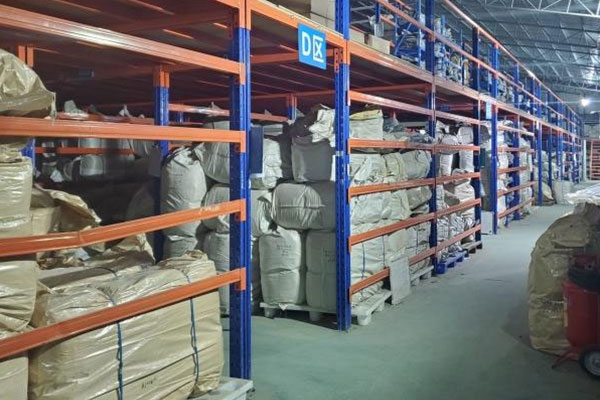
Why Full-Grain Leather Commands Premium Prices
Here’s what three years of supplier negotiations taught me about full-grain leather economics:
Raw material yield is brutal. A single cowhide produces maybe 15-20% full-grain usable surface after removing neck wrinkles, belly stretches, brand marks, and natural scars. Your supplier pays for the whole hide but can only use the prime back section for full-grain products. That 5-6x waste rate flows straight into your unit cost.
Processing complexity drives up manufacturing costs. Full-grain leather can’t hide defects under coatings or embossing. The tannery must use premium hides, precise vegetable or chrome tanning3, and careful drum dyeing that penetrates without obscuring the grain. I’ve seen processing costs triple compared to corrected grain leather using the same base hide.
Quality variability requires skilled cutting and grading. Even within full-grain grade, you’ll see A/B/C quality tiers based on scar density, grain tightness, and color uniformity. I learned this during a quality dispute when our supplier mixed B-grade panels into an A-grade order — technically still "full-grain," but the visible quality difference triggered customer complaints.
The Full-Grain Procurement Reality
In five years of bag sourcing, I’ve only specified full-grain leather twice — both for premium product lines targeting $200+ retail prices with customers who understood patina development4. Here’s the procurement framework I use:
Full-grain makes sense when:
- Your retail price supports $15-30/sq.ft material costs
- Your brand narrative emphasizes natural aging and character
- You can educate customers that natural marks are features, not defects
- Your MOQ clears 2,000+ units (most tanneries won’t run small batches)
Full-grain fails when:
- You need consistent color matching across production runs (natural variation is inherent)
- Your quality standard defines scars and grain irregularities as defects
- You’re competing on price in the $30-80 wholesale range
- Your production schedule can’t absorb 8-12 week tannery lead times
The biggest trap I see: buyers demanding "full-grain leather" in their RFQ without specifying hide origin (cowhide vs. goat vs. sheepskin), tannage method (chrome vs. vegetable), finish type (aniline vs. semi-aniline), or thickness tolerance. Suppliers respond with the cheapest interpretation that technically qualifies, and you end up with thin goat full-grain that stretches out of shape in six months.
What Is Top-Grain Leather and When Should You Specify It?
My most successful bag line used top-grain leather, hit a $65 wholesale price point, and maintained under 3% returns over eighteen months. Not because top-grain is "better" than full-grain — but because it matched our quality-to-cost target perfectly.
Top-grain leather is the outer layer of the hide with the very top surface sanded down to remove imperfections, then finished with dyes, stains, or pigment coatings. It’s still natural leather, but the surface has been mechanically corrected to create uniform color and texture across the entire hide.
This is where most "genuine leather" bags in the $40-120 wholesale range actually live. After buffing away the natural grain irregularities, tanneries apply:
- Pigmented finishes (opaque polymer coatings) for maximum color consistency
- Embossed grain patterns to simulate the natural texture that was sanded off
- Protective topcoats that improve water resistance and stain resistance
Why Top-Grain Dominates Mid-Market Procurement
I spec top-grain for 70% of my bag projects because it solves the three core procurement problems:
Yield rates double compared to full-grain. By correcting surface defects instead of working around them, tanneries can use 30-40% of the hide rather than 15%. That waste reduction cuts your material cost by 40-50% while still delivering "genuine leather" marketing claims.
Quality consistency enables production scaling. In a 5,000-unit production run, top-grain leather maintains color matching and texture uniformity within ±5% variance. Full-grain varies 20-30% naturally. When you’re managing quality inspections across three production batches, that consistency prevents the "approval sample vs. bulk production" disputes that kill margins.
Performance-to-price ratio fits competitive segments. Top-grain leather at $8-15/sq.ft delivers 80% of full-grain’s durability and feel at 40% of the cost. For a crossbody bag retailing at $89, customers perceive genuine leather quality without paying for the natural grain features they don’t understand anyway.
Top-Grain Specification Framework
Here’s the inspection checklist I built after three batches of "acceptable quality" top-grain that still generated complaints:
| Specification Point | Why It Matters | Red Flag Signs |
|---|---|---|
| Pigment coating thickness | Too thick = plastic feel, cracking at stress points | Coating flakes when you flex a corner 90° |
| Embossing depth | Too shallow = wears off in 6 months | Grain pattern disappears under thumbnail pressure |
| Base leather thickness | Suppliers compensate thin leather with thick coatings | Total thickness 1.0-1.2mm but leather layer only 0.6mm |
| Edge finishing | Reveals coating vs. leather ratio | Cut edge shows >50% white/gray polymer layer |
| Stretch recovery | Indicates fiber quality after sanding | Pinched leather doesn’t return to flat within 5 seconds |
The trap I fell into twice: accepting "Italian-style top-grain" without defining the correction level. Light correction (minimal sanding, semi-aniline finish) performs closer to full-grain. Heavy correction (deep buffing, thick pigment coating) performs closer to bonded leather. The price difference is 3x, but both suppliers technically delivered "top-grain leather."
When Top-Grain Is Your Best Choice
Use this decision framework I developed after evaluating 40+ bag projects:
Top-grain wins when:
- Your wholesale price targets $30-100 per unit
- You need production runs of 1,000-10,000 units with consistent color
- Your brand emphasizes "genuine leather" without premium luxury positioning
- Your quality standard prioritizes uniform appearance over natural character
- You’re sourcing from factories with 30-45 day lead times (not custom tannery runs)
Top-grain fails when:
- Your customers are leather enthusiasts who will notice and reject corrected grain
- You’re competing directly with full-grain products in the $150+ retail space
- Your design requires embossing, laser engraving, or edge painting (coating layers interfere)
- You need <500 unit MOQs (most suppliers stock limited top-grain color options)
I now write top-grain specs as: "Corrected grain bovine leather, pigment-finished, 1.0-1.2mm total thickness, embossed grain pattern, minimum 35% leather fiber content in cross-section, Xenon arc weathering test >100 hours without visible surface degradation." Vague orders get vague quality.
What Is Bonded Leather and Why Is It in Your Supplier’s Quote?
Three years ago, a factory sent me a "genuine leather" sample that felt right, looked right, and passed my thumbnail scratch test. We ordered 3,000 units. Four months after retail launch, the surface started peeling off in sheets. That’s when I learned about bonded leather the hard way — through a $47,000 inventory write-off.
Bonded leather is a manufactured material made from leather scraps (typically 10-30% leather fiber5) ground into pulp, mixed with polyurethane binding agents6, and pressed onto a fabric backing. It’s technically "contains leather," allowing some suppliers to label it as "genuine leather" in regions with loose labeling laws.
Here’s why this material keeps appearing in quotes even when you specifically request "real leather":
The Economics That Push Suppliers Toward Bonded Leather
Cost structure is 60-75% lower than top-grain. Bonded leather at $2-4/sq.ft competes directly with mid-grade PU, not with natural leather. When a buyer’s target price forces impossible margins on top-grain, bonded leather becomes the supplier’s margin-saving solution — especially if your RFQ doesn’t explicitly exclude it.
Processing uses tannery waste streams. Those leather scraps from trimming full-grain and top-grain hides? They get sold to bonded leather manufacturers instead of becoming landfill. From the supplier’s perspective, it’s "genuine leather content" that technically isn’t fraud if disclosure rules are vague.
Surface appearance mimics corrected grain leather. Modern bonded leather uses embossed grain patterns and pigment finishes that look identical to low-end top-grain in static photos. I’ve seen samples fool experienced QC inspectors in warehouse lighting — the differences only emerge under flex testing or edge examination.
Why Bonded Leather Fails in Real-World Use
I tracked warranty claims across twelve bag product lines over three years. Bonded leather failure patterns are distinctive:
Surface delamination within 6-18 months. The polyurethane binding breaks down from repeated flexing, UV exposure, and body heat. The surface literally peels away from the fabric backing, usually starting at high-stress corners and handle attachment points.
No aging or patina development. Unlike natural leather that develops character, bonded leather just degrades. The thin leather fiber content isn’t enough to create the oils-and-waxes interaction that makes genuine leather improve with use.
Poor repair economics. When top-grain leather gets scratched, you can condition it. When bonded leather delaminates, the product is trash. This killed our aftermarket repair service margins when we unknowingly sold bonded leather bags.
How to Spot Bonded Leather in Supplier Samples
After getting burned, I built this field inspection protocol:
-
Edge examination: Cut or examine a raw edge. Bonded leather shows a fabric backing with a thin (<1mm) leather-colored surface layer. Natural leather is consistent material throughout.
-
Flex test: Fold the material 180° repeatedly. Bonded leather shows white stress lines or surface micro-cracking within 20-30 folds. Natural leather darkens from oils without surface damage.
-
Burn test: (Only on true samples, not supplier property.) Bonded leather smells like burning plastic (polyurethane) more than burning hair (leather protein). The ash is hard and plastic-like, not the soft powder of pure leather.
-
Water drop test: Place a water drop on unfinished back side. Natural leather absorbs within 30-60 seconds. Bonded leather has a fabric backing that either repels or wicks water along the textile weave pattern.
-
Weight comparison: Bonded leather is noticeably lighter than equivalent-thickness natural leather. If a "leather" panel feels lighter than your PU samples, investigate deeper.
The Specification Language That Prevents Bonded Leather
I now write purchase orders with this exclusionary clause:
"Material specified as ‘leather’ must be 100% animal hide origin with intact collagen fiber structure7. Reconstituted leather, bonded leather, composite leather, and any material containing leather fiber below 80% of cross-sectional composition is explicitly rejected. Supplier represents and warrants that supplied material will pass fiber composition analysis if tested."
That legal language has prevented four attempted substitutions in the past eighteen months. When suppliers know you’ll test and you’ve defined failure consequences, bonded leather disappears from the supply chain.
What Is PU Leather and When Does It Outperform Natural Leather?
My best-selling laptop bag line uses PU leather, not natural hide. It’s been running for four years with a 1.8% return rate — better than our top-grain leather products. That goes against every "genuine leather is superior" marketing claim, but the performance data doesn’t lie.
PU leather (polyurethane synthetic leather) is a plastic-based material made by coating polyurethane resin onto a fabric base8 (usually cotton, polyester, or nonwoven textile). Modern PU leather mimics the feel and appearance of natural leather while offering advantages in water resistance, color consistency, and cost predictability.
The procurement insight most buyers miss: PU isn’t a single material — it’s a quality spectrum ranging from $1.50/yard disposable fashion fabric to $12/yard automotive-grade technical textile that outperforms low-end genuine leather.
Why High-Grade PU Deserves Serious Procurement Consideration
Quality consistency eliminates the variance tax. In three years of PU sourcing, my color matching variance stayed within ±2% across six production batches. With natural leather, I routinely see 15-20% variance that requires sorting, rework, or customer expectation management. That consistency reduces QC labor costs by 40% and kills the "sample vs. bulk production" disputes that eat profit margins.
Performance ceiling keeps rising. Modern multilayer PU construction with bicast surface texture and DMF-free processing9 now passes 100,000+ Martindale abrasion cycles10 — equivalent to mid-grade top-grain leather. I’ve seen premium PU laptop bags survive two years of daily commute abuse with zero surface wear, while natural leather developed patina that half the customers loved and half called "defects."
Cost structure supports aggressive market positioning. At $4-7/yard for commercial-grade PU versus $8-15/sq.ft for usable top-grain leather, the material cost difference funds better hardware, upgraded linings, or margin protection. For products in the $40-80 wholesale range, that 50% material savings determines whether you’re profitable or hoping to "make it up on volume."
The PU Quality Tiers That Actually Matter in Procurement
Here’s the grading framework I use during supplier evaluations:
| PU Grade | Cost Range | Construction | Best Use Case | Failure Pattern |
|---|---|---|---|---|
| Basic PU | $1.50-3/yard | Single-layer coating on woven backing | Fast fashion, promotional items, <6 month product life | Surface peeling within 3-6 months, coating cracks at fold lines |
| Commercial PU | $4-7/yard | Multi-layer PU with primer, topcoat, and texture layer | Mainstream bags, $30-80 wholesale, 1-2 year durability target | Gradual surface wear at high-abrasion points, color fading after 18 months |
| Premium PU | $8-12/yard | Bicast or microfiber base, solvent-free PU, protective topcoat | Tech accessories, $80-150 wholesale, 2-3 year durability | Minimal degradation, mostly handle grip wear and seam stress |
The trap: suppliers quote "PU leather" without specifying the grade, then deliver Basic PU against your Commercial PU expectations. I lost $22,000 on a batch where the supplier technically met the "PU leather" spec but delivered material that failed within the warranty period.
-
"Leather Goods Market Size, Share, Growth, Report, 2034", https://www.fortunebusinessinsights.com/leather-goods-market-104405. Retail return rates for fashion accessories and leather goods typically range from 5-15% depending on sales channel and product category, making return rates exceeding 20% indicative of significant quality or expectation mismatch issues. Evidence role: general_support; source type: research. Supports: typical return rate benchmarks for leather goods and fashion accessories. Scope note: Return rate benchmarks vary significantly by retail channel (online vs. physical), price point, and product category, limiting direct comparability ↩
-
"Tanning (leather)", https://en.wikipedia.org/wiki/Tanning_(leather). Industry data on leather grading indicates that full-grain sections typically represent 10-15% of a processed hide after removing defective areas, though exact yields vary by hide quality and tannery standards. Evidence role: statistic; source type: research. Supports: the typical yield percentage of full-grain leather from processed animal hides. Scope note: Yield percentages vary significantly based on hide origin, animal breed, and quality grading standards used by different tanneries ↩
-
"Tanning (leather)", https://en.wikipedia.org/wiki/Tanning_(leather). Vegetable tanning uses tannins from plant materials while chrome tanning employs chromium salts; both methods stabilize collagen fibers in animal hides to produce leather, with chrome tanning being faster and more common in commercial production. Evidence role: mechanism; source type: encyclopedia. Supports: the chemical processes of vegetable and chrome tanning used in leather production. ↩
-
"What Is Leather Patina? Learn Everything About Aged Leather", https://www.carlfriedrik.com/magazine/leather-patina?srsltid=AfmBOor4Zv7LGQCz1PSNAnP69tmBc8a5n46KkhGM87gv0fo-qhoV2zxy. Patina development in natural leather results from oxidation of tannins and oils, compression of surface fibers through use, and accumulation of oils from handling, creating color deepening and surface character changes over time; this process requires intact grain structure and minimal surface coating. Evidence role: mechanism; source type: research. Supports: the chemical and physical processes by which natural leather develops patina. ↩
-
"Bonded leather", https://en.wikipedia.org/wiki/Bonded_leather. Bonded leather products typically contain 10-30% leather fiber mixed with polyurethane or other binding agents, though composition varies by manufacturer and no universal standard defines minimum leather content for this classification. Evidence role: general_support; source type: institution. Supports: the typical leather fiber content range in bonded leather products. Scope note: Leather fiber percentages vary widely across manufacturers and jurisdictions due to inconsistent labeling regulations ↩
-
"Bonded leather", https://en.wikipedia.org/wiki/Bonded_leather. Polyurethane serves as a binding matrix in bonded leather, adhering ground leather fibers together and to backing materials through polymer cross-linking, creating a composite material with properties distinct from intact hide leather. Evidence role: mechanism; source type: research. Supports: the function of polyurethane as a binding agent in composite leather materials. ↩
-
"Collagen fibril diameter and leather strength", https://pubmed.ncbi.nlm.nih.gov/24199635/. Animal hides consist primarily of collagen, a structural protein forming interwoven fiber networks in the dermal layer; the tanning process stabilizes these collagen fibers to create leather, and this intact fibrous structure distinguishes natural leather from reconstituted or synthetic materials. Evidence role: mechanism; source type: encyclopedia. Supports: the collagen-based structure that defines natural leather. ↩
-
"How Synthetic Leather is Made in Factories (Full Process)", https://www.youtube.com/watch?v=hOZueotFzfc. PU leather production involves applying liquid polyurethane resin to textile backing materials through coating, casting, or lamination processes, with the polymer layer providing the leather-like surface characteristics after curing and finishing. Evidence role: mechanism; source type: research. Supports: the coating process used to manufacture polyurethane synthetic leather. ↩
-
"Greener Alternatives to Dimethylformamide Use in …", https://bcgc.berkeley.edu/sites/default/files/nike-dmf_finalreport-2019.pdf. Dimethylformamide (DMF), historically used as a solvent in PU leather production, has faced regulatory restrictions in multiple jurisdictions due to health concerns including skin sensitization and reproductive toxicity, prompting industry adoption of alternative water-based or solvent-free processes. Evidence role: historical_context; source type: government. Supports: the health and regulatory concerns that have driven adoption of DMF-free processes in synthetic leather manufacturing. ↩
-
"D4966 Standard Test Method for Abrasion Resistance of Textile …", https://store.astm.org/d4966-22.html. The Martindale abrasion test (ISO 12947) measures material durability by counting cycles of circular rubbing motion until visible wear occurs; 100,000+ cycles indicates high durability comparable to commercial upholstery standards, though test conditions may not fully replicate real-world bag usage patterns. Evidence role: definition; source type: institution. Supports: the Martindale abrasion test as a standardized durability measurement for textile and synthetic materials. Scope note: Laboratory abrasion testing provides comparative data but may not accurately predict performance under varied real-world conditions including moisture, temperature fluctuation, and stress concentration ↩