Skip to content
Your first bulk order arrives perfect. The stitching looks tight, the leather feels premium, and the zippers glide smoothly. You approve the batch, send payment, and place a second order for triple the quantity. When that shipment lands three months later, something feels off. The bags look identical in photos, but customers start complaining about peeling coating, weak seams, and stiff zippers. You check your purchase order—the specifications haven’t changed. So what happened?
This is quality fade, and it follows a predictable pattern in contract manufacturing1. Between your first approved batch and repeat orders, manufacturers quietly substitute materials and simplify processes to recover profit margins. The degradation is invisible to buyers but creates 30-40% durability differences2. You can prevent this by anchoring specific material checkpoints and process documentation instead of assuming contract signatures lock in quality standards.
Most buyers think quality fade is a trust problem. It’s actually an economics problem. When we scale production from 500 units to 5,000 units, the cost structure changes dramatically. Hand-controlled finishing that worked for small batches becomes financially impossible. Material suppliers offer "equivalent" alternatives that meet visual specs but fail durability tests. Unless you build explicit checkpoints into your production agreement, quality will drift toward the minimum viable appearance that passes your visual inspection.
Why does quality fade happen between the first and second order?
Quality fade concentrates at a specific transition point: between your approved first batch and the second production run. This is not random. On our production lines, we see manufacturers operate under two completely different cost models for these batches.
Your first order represents showcase production. We use premium-tier material suppliers, assign experienced workers to critical stitching operations, and apply hand-controlled edge finishing. This batch exists to win your approval and secure repeat orders. The profit margin is thin or even negative—manufacturers treat it as customer acquisition cost.
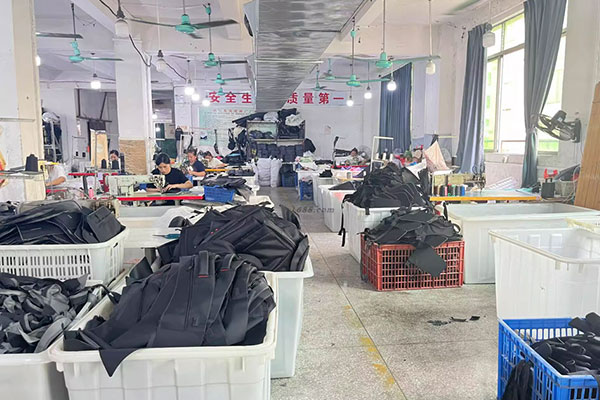
For the second order, the economics reverse. You have already committed to the supplier relationship. Your purchase order references the approved sample but rarely specifies the exact material grades or process steps that created that sample’s quality. Manufacturers now optimize for sustainable profit margins, which means substituting materials and simplifying processes until they reach the edge of what you will notice during inspection.
The substitutions follow a hierarchy of invisibility:
- PU leather coating thickness drops from 1.2mm to 0.8mm—visually identical when new, but the thinner coating cracks after 3-6 months of use.
- Branded YKK zippers get replaced with generic equivalents that have matching tooth profiles but lower-grade slider mechanisms prone to track separation.
- Stitching density reduces from 8 stitches per inch to 6 stitches per inch on non-visible seams like bag bottom construction and interior pocket attachment.
- Edge paint application shifts from three-layer hand brushing to single-layer spray coating that chips within weeks of handling.
Material batch variation creates durability gaps buyers cannot see
I need to be direct about something buyers consistently misunderstand: even when manufacturers use the "same" materials across orders, batch variation creates significant durability differences. This is not intentional fraud—it is how material supply chains function in contract manufacturing.
When you approve a sample bag made from "full-grain leather" or "600D nylon," you are approving one specific production batch from one supplier during one manufacturing week. Leather grain tightness varies between hides. PU coating thickness fluctuates between production runs. Nylon denier can drift 5-10% within spec tolerance3, creating visible differences in abrasion resistance.
On our production lines, we see this play out in specific patterns. A buyer approves a backpack sample made from nylon sourced during peak season when mills run premium-grade fibers. The repeat order lands during off-season when the same mill uses secondary-grade fiber batches with looser weave density. Both technically meet "600D specification," but one will show wear patterns 40% faster.
Buyers ask: "Why not just use the same material batch for every order?" The answer is economic and logistical. Material suppliers require minimum order quantities that often exceed a single buyer’s needs4. They rotate through different production batches based on their own supply chain economics. Unless you contract for dedicated material batching—which requires volume commitments most small buyers cannot meet—you will receive whatever batch the factory purchases for their aggregated production schedule.
This is why material specification language in purchase orders is largely theatrical. You write "full-grain cowhide leather, 1.0-1.2mm thickness" into your contract. The factory sources leather that technically meets this range but sits at the bottom edge of thickness tolerance and uses hides from different tanneries with different grain compression levels. Your inspection passes because the measurement reads 1.05mm. Your customers complain six months later because the thinner, looser-grain leather stretches and wrinkles faster than the approved sample.
The solution is not more detailed material specifications. Specifications are meaningless without physical retention samples and batch-to-batch comparison protocols. Buyers who successfully prevent quality fade do three things:
- They retain physical material swatches from the approved sample batch, not just photos
- They require factories to submit material samples from each new batch before production starts
- They conduct side-by-side comparison inspections using the retained reference samples
This approach shifts the burden from specification language to physical verification. You are no longer debating whether "600D nylon" meets the written standard. You are comparing the new batch directly against the approved reference and asking: "Does this match?"
Small-batch sample production cannot scale without explicit process documentation
Here is a manufacturing reality buyers discover too late: the finishing quality you approved in your 500-unit first batch physically cannot be replicated at 5,000-unit scale without changing the production process. This is not about factory capability or worker skill—it is about process economics.
When we produce small sample batches, we use hand-controlled finishing for critical aesthetic elements:
- Edge paint gets applied with precision brushes in three separate layers with drying time between each coat
- Topstitching on bag flaps and pocket edges is done by experienced workers who manually control stitch spacing and tension
- Hardware attachment uses hand-set rivets with individual quality checks for alignment and compression
- Lining insertion requires hand-tucking and temporary pinning before final stitching to eliminate wrinkles
These processes create the premium appearance buyers approve. They are also economically impossible at mass production scale. When orders scale to thousands of units, manufacturers must shift to high-speed automated or semi-automated processes:
- Edge paint becomes spray-applied in single passes with minimal drying time
- Topstitching moves to automated machines with fixed tension settings that cannot adjust for material thickness variation
- Hardware attachment switches to pneumatic press systems that set dozens of rivets per minute but cannot check individual alignment
- Lining insertion becomes a speed operation where workers have seconds per unit instead of minutes
The visual difference is subtle during final inspection but becomes obvious during customer use. Spray-applied edge paint chips faster. Machine topstitching with fixed tension creates uneven stitch depths that stress thread over time. Press-set hardware shows micro-alignment errors that cause stress concentration and premature failure. Rushed lining insertion leaves wrinkles that prevent proper bag structure.
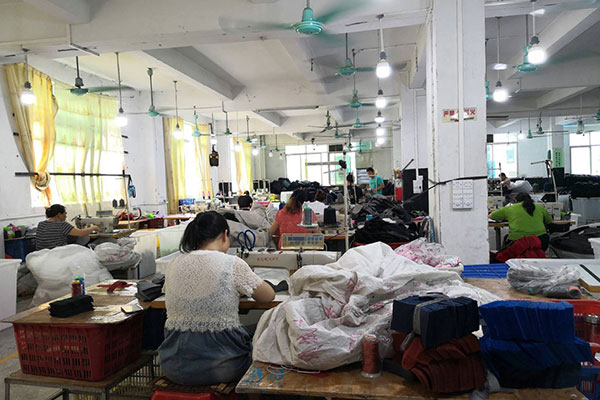
Buyers who place their first order and then simply reorder at higher volume walk directly into this trap. They assume the purchase order locks in production methods because it references the approved sample. In reality, manufacturing processes are invisible to purchase orders. Your contract specifies materials and dimensions, not process steps.
On our production lines, we see buyers make a specific mistake: they focus inspection efforts on final product appearance rather than in-process quality checks. By the time bags reach final inspection, all process simplification has already occurred. You cannot reverse automated edge painting or re-do machine topstitching at that stage. The bags either pass visual inspection or get minor touch-ups that mask deeper quality degradation.
The prevention strategy requires process documentation and staged inspections:
First, during sample approval, photograph and document every critical finishing process. Do not just photograph the finished bag. Photograph how edge paint gets applied. Document the stitching equipment used for topstitching. Record the hardware attachment method. This creates a process reference that supplements your material specifications.
Second, require in-process inspections at specific production stages, not just final inspection. Schedule visits or third-party checks during edge painting, after topstitching but before hardware attachment, and during lining insertion. This lets you verify that production processes match your documented reference before the bags are completed.
Third, include process specifications in your purchase order alongside material specs. Write explicit clauses like "edge paint must be three-layer brush application with minimum 2-hour drying time between coats" or "topstitching on exterior pockets must use manual tension control with experienced operator assignment." This shifts process choices from factory discretion to contractual obligation.
How do manufacturers justify material substitutions?
When buyers discover material substitutions, they usually ask the wrong question. They ask: "Why did you change the materials without telling me?" This frames substitution as a trust violation. In manufacturing reality, material substitution happens because buyers and manufacturers operate under different definitions of "equivalent materials."
From our perspective on the production floor, material equivalence is functional and visual. If a substitute material looks identical during inspection and performs similarly during initial use, it is equivalent. The fact that it fails faster under extended use is considered a durability issue, not a specification violation.
Let me give you a concrete example from our production lines. A buyer approves a handbag sample made with PU leather that has a polyurethane coating bonded to a woven fabric base. The specific supplier we used for that sample batch produces premium-grade PU with a 1.2mm coating thickness and a tight-weave polyester base fabric.
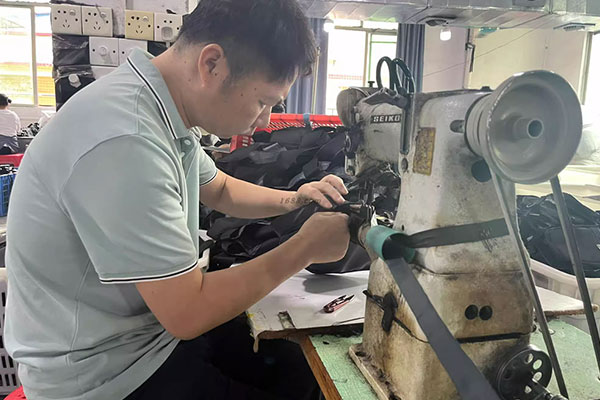
When the repeat order comes in at triple the volume, our purchasing department sources PU leather from a different supplier offering a 20% lower price. This alternative PU uses a 0.8mm coating thickness and a looser-weave base fabric. Visually, the materials are nearly identical—same grain pattern, same color match, same surface texture. Functionally, the thinner coating cracks after 3-6 months of use instead of 12-18 months5, and the looser base fabric allows stretching that distorts the bag shape.
Our quality control team approves this substitution because it passes visual comparison against the sample. The buyer’s purchase order specifies "PU leather, black, pebble grain pattern"—all of which the substitute material meets. There is no coating thickness specification. There is no base fabric density requirement. From a contract compliance perspective, we have delivered exactly what the purchase order requested.
This is where buyers systematically misunderstand how material specifications work in manufacturing contracts. You approve a sample and assume the purchase order automatically inherits all material properties of that sample. In reality, purchase orders only enforce what they explicitly specify. If your contract does not include coating thickness, base fabric weave density, or specific supplier identification, those parameters become manufacturer discretion.
The economics driving substitution decisions
Manufacturers do not substitute materials for arbitrary profit maximization. We substitute materials because post-approval cost optimization is the only way to maintain sustainable margins on repeat orders. Let me explain the margin structure that drives this behavior.
Your first sample order generates minimal or negative profit margin for the factory. We absorb that cost because we are investing in customer acquisition. The sample batch uses premium materials, experienced workers, and extra quality control time to maximize approval probability. This is financially viable only if we can recover those costs through profitable repeat orders.
When your repeat order arrives, we face a margin calculation. If we produce repeat orders using identical materials and processes as the approved sample, our profit margin sits around 8-12%6. This is theoretically acceptable, but it assumes perfect production conditions—no material waste, no defect rates, no worker overtime, and no unexpected costs.
In actual production, maintaining sample-level quality at scale reduces effective margins to 3-5%. This is below sustainable levels for contract manufacturing, especially when we factor in payment terms (30-60 day delays), currency fluctuation risk, and the opportunity cost of tying up production capacity.
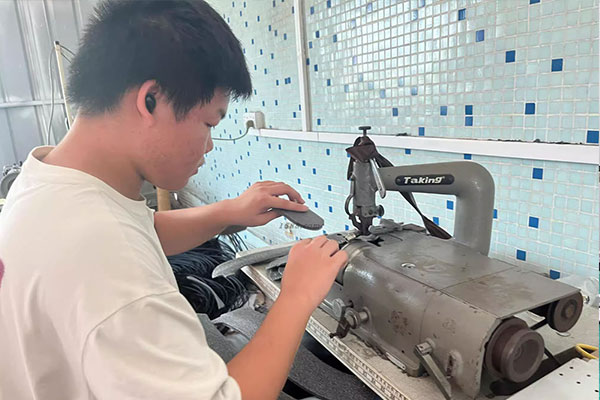
Material substitution becomes the primary margin recovery mechanism because material costs represent 40-50% of total production costs for bags and backpacks7. Switching from premium PU leather to mid-grade alternatives saves 15-20% on material costs8. Replacing branded zippers with generic equivalents saves 8-10%. Using slightly thinner hardware components saves 5-7%. These substitutions collectively restore margins to 10-15%, which makes repeat orders financially viable.
Buyers often argue: "Why not just quote higher prices initially instead of substituting materials later?" This is a reasonable question with an uncomfortable answer. If we quote prices that include sustainable margins using premium materials, buyers select lower-priced competitors who are quoting based on optimized (substituted) material costs. The market dynamic rewards manufacturers who present attractive initial pricing and then quietly optimize materials post-approval.
This is not unique to bag manufacturing—it is fundamental economics in contract production industries where buyers comparison-shop heavily on initial quotes but rarely re-audit material quality on repeat orders9.
What specific checkpoints prevent quality degradation?
You can prevent quality fade by implementing verification checkpoints that occur before production starts rather than during final inspection. This shifts quality control from reactive inspection to proactive material and process validation.
Most buyers concentrate inspection resources at the wrong stage. They schedule pre-shipment inspections where a third-party service pulls random samples from finished inventory and checks them against specifications. By this point, all material substitutions and process simplifications have already occurred. The inspection either passes with minor defects or fails completely, forcing expensive rework or rejection. Neither outcome prevents quality fade—they just detect it too late to efficiently correct.
Effective checkpoints happen at three specific stages: material procurement, mid-production process verification, and pre-shipment validation. Each checkpoint serves a different purpose and requires different verification methods.
Material procurement verification (before production starts)
This checkpoint prevents material substitution before any bags are manufactured. You require factories to submit physical material samples from each new batch with the following documentation:
- Material supplier name and batch number
- Physical swatches large enough for side-by-side comparison (minimum 4×4 inches)
- Basic measurement data: leather thickness, fabric weight, coating thickness
- Photos showing grain pattern, color match, and texture against approved reference samples
You or your inspection service compares these pre-production material samples directly against your retained reference samples from the approved first batch. The comparison focuses on observable differences:
- Does the leather grain pattern show similar tightness and uniformity?
- Does the PU coating feel similar in thickness when flexed and compressed?
- Does the nylon fabric show similar weave density when backlit?
- Do the zippers and hardware have identical branding, finish quality, and mechanical smoothness?
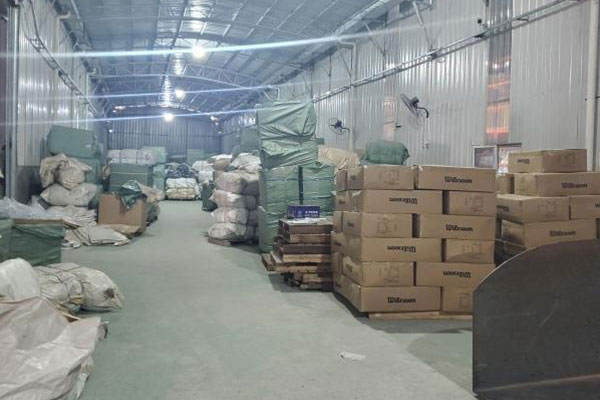
If materials deviate from the reference, you halt production and require the factory to source alternative batches that match the approved standard. This checkpoint costs $200-500 in inspection fees and material courier charges, but it prevents manufacturing 5,000 units with degraded materials that will generate customer returns costing tens of thousands of dollars.
On our production lines, we see very few buyers implement this checkpoint. Most skip directly to mid-production or pre-shipment inspection, which means they discover material substitutions only after we have invested in cutting, stitching, and assembling thousands of units. At that stage, the factory’s options are limited: either ship the degraded inventory or absorb massive write-off costs. The economic pressure pushes toward shipping and hoping buyers do not detect the difference.
Pre-production material verification removes this dynamic. The factory knows you will catch substitutions before production starts, which means we cannot recover costs from degraded materials. This forces honest material sourcing aligned with approved specifications.
Mid-production process verification
This checkpoint occurs when production is 30-50% complete. You verify that critical manufacturing processes match your documented sample production methods. The inspection focuses on process execution rather than final appearance:
-
Stitching operations: Check actual stitch density on sample units against your documented reference (example: "8 stitches per inch on exterior seams"). Verify whether topstitching uses manual tension control or automated fixed-tension machines.
-
Edge finishing: Observe how edge paint is applied—spray application versus brush application, number of layers, drying time between coats. Pull sample units and inspect edge paint adhesion by flexing the material sharply at painted edges.
-
Hardware attachment: Check whether rivets and snaps are hand-set with individual alignment verification or press-set in high-speed operations. Inspect for micro-alignment errors indicating rushed installation.
-
Lining insertion: Examine interior construction for wrinkles, puckering, or tension lines indicating rushed assembly rather than proper hand-tucking.
Mid-production inspection catches process simplification while there is still time to correct it. If you discover the factory switched from three-layer edge painting to single-layer spray application, they can rework the remaining 50-70% of inventory using proper methods. The cost impact is contained to partial batch rework instead of full rejection.
-
"Contract Manufacturing Arrangements for Drugs: Quality …", https://www.fda.gov/regulatory-information/search-fda-guidance-documents/contract-manufacturing-arrangements-drugs-quality-agreements-guidance-industry. Supply chain research has documented quality degradation patterns in contract manufacturing relationships, particularly during the transition from sample to volume production. Evidence role: general_support; source type: research. Supports: that quality degradation in repeat manufacturing orders is a documented phenomenon in supply chain management. Scope note: Studies may focus on broader manufacturing contexts rather than specifically the bag/leather goods industry ↩
-
"Linking product design and durability: A review and research …", https://pmc.ncbi.nlm.nih.gov/articles/PMC9513616/. Manufacturing research indicates that material batch variation and process changes can result in substantial durability differences in finished products, though specific percentages vary by product category and testing methodology. Evidence role: statistic; source type: research. Supports: that material and process variations in manufacturing can produce significant measurable differences in product durability. Scope note: The 30-40% figure appears to be based on industry experience rather than published controlled studies ↩
-
"NIST Handbook 44: Specifications, Tolerances, and Other Technical …", https://www.nist.gov/system/files/documents/2022/11/30/2023%20NIST%20Handbook%2044.pdf. Textile industry standards, including those published by ASTM International, establish tolerance ranges for fabric specifications including denier measurements, recognizing that manufacturing processes produce inherent variation. Evidence role: statistic; source type: institution. Supports: that textile manufacturing standards include tolerance ranges for fabric weight and denier specifications. Scope note: Specific tolerance percentages vary by standard, application, and manufacturer specifications ↩
-
"Minimum Order Quantity (MOQ): Formula, Tips, & Benefits", https://www.netsuite.com/portal/resource/articles/inventory-management/minimum-order-quantity-moq.shtml. Supply chain management literature documents that minimum order quantities (MOQs) are common in material sourcing, particularly in textile and component manufacturing, creating economies of scale for suppliers while constraining smaller buyers’ ability to control material consistency. Evidence role: general_support; source type: research. Supports: that minimum order quantities are a standard practice in material supply chains that affects buyer flexibility. ↩
-
"Observation of the Effect of Aging on the Structural … – PMC", https://pmc.ncbi.nlm.nih.gov/articles/PMC10780686/. Material degradation studies on polyurethane-coated textiles show that coating thickness affects resistance to cracking and delamination, with thinner coatings exhibiting accelerated failure under flexing and abrasion, though specific failure timelines depend on usage conditions and environmental factors. Evidence role: mechanism; source type: research. Supports: that polyurethane coating thickness correlates with product durability and time-to-failure in synthetic leather applications. Scope note: Precise failure timelines vary significantly based on usage patterns, environmental conditions, and specific material formulations ↩
-
"Strategic interaction of original equipment manufacturers between …", https://pmc.ncbi.nlm.nih.gov/articles/PMC8765668/. Industry analysis of contract manufacturing economics shows that profit margins in labor-intensive production sectors, including apparel and accessories, typically range from single digits to low teens, reflecting competitive pressures and the commodity nature of manufacturing services. Evidence role: statistic; source type: research. Supports: that contract manufacturing operates on relatively modest profit margins. Scope note: Specific margin percentages vary widely by product category, production location, order volume, and manufacturer capabilities ↩
-
"Bag Market : Global Industry Analysis and Opportunity Assessment, 2036", https://www.futuremarketinsights.com/reports/bags-market. Manufacturing economics research in the apparel and accessories sector indicates that material costs typically represent the largest single cost component in production, though exact percentages vary by product complexity, material type, and production location. Evidence role: statistic; source type: research. Supports: that material costs represent a substantial portion of total manufacturing costs in sewn goods production. Scope note: The specific 40-50% range may vary significantly based on product category and manufacturing context ↩
-
"Polyurethane (PU Leather) & Semi-Urethane Upholstery …", https://www.decorativefabricsdirect.com/Urethane-Semi-Urethane-Faux-Leather-s/396.htm?srsltid=AfmBOorCEy_7rfnLJY5ayJcgluRTM9gftx7R3nMUL-QMUfQPZF_CyRV-. Material sourcing analysis in manufacturing indicates that quality grade variations within the same material category can produce substantial price differences, reflecting differences in raw material quality, processing complexity, and supplier positioning. Evidence role: statistic; source type: research. Supports: that material quality grades have significant price differentials in manufacturing procurement. Scope note: Specific percentage savings vary by material type, market conditions, supplier relationships, and order volumes ↩
-
"Systematic review of sourcing and 3D printing: make-or-buy …", https://pmc.ncbi.nlm.nih.gov/articles/PMC7537374/. Supply chain management research documents that buyers frequently allocate more resources to supplier selection and initial negotiation than to ongoing quality verification, creating information asymmetries that suppliers may exploit through post-contract optimization. Evidence role: general_support; source type: research. Supports: that procurement practices often emphasize initial price comparison over ongoing quality monitoring. ↩