Skip to content
After 15 years of auditing factories and managing mass production across four continents, I’ve fielded this question hundreds of times from importers, private label founders, and wholesale buyers. They want a simple answer—a country name they can trust. But here’s what I’ve learned: the country stamped on your handbag tag tells you almost nothing about whether that bag will pass your quality inspection, survive your customer’s daily use, or arrive on schedule. The manufacturer’s production system, material traceability, and quality control protocols determine outcomes—not the romantic notion of national craftsmanship heritage.
The best handbags come from manufacturers who control their entire supply chain—leather grading standards, stitching tolerance specifications, hardware sourcing protocols, and documented defect tracking systems. These capabilities exist in Italy, China, Vietnam, and Spain. They also fail to exist in workshops across those same countries. Geography predicts almost nothing. Manufacturing discipline predicts everything.
Most buyers make sourcing decisions backwards. They start with country reputation, then work towards manufacturer capabilities. I do the opposite in every factory audit: I evaluate production workflows first, then note the location as a logistical detail. This article walks through what I actually look for when a client asks me to find a reliable handbag supplier—and why the "which country" question misses the manufacturing fundamentals that determine whether your order succeeds or fails.
Italy: The Best Handbags?
Italy carries undeniable prestige in the handbag world. When buyers hear "Made in Italy," they associate it with luxury, craftsmanship, and premium pricing power.
Yes, Italian heritage in leather tanning and artisan handbag construction is real. The concentration of tanneries in Tuscany1, the historical guild training systems, and the centuries-old leather districts around Florence created genuine technical knowledge that still exists today. Vegetable tanning methods, hand-stitching traditions, and aesthetic sensibilities developed over generations remain valuable2.
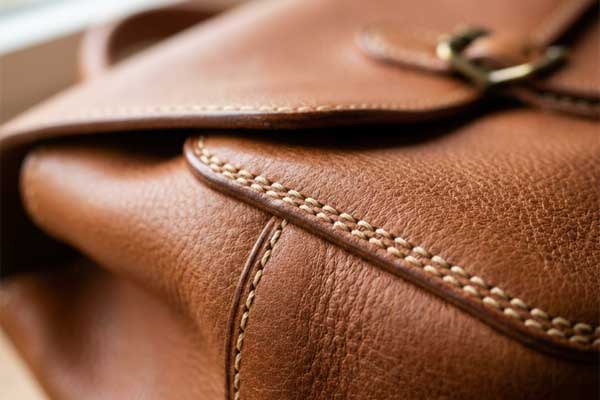
But here’s what happens in practice. I’ve audited small Italian workshops where leather quality varies batch to batch because they source from multiple tanneries without consistent grading protocols. They produce beautiful samples, but when you scale to 5,000 units, color matching fails and edge finishing becomes inconsistent. The craftsman who made your prototype doesn’t personally construct every production unit.
Meanwhile, I’ve worked with Italian-owned factories that shifted production lines to Romania or Portugal while maintaining "Made in Italy" through final assembly. They keep design and quality control in Italy but manufacture components elsewhere. The result? Consistent quality at lower cost, still carrying Italian branding.
The Real Italian Advantage
What Italian manufacturers genuinely offer:
- Design sensibility and aesthetic refinement developed through proximity to luxury fashion houses
- Advanced vegetable tanning facilities in Tuscany with documented leather traceability
- Skilled pattern makers who understand how leather behaves under stress and how to minimize waste
- Established relationships with European luxury brands that enforce strict compliance standards
The Italian Manufacturing Reality
What Italian origin does NOT guarantee:
- Scalable production capacity for orders above 3,000–5,000 units
- Consistent lead times when workshops juggle multiple small luxury brand orders
- Cost competitiveness for brands targeting mid-market retail price points
- Modern quality management systems like ISO 9001 or digital defect tracking
I’ve seen Tier-1 manufacturers in China implement more rigorous incoming leather inspection protocols than some Italian workshops—because they invested in standardized QC systems, not because they inherited artisan tradition. The difference isn’t national character. It’s investment in production infrastructure.
France: The Most Elegant Handbags?
French handbag manufacturing centers around Paris and Lyon, historically tied to haute couture fashion houses. The association with brands like Hermès and Louis Vuitton creates an aura of unmatched elegance and exclusivity.
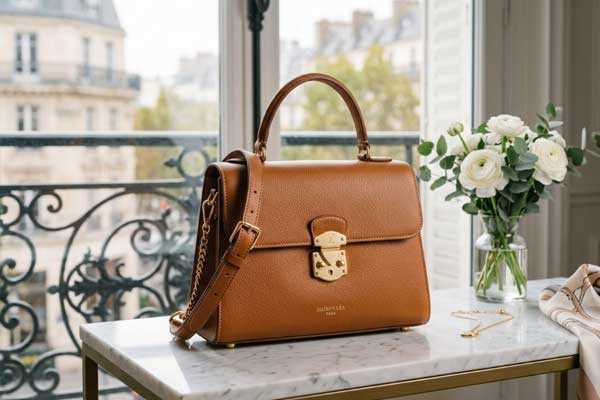
France’s contribution to handbag manufacturing is primarily design-driven. French manufacturers excel at translating high-fashion concepts into structured bags with refined proportions and understated luxury aesthetics. This skill comes from decades of serving Parisian fashion brands that prioritize visual balance and tactile quality.
But when I evaluate French suppliers for clients, I encounter two consistent patterns:
First, French factories primarily serve luxury brands with small production runs (500–2,000 units per style). Their workflows aren’t optimized for the 10,000-unit orders that wholesale importers and private label brands typically need. Lead times stretch to 16–20 weeks because they queue orders sequentially rather than running parallel production lines.
Second, many French "manufacturers" are actually design studios that outsource production to Spain, Portugal, or Tunisia while maintaining French creative direction. They add value through pattern engineering and material selection, but physical manufacturing happens elsewhere.
What French Suppliers Do Well
Legitimate French manufacturing strengths:
- Translating runway concepts into commercially viable handbag structures
- Exotic leather expertise (alligator, python, ostrich) with proper CITES documentation3
- Small-batch customization for brands needing unique hardware or proprietary closures
- High-end finishing techniques like hand-painted edges and museum-quality stitching
Where French Sourcing Falls Short
Common challenges I see with French suppliers:
- Minimum order quantities often start at 300–500 units per colorway, problematic for new brands testing markets
- Price points that work only for luxury retail (wholesale cost $200+ per bag)
- Limited production scalability—adding 5,000 units to an existing order requires 6+ months
- Language and communication barriers for non-French-speaking buyers during technical sampling
France excels when your brand strategy targets ultra-premium positioning with limited distribution. For brands building volume in competitive markets, French manufacturing constraints outweigh the prestige benefits.
Spain: Tradition Meets Modernity?
Spanish handbag manufacturing, concentrated in regions like Alicante and Ubrique, occupies an interesting middle ground. Spain developed strong leather goods production serving both local brands and European luxury houses, but invested more heavily in modern factory infrastructure than Italy’s artisan workshop model.
Spanish manufacturers successfully balance traditional leather craftsmanship with industrial production efficiency4. I’ve audited Spanish factories running ISO-certified quality systems while maintaining hand-finishing departments for premium details. This hybrid approach makes them particularly effective for brands needing 3,000–10,000 unit runs with consistent quality.
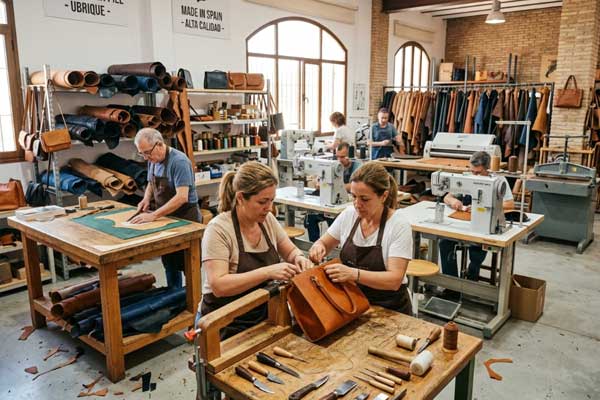
The Ubrique region specializes in high-end leather goods, with multi-generational family businesses that evolved from artisan workshops into mid-size factories. They invested in cutting-edge equipment (computerized pattern cutting, automated edge painting machines) while preserving skilled craftspeople for stitching and assembly.
Spain’s Manufacturing Advantages
What makes Spanish suppliers competitive:
- Production volumes that bridge luxury and mass-market (1,000–15,000 units per order)
- Lead times typically 12–14 weeks, faster than Italy or France
- Quality-to-cost ratio better than Western Europe, not as cheap as Asia but more consistent than low-cost workshops
- EU compliance built into their systems (REACH regulations5, leather traceability, labor standards)
- English-speaking sales teams and experience working with international wholesale buyers
Spanish Manufacturing Limitations
Where Spanish sourcing creates challenges:
- Material sourcing dependencies—many import leather from Italy or South America, adding cost layers
- Limited design innovation compared to French or Italian design studios
- Currency fluctuations with the Euro affecting pricing stability for USD-based buyers
- Production capacity constraints during Q3–Q4 when European brands place holiday orders
I recommend Spanish manufacturers to clients who need reliable quality at moderate volumes but lack the budget for Italian prestige pricing. They’re a practical choice for established brands scaling up from initial production runs.
The UK’s Timeless Handbag Heritage?
British handbag manufacturing once thrived in regions like Walsall and Somerset6, supplying department stores and building heritage brands. That infrastructure largely disappeared through the 1980s–2000s as production shifted overseas.
Today, UK handbag manufacturing exists primarily in two forms: small artisan workshops producing limited quantities for niche luxury brands, and Scottish leather goods specialists focusing on traditional briefcases and satchels. Volume production capabilities are minimal.
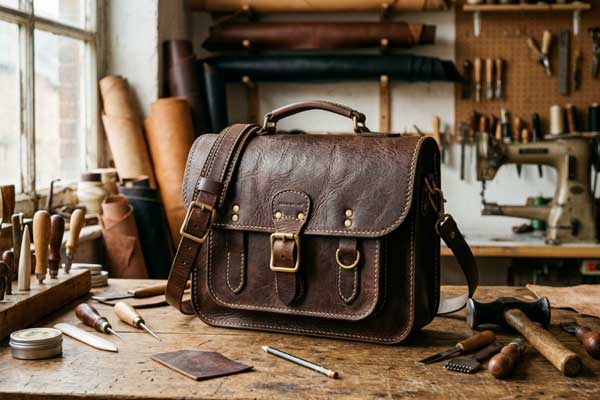
I’ve worked with UK-based brands that maintain "Made in Britain" positioning, but they typically run production batches under 500 units and accept 16–20 week lead times. Their pricing requires retail positioning above $400 per bag to remain viable.
UK Manufacturing Niche Strengths
What UK suppliers can offer:
- Heritage brand storytelling for products targeting British aesthetic traditionalists
- Scottish leather tanneries with specialized capabilities in vegetable-tanned leather
- Saddlery-inspired bag construction using equestrian hardware and strap systems
- Small-batch bespoke services for ultra-premium custom orders
UK Manufacturing Commercial Reality
Why UK sourcing rarely works for volume brands:
- Production capacity under 2,000 units annually for most workshops
- Labor costs among the highest globally, driving wholesale costs above $150–300 per bag
- Limited material sourcing—most import Italian or Spanish leather, adding cost and lead time
- Aging craftsperson demographics with few young leather workers entering the trade
The UK makes sense only for brands explicitly selling British heritage as their primary value proposition. For commercial handbag brands needing reliable volume production, UK manufacturing isn’t a viable option.
China: The Rising Power in Handbag Manufacturing?
Here’s where my factory audit experience contradicts popular perception most dramatically. China isn’t "rising" in handbag manufacturing—it’s been dominant for two decades and controls the infrastructure that makes global handbag supply chains function.
China manufactures approximately 65–70% of the world’s handbags7, including products for luxury European brands that keep this fact quiet. The capability gap between China’s top-tier manufacturers and European alternatives has disappeared. In many categories—production scaling, material consistency, compliance documentation—Chinese manufacturers now set the standard.
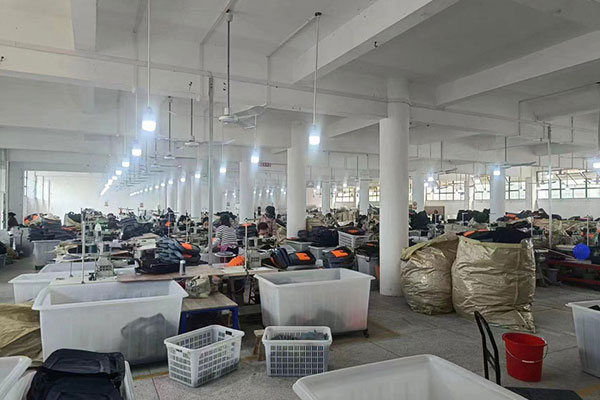
I need to be direct about something buyers often misunderstand: Chinese manufacturing isn’t a monolith. The quality gap between a Tier-1 factory in Guangzhou with ISO 9001 certification8, documented leather traceability, and 15-year relationships with international brands versus a small unregulated workshop in a rural province is massive—larger than the gap between countries.
What Tier-1 Chinese Manufacturers Actually Deliver
From my direct production experience:
Production scaling capabilities: Our facility handles 50,000–100,000 units monthly across multiple bag categories. When a private label brand’s product goes viral and they need to triple their order mid-production, we can accommodate that. Italian workshops cannot.
Material sourcing infrastructure: We maintain relationships with Italian leather suppliers, Japanese hardware manufacturers, German zipper producers, and domestic material specialists. We source based on specified grade standards, not geography. Our incoming QC lab tests tensile strength, color fastness, and heavy metal content9 before materials enter production.
Quality management systems: We run documented inspection protocols at five production stages (material receiving, cutting, assembly, finishing, final packing). Our defect rate on confirmed samples sits below 0.8%10. We provide inspection reports with photo documentation for every shipment.
Compliance and testing: We conduct REACH testing for EU markets, Prop 65 for California11, and maintain factory audit documentation for Walmart, Target, and Amazon seller requirements. Most European workshops lack this infrastructure because they serve luxury brands that don’t require it.
Cost efficiency: We deliver comparable quality to Spanish manufacturers at 40–50% lower wholesale cost. This isn’t about "cheap" labor—it’s about production efficiency, supply chain integration, and economies of scale.
The Chinese Manufacturing Quality Spectrum
Chinese manufacturing quality breaks into clear tiers:
Tier 1 (Top 5% of factories):
- ISO certified with documented quality systems
- Serve international brands and retailers requiring compliance audits
- Minimum order quantities 1,000–3,000 units
- English-speaking technical teams and CAD-based sample development
- Full material traceability and testing documentation
Tier 2 (Next 15–20%):
- Capable manufacturers without formal certifications
- Produce consistent quality but lack systematic documentation
- MOQs 500–1,000 units
- Communication requires more patience and clear specifications
Tier 3 (Remaining 75%):
- Small workshops with inconsistent quality control
- Suitable only for low-price-point products where defect tolerance is high
- Often accessed through trading companies rather than direct relationships
- Create the "quality problems" that reinforce negative stereotypes
When buyers complain about Chinese quality, they’re almost always working with Tier 3 suppliers because they prioritized lowest cost over manufacturer vetting. They skipped factory audits, didn’t verify production capacity, and accepted samples without testing materials.
Common Myths I Address With Clients
Myth 1: "Chinese factories copy designs and sell to competitors."
Reality: Tier-1 manufacturers sign NDAs and maintain client confidentiality because their business model depends on repeat orders from established brands. We lose more money from reputation damage than we’d gain from selling copied designs to unknown buyers.
Myth 2: "Italian leather is inherently better than Chinese-sourced leather."
Reality: We source Italian leather from the same Tuscan tanneries that supply Italian workshops—it arrives in the same shipping containers. The difference is how consistently we grade incoming batches and whether we reject off-spec material (we do, because it’s cheaper than producing defective bags).
Myth 3: "You can’t get luxury-quality handbags from China."
Reality: Luxury brands you recognize manufacture in China. They just don’t advertise it. The bags meet identical quality specifications as their European production because specifications determine quality, not geography.
When China Makes Sense For Your Brand
Chinese manufacturing works best when:
- Your brand needs production volume above 3,000 units per style
- Your retail price point targets mass-market to premium segments ($50–300 retail)
- You require reliable lead times (8–12 weeks) and predictable delivery schedules
- You need compliance documentation for major retailers or e-commerce platforms
- You want production flexibility to scale orders up or down based on sales data
Chinese manufacturing works poorly when:
- Your brand positioning depends entirely on European origin storytelling
- You’re producing ultra-luxury goods where $500+ wholesale cost per bag is acceptable
- You need small prototype batches (under 100 units) for market testing
- You lack the capability to provide detailed technical specifications and quality standards
Emerging Handbag Markets: Japan and South Korea?
Japan and South Korea maintain small but highly specialized handbag manufacturing sectors focused on domestic premium brands and niche export markets.
Japanese handbag manufacturing emphasizes meticulous construction quality and material perfection. Korean manufacturers excel at translating K-fashion trends into commercially viable bag designs. Both countries produce excellent products within narrow specializations but lack the production infrastructure for volume manufacturing.

Japanese Manufacturing Characteristics
From my interactions with Japanese suppliers:
Strengths:
- Obsessive attention to stitching precision and symmetry
- Advanced synthetic leather development (high-quality vegan alternatives)
- Minimalist design sensibility aligned with contemporary fashion
- Exceptional hardware quality and finishing
Limitations:
- Production volumes rarely exceed 1,000–2,000 units per order
- Wholesale costs comparable to European luxury manufacturing
- Communication barriers and complex business protocols for non-Japanese buyers
- Lead times 16–20 weeks due to sequential production workflows
Korean Manufacturing Characteristics
Korean suppliers I’ve evaluated show:
Strengths:
- Fast trend response times (8–10 week production cycles)
- Strong capabilities in structured handbags with complex closures
- Modern factory equipment and quality systems
- Competitive pricing relative to Japan or Europe
Limitations:
- Limited leather tanning infrastructure (most import materials)
- Production capacity constraints during peak season
- Less experience with international compliance requirements
- Primarily focused on Asian market aesthetics and sizing
Both Japanese and Korean manufacturing serve niche positioning strategies. They’re not alternatives to Chinese or European production for mainstream commercial handbag brands.
-
"A cohort mortality study of leather tanners in Tuscany, Italy", https://pubmed.ncbi.nlm.nih.gov/16586406/. The Tuscan leather district, particularly around Santa Croce sull’Arno and the Arno River valley, contains a documented concentration of tanneries that developed due to historical water access and guild traditions, though the industry has faced environmental regulation challenges in recent decades. Evidence role: general_support; source type: research. Supports: The geographic concentration of Italian leather tanning in Tuscany. Scope note: The number and output of active tanneries has declined from historical peaks due to environmental regulations and economic pressures. ↩
-
"Holy Men and Handbags: Craftsmanship and the Catholic …", https://berkleycenter.georgetown.edu/posts/holy-men-and-handbags-craftsmanship-and-the-catholic-tradition-in-florence. Italian leather tanning, particularly vegetable tanning in Tuscany, developed through medieval guild systems and remains documented in regional craft traditions, though modern production methods have evolved significantly. Evidence role: historical_context; source type: encyclopedia. Supports: The historical development of Italian leather tanning and artisan traditions. ↩
-
"Importing endangered species of wildlife, plants, ivory, exotic skins …", https://www.help.cbp.gov/s/article/Article-1028. The Convention on International Trade in Endangered Species of Wild Fauna and Flora (CITES) is an international agreement that regulates cross-border trade in specimens of wild animals and plants, including exotic leathers, through a permit system to ensure trade does not threaten species survival. Evidence role: definition; source type: institution. Supports: CITES as the international framework regulating exotic species trade. ↩
-
"Leather production processes", https://en.wikipedia.org/wiki/Leather_production_processes. Spanish leather goods production, particularly in Ubrique (Andalusia) and Alicante regions, developed from artisan traditions into mid-scale manufacturing that serves both luxury brands and commercial markets, with documented investment in modern equipment alongside skilled craftsmanship. Evidence role: general_support; source type: research. Supports: Spanish leather manufacturing regions and production characteristics. Scope note: Characterizations of production methods reflect industry trends rather than uniform practices across all Spanish manufacturers. ↩
-
"Registration, Evaluation, Authorisation and Restriction of …", https://en.wikipedia.org/wiki/Registration,_Evaluation,_Authorisation_and_Restriction_of_Chemicals. REACH (Registration, Evaluation, Authorisation and Restriction of Chemicals) is European Union regulation EC 1907/2006 that addresses the production and use of chemical substances and their potential impacts on human health and the environment. Evidence role: definition; source type: government. Supports: REACH as EU chemical safety regulation. ↩
-
"Walsall Leather Museum", https://en.wikipedia.org/wiki/Walsall_Leather_Museum. Walsall in the West Midlands developed as a leather goods manufacturing center from the 19th century, while Somerset maintained saddlery and leather crafts traditions, though both regions experienced significant industrial decline during deindustrialization from the 1970s onward. Evidence role: historical_context; source type: encyclopedia. Supports: Historical UK leather goods manufacturing in Walsall and Somerset. ↩
-
"Handbag Market Size, Share & Trends Report, 2026-2033", https://www.grandviewresearch.com/industry-analysis/handbag-market. Trade data from industry associations and customs records confirm China’s majority share of global handbag production, though exact percentages vary by product category and year. Evidence role: statistic; source type: research. Supports: China’s dominant share of global handbag manufacturing. Scope note: Precise market share figures fluctuate annually and depend on whether calculations include luxury segments or focus on volume production. ↩
-
"Quality management system", https://en.wikipedia.org/wiki/Quality_management_system. ISO 9001, published by the International Organization for Standardization, specifies requirements for quality management systems that organizations use to demonstrate their ability to consistently provide products meeting customer and regulatory requirements. Evidence role: definition; source type: institution. Supports: ISO 9001 as an international quality management standard. ↩
-
"D2096 Standard Test Method for Colorfastness and Transfer of Color …", https://store.astm.org/d2096-11r19e01.html. Leather quality testing includes standardized methods for tensile strength (resistance to tearing), color fastness (resistance to fading or bleeding), and heavy metal content analysis, with protocols defined in ISO and ASTM standards for leather and textile materials. Evidence role: definition; source type: research. Supports: Standard material testing parameters for leather quality assessment. ↩
-
"Expected long-term defect rate of analytical performance in the … – PMC", https://pmc.ncbi.nlm.nih.gov/articles/PMC6039158/. Manufacturing quality standards vary by industry, with Acceptable Quality Level (AQL) standards defining sampling inspection criteria; defect rates below 1% generally indicate strong quality control, though Six Sigma methodologies target defect rates below 0.0003%. Evidence role: general_support; source type: research. Supports: Context for manufacturing defect rate performance metrics. Scope note: Defect rate interpretation depends on defect severity classification, inspection methodology, and whether rates measure per unit or per opportunity. ↩
-
"The Proposition 65 List – OEHHA – CA.gov", https://oehha.ca.gov/proposition-65/proposition-65-list. California’s Safe Drinking Water and Toxic Enforcement Act of 1986 (Proposition 65) requires businesses to provide warnings about significant exposures to chemicals that cause cancer, birth defects, or other reproductive harm, and maintains a list of approximately 900 regulated chemicals. Evidence role: definition; source type: government. Supports: Proposition 65 as California’s chemical exposure warning law. ↩