Skip to content
Every week, I open emails from entrepreneurs who’ve spent months perfecting their handbag designs—only to discover their beautiful mockups can’t actually be produced. They’ve invested in 3D renderings, built elaborate branding decks, and sometimes even pre-sold inventory on Kickstarter. But when they approach manufacturers, they hear the same confusing responses: "This design needs structural adjustments," "The MOQ is 500 units," or "This material won’t work for this construction method." Most assume these are negotiating tactics or signs of an incompetent factory. In reality, these are the first signals that their design file isn’t production-ready—and without understanding the gap between concept and manufacturing reality, their entire launch timeline collapses.
Handbag manufacturing is not a simple handoff from design to production. It’s an engineering negotiation between your creative vision, material physics, economic viability, and delivery logistics. The factories that succeed in helping you aren’t the ones who say "yes" to everything—they’re the ones who identify manufacturing conflicts early and guide you toward designs that can actually ship. Understanding this process before you commit to sampling or tooling is the difference between launching on schedule and burning through your startup capital on unusable prototypes.
I’ve managed hundreds of custom orders at our OEM facility, and the pattern is consistent: clients who understand the manufacturing workflow before they finalize their designs cut their sampling cycles in half and avoid the most expensive mistakes. This guide walks you through the real decision points in handbag production—from why your design file needs validation before sampling, to how MOQ actually works, to what happens when you request "just a small material swap." These aren’t abstract manufacturing principles—they’re the specific breakdowns I see every month when well-intentioned founders hit production reality.
What Does "Production-Ready Design" Actually Mean?
Most first-time clients arrive with design files they believe are complete. They’ve worked with graphic designers or product design consultancies to create detailed technical flats, color palettes, and hardware specifications. The designs look professional. They assume the next step is simply finding a factory that can execute the vision.
A production-ready design isn’t just aesthetically complete—it’s structurally validated, material-tested, and cost-mapped to your target retail price and order volume. Until a design passes through manufacturing feasibility review, it remains a conceptual rendering that may or may not survive contact with physical production constraints.
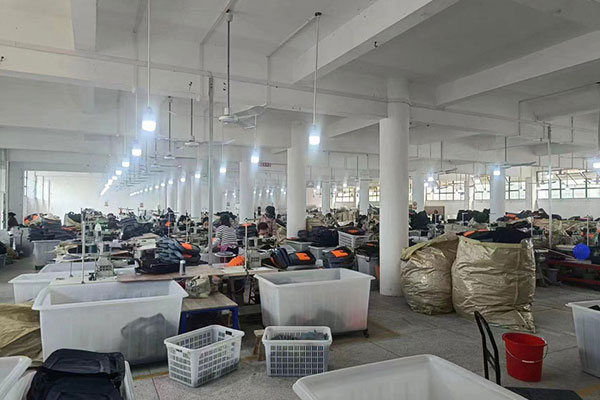
The gap between "design-ready" and "production-ready" is where most timelines derail. In our client consultations, we routinely encounter designs that specify hardware sizes incompatible with the chosen leather thickness, strap attachment points that create stress concentration failures, or closure mechanisms that require hand-finishing techniques incompatible with volume production. These aren’t problems because the factory lacks skill—they’re design-to-manufacturing conflicts that need resolution before sampling begins.
Why Design Files Alone Don’t Guarantee Manufacturability
When you send a design file to a manufacturer, you’re not providing construction blueprints—you’re providing visual intent. The actual construction methodology—how pieces are cut, in what sequence they’re assembled, which reinforcement layers are added, how edges are finished—requires translating your 2D rendering into a 3D structural object that withstands stress testing and repeated use.
I’ve seen beautifully rendered tote bags where the handles attach to a single layer of 1.2mm PU leather with no reinforcement gusset. The rendering looks elegant. But the moment you load 5kg of weight into that bag (standard stress testing for everyday totes1), the handle rips through the top panel within 30 seconds. The designer wasn’t wrong to envision clean attachment points—they simply didn’t account for the physics of tensile stress distribution2 across thin materials.
This is why we never proceed directly from design file to mass production. The sampling phase exists specifically to surface these conflicts. When a factory tells you "this design needs structural adjustments," they’re not critiquing your aesthetic—they’re identifying mechanical failures that will create warranty claims, customer returns, and brand damage if the design ships as-is.
Common Design Elements That Require Engineering Validation
| Design Feature | Manufacturing Reality Check | Common Resolution |
|---|---|---|
| Magnetic snap closures on soft leather | Magnets require rigid backing plates; soft leather collapses under magnetic pull | Add internal rigid stabilizer or switch to twist-lock closure |
| Ultra-thin minimalist straps (8mm width) | Narrow straps concentrate weight stress; high breakage risk under load | Increase to 12-15mm or add internal nylon webbing reinforcement |
| All-over printed patterns on PU leather | Printing requires specialized equipment; not all factories offer digital textile printing | Switch to screen-printed panels or sublimation-compatible synthetic materials |
| Complex multi-panel color blocking | Each color change requires separate cutting, increasing labor cost and error rate | Simplify to 2-3 color zones or accept higher unit cost for complexity |
| Antique brass hardware on pale-colored leather | Brass oxidizes and bleeds rust-colored stains into light leather over time3 | Use stainless steel hardware or seal brass with protective coating |
These aren’t theoretical edge cases—these are the top five design requests we receive that require immediate revision before sampling. Clients who understand these constraints upfront modify their designs before submitting them for quotation, dramatically reducing back-and-forth revision cycles.
What Actually Happens During Design Feasibility Review
When you submit a design to a professional OEM facility, the order management team (my role) conducts a multi-stage feasibility assessment before quoting. We’re evaluating:
-
Material compatibility: Can the specified material withstand the construction method? (For example, you can’t sew ultra-soft nappa leather with the same stitch density as structured Saffiano leather—the leather will tear along the seam line.)
-
Hardware availability: Are the specified buckles, zippers, and magnetic closures available from our hardware suppliers in your target finish and size? If not, what’s the lead time for custom hardware development?
-
Construction sequence: Can the bag be assembled using our existing sewing machines and tooling jigs, or does it require custom fixtures? (Complex curved seams often need custom pressing molds.)
-
Quality control testability: Can we test the finished product using standard protocols (weight stress testing, zipper cycle testing4, color fastness testing5), or does the design introduce untestable variables?
-
Cost-to-retail-price alignment: Based on your target retail price, does the material and construction complexity fit within the standard 4-5x factory cost markup retail brands typically use6? If your design requires $30 in materials and labor but your target retail price is $80, your margins won’t support wholesale distribution or marketing spend.
This review typically takes 2-3 business days. If we identify conflicts, we don’t simply reject the design—we propose engineering alternatives that preserve your aesthetic intent while solving the manufacturing constraint. For instance, if you’ve specified a closure mechanism that requires hand-stitching (incompatible with volume production), we’ll suggest a machine-compatible alternative closure that delivers the same user experience.
Design adjustments during this phase aren’t scope creep or factory limitations—they’re quality control and risk mitigation. Every modification we propose is rooted in preventing field failures, production defects, or cost overruns. Clients who treat this as a collaborative engineering process rather than a negotiation consistently launch faster and with fewer costly redesigns.
How Does MOQ (Minimum Order Quantity) Actually Work?
The most common question we receive from first-time clients is: "Can I start with 50 units to test the market?" The frustration is understandable—you want to validate demand before committing to large inventory. But when we respond with "Our MOQ is 500 units," it’s not arbitrary gatekeeping or a power play to extract larger orders.
MOQ is a material procurement threshold, not a factory preference. It exists because raw materials are sold in bulk lots, production line setup has fixed costs that must be amortized across the order volume, and quality control requires minimum batch sizes to ensure consistency.
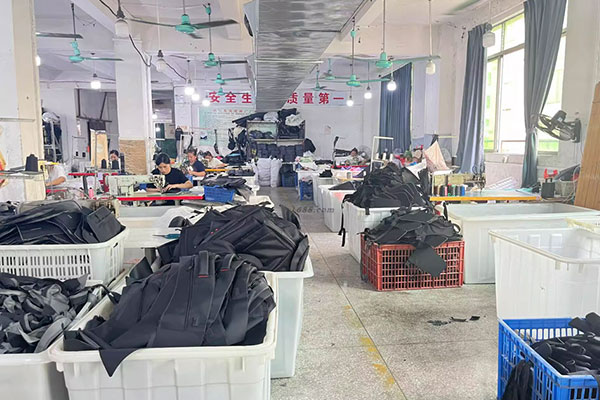
Understanding the economics behind MOQ helps you make smarter sourcing decisions. A factory willing to accept a 50-unit order is either charging you premium unit costs to absorb the waste and setup inefficiency, or they’re skipping critical quality control steps to make the economics work. Neither scenario serves your long-term brand integrity.
The Real Cost Drivers Behind MOQ Requirements
When you place an order for custom handbags, the factory doesn’t simply pull materials from shelf inventory. Every custom order requires procuring materials in manufacturer-specified minimum quantities:
-
Leather and synthetic materials: Genuine leather is sold in full hides (typically 4-6 square meters per hide)7. PU leather and canvas come in 50-100 meter rolls8. If your bag design requires 0.6 square meters of leather per unit and you order 50 bags, the factory must still purchase full hides—meaning significant material waste unless the excess can be used for other simultaneous orders.
-
Hardware components: Zippers, magnetic snaps, metal logo plates, and D-rings are ordered from specialized hardware suppliers in lots of 500-1,000 pieces minimum. A single custom metal logo plate typically requires a minimum stamping order of 500 units just to justify the mold setup cost.
-
Lining fabrics: Interior lining fabrics are sold in 50-meter rolls. If your bag requires 0.4 meters of lining per unit, a 50-unit order consumes only 20 meters—leaving 30 meters of dead inventory the factory must absorb or gamble on selling to future clients.
-
Packaging materials: Custom printed dust bags, rigid gift boxes, and branded tissue paper have their own MOQs from packaging suppliers—typically 500-1,000 units minimum9.
These aren’t negotiable supplier preferences—they’re how industrial material suppliers operate globally. A factory that agrees to a 50-unit order is either eating the waste cost (which they’ll pass back to you through inflated unit pricing) or they’re using leftover materials from previous orders (which creates color matching inconsistencies and material substitution risks).
Why Production Line Setup Creates Economic Thresholds
Beyond material procurement, every custom order requires production line configuration:
-
Pattern cutting setup: Your bag design must be converted into physical cutting patterns (templates for each material piece). These patterns are laid out on cutting tables, and workers manually cut fabric/leather using the templates. Smaller orders increase the setup-to-production-time ratio, driving up labor cost per unit.
-
Sewing machine configuration: Different bag designs require different sewing machine attachments, needle sizes, and thread tensions. Switching between products mid-production creates downtime and quality control disruption.
-
Quality control sampling: Our QC protocol requires inspecting 10% of every production batch10. On a 50-unit order, that’s only 5 bags—statistically insufficient to detect defect patterns. On a 500-unit order, we inspect 50 bags, which provides real quality data to catch systemic issues before the full batch ships.
-
Worker training and rhythm: Experienced sewers develop muscle memory for specific bag construction sequences. Smaller batches mean workers never achieve full production rhythm, increasing error rates and slowing output.
A 500-unit MOQ isn’t the factory demanding unnecessary volume—it’s the minimum batch size where material waste becomes acceptable, setup costs amortize efficiently, and quality control can function properly.
What Happens When Clients Insist on Sub-MOQ Orders
We occasionally accommodate sub-MOQ orders for long-term clients testing new product lines or for premium-priced luxury items where higher unit costs are acceptable. But these orders come with explicit trade-offs:
- Unit cost increases by 30-50%: All the fixed costs (material waste, setup labor, pattern development) are spread across fewer units.
- Extended lead times: Small orders are scheduled around larger production runs, creating unpredictable timelines.
- Limited customization options: We can only use materials already in stock from other orders, restricting color and texture choices.
- Higher defect tolerance: With statistically insignificant QC sample sizes, minor inconsistencies are harder to catch before shipping.
Clients who understand these trade-offs often choose to either increase their initial order volume or start with our stock designs (which carry no MOQ since materials are already procured and patterns are pre-developed). Both approaches are valid—the key is making informed decisions rather than assuming MOQ is arbitrary factory stubbornness.
Alternative Strategies When You Can’t Meet MOQ
If 500 units exceeds your cash flow capacity or market testing needs, here are practical alternatives we routinely discuss with clients:
| Strategy | How It Works | Best For |
|---|---|---|
| Stock design with custom branding | Choose from our existing product catalog; we add your custom logo/hang tag | E-commerce sellers validating new niches before custom development |
| Shared production runs | Multiple clients order the same base design with different branding; costs are shared | Startups with limited budgets willing to sacrifice exclusivity |
| Phased production | Order 250 units now with commitment to 250 units within 6 months | Brands with strong pre-orders or retail distribution agreements |
| Premium pricing model | Accept higher unit costs for sub-MOQ; position product as limited-edition | Luxury or artisan brands targeting high-margin customers |
| Domestic small-batch manufacturers | Work with local contract manufacturers who specialize in low-volume production | Products requiring rapid iteration or ultra-fast turnaround |
Each approach has trade-offs. Stock designs limit differentiation. Shared production runs mean you might encounter competitors using similar base designs. Phased production requires confident demand forecasting. Premium pricing only works if your brand positioning supports $200+ retail handbags.
The wrong approach is ignoring MOQ economics entirely and forcing a factory into an economically unviable arrangement—that inevitably leads to quality compromises, missed deadlines, or outright production failures.
What’s the Difference Between OEM and ODM Manufacturing?
When clients first contact us, they often ask whether we’re an "OEM factory" or an "ODM factory" without fully understanding what those terms mean for their specific project. The distinction matters because it determines who owns the design, who controls the product roadmap, and how much creative input the factory provides.
OEM (Original Equipment Manufacturer) means you provide the complete product design and specifications; we manufacture it to your exact requirements. ODM (Original Design Manufacturer) means we own a catalog of ready-made designs that you can rebrand and customize within defined parameters. Most successful handbag launches use a hybrid approach—starting with ODM stock designs to test the market, then transitioning to full OEM custom development once sales validate demand.
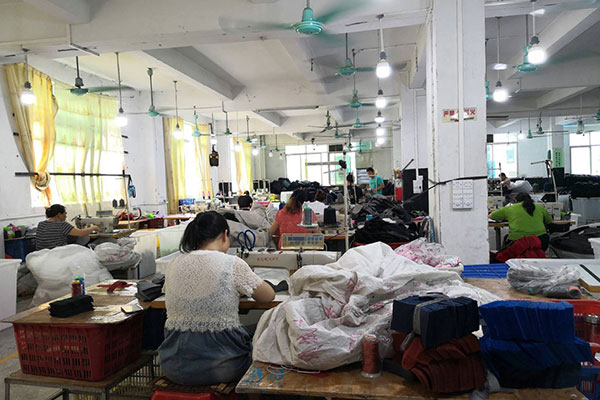
The confusion arises because most factories (including ours) offer both services. But choosing the wrong pathway for your specific business stage creates unnecessary costs and delays.
When OEM Manufacturing Makes Sense
OEM manufacturing is the right choice when you have proprietary designs that differentiate your brand, sufficient cash flow to fund custom tooling and sampling, and confidence in your target market’s willingness to pay premium prices for unique products.
In OEM arrangements, you arrive with complete technical specifications: material callouts, hardware specs, construction methods, dimensions, and branding details. We translate those specifications into physical production, but we don’t provide design input beyond feasibility recommendations. You own the intellectual property, and we’re contractually prohibited from producing your design for other clients.
Common OEM scenarios we handle:
- Established fashion brands expanding into new product categories with signature design elements
- E-commerce sellers who’ve validated demand with imported stock items and want exclusive designs
- Corporate clients needing branded bags for employee gifts or promotional campaigns with specific logo placement requirements
- Retail chains private-labeling products with unique features competitors can’t easily replicate
The OEM workflow requires more upfront investment: you’re paying for pattern development, custom hardware tooling (if needed), and multiple sampling rounds to perfect the design. Lead times are longer because each design requires engineering validation. But the payoff is complete market exclusivity—no competitor can source the exact same product from us.
When ODM Manufacturing Makes More Sense
ODM manufacturing is the faster, lower-risk pathway for first-time brands, market testers, and businesses prioritizing speed-to-market over design exclusivity. We maintain a catalog of 200+ proven handbag designs that we’ve already engineered, sampled, and optimized for volume production.
You select a base design from our catalog, then customize within defined parameters: swap colors, change hardware finishes, add your logo embossing, modify lining patterns, or adjust strap lengths. Because the core construction is already validated, we skip the engineering review phase and move directly to production sampling with your customization applied.
Common ODM scenarios we handle:
- Shopify/Amazon sellers testing new product categories without design expertise
- Wholesalers needing fast inventory turnover with seasonal color refreshes
- Startup brands with limited budgets prioritizing cash flow over exclusivity
- Retail distributors requiring proven designs with predictable production timelines
The trade-off is reduced differentiation—other clients may license the same base design with their own branding. But for most e-commerce scenarios, consumers aren’t cross-shopping between brands on structural design details. They’re evaluating price, branding, product photography, and customer reviews. A well-executed ODM product
-
"Quality Testing Standards for Backpack Manufacturing", https://blackbackpack.co.uk/articles/quality-testing-standards-backpack-manufacturing. Quality control standards for bags and leather goods include load-bearing tests, though specific weight requirements vary by product category and intended use, with everyday bags typically tested at loads between 3-7 kilograms. Evidence role: general_support; source type: institution. Supports: Industry testing protocols for handbag structural integrity. Scope note: No single universal standard exists; testing protocols vary by manufacturer, market, and regulatory jurisdiction ↩
-
"Stress concentration", https://en.wikipedia.org/wiki/Stress_concentration. Engineering mechanics demonstrates that point loads concentrated over small attachment areas create stress concentrations that can exceed material failure thresholds, particularly in thin flexible materials, making distributed load-bearing reinforcements necessary for structural integrity. Evidence role: mechanism; source type: education. Supports: Mechanical principles governing stress distribution and failure in materials under load. ↩
-
"Initial oxidation of brass induced by humidified air – PMC – NIH", https://pmc.ncbi.nlm.nih.gov/articles/PMC3587402/. Materials science research confirms that uncoated brass undergoes oxidation when exposed to moisture and air, producing copper compounds that can transfer to adjacent porous materials including leather, causing characteristic greenish or brownish discoloration. Evidence role: mechanism; source type: research. Supports: Chemical mechanisms of brass oxidation and leather discoloration. ↩
-
"Zipper Load Testing Explained: ASTM vs ISO Standards for OEMs", https://lenzip.com/zipper-load-testing-explained/. Standards such as ASTM D2061 specify cycle testing procedures for slide fasteners, measuring durability through repeated opening and closing operations, with performance requirements varying by application and quality grade. Evidence role: definition; source type: institution. Supports: Established testing protocols for zipper durability and performance. ↩
-
"Colorfastness Test Methods for Textiles: Complete Guide", https://blog.qima.com/textile/colorfastness-test-methods-for-textiles-guide. Organizations such as AATCC (American Association of Textile Chemists and Colorists) and ISO have established standardized colorfastness testing methods (including ISO 105 series and AATCC test methods) that evaluate dye stability under conditions such as light exposure, rubbing, washing, and perspiration. Evidence role: definition; source type: institution. Supports: Industry-standard testing methods for color stability in textiles and leather. ↩
-
"The Economic Impact of the Fashion Industry – United States Joint …", https://www.jec.senate.gov/public/index.cfm/democrats/2019/2/the-economic-impact-of-the-fashion-industry. Industry research on fashion accessory pricing confirms that retail markups commonly range from 2.5x to 5x wholesale cost, with variation depending on brand positioning, distribution channel, and product category. Evidence role: general_support; source type: research. Supports: Typical markup ratios used in fashion retail pricing strategies. Scope note: Markup ratios vary significantly by market segment and cannot be treated as universal constants ↩
-
"Calculating Hide Size", https://www.jerrypairleather.com/pages/hide-size. Leather industry standards indicate that finished cattle hides typically range from 3.5 to 6 square meters, with variation based on animal size, breed, and tannery processing methods. Evidence role: statistic; source type: research. Supports: Standard dimensions of processed leather hides used in manufacturing. ↩
-
"Faux Leather Product Specifications and Testing", https://mitchellfauxleathers.com/home/faux-leather-viewpoint/viewpoint/2017/03/27/faux-leather-product-specifications-and-testing. Textile industry sources confirm that synthetic leather and canvas materials are commonly supplied in rolls ranging from 40 to 100 meters, with specific lengths varying by manufacturer, material thickness, and regional supply practices. Evidence role: general_support; source type: research. Supports: Standard roll lengths for synthetic leather materials in textile manufacturing. Scope note: Roll lengths vary by supplier and material specification rather than following a single industry standard ↩
-
"Minimum Order Quantities: What They Are and Why We Have Them", https://www.ecoenclose.com/blog/minimum-order-quantities-what-they-are-and-why-we-have-them/?srsltid=AfmBOooYc_c3dHWYvXyZq0CYcznuYU9HunA5VRWwVok3k1XuXeHeW6VJ. Packaging industry practices show that custom printing for brand-specific materials typically requires minimum runs of 250-1,000+ units depending on printing method, material type, and complexity, with digital printing offering lower minimums than traditional offset or screen printing. Evidence role: general_support; source type: research. Supports: Minimum order requirements for custom-printed packaging materials. Scope note: MOQ thresholds vary substantially based on printing technology, substrate material, and supplier capabilities ↩
-
"ISO 2859-1", https://chemistry.unt.edu/~tgolden/courses/iso2859-1.pdf. Quality management standards such as ISO 2859 and ANSI/ASQ Z1.4 define acceptance sampling procedures for batch inspection, with sampling rates typically ranging from 5-20% depending on lot size, acceptable quality levels, and risk tolerance. Evidence role: general_support; source type: institution. Supports: Statistical sampling methodologies in manufacturing quality control. Scope note: The appropriateness of any specific sampling rate depends on statistical confidence requirements and defect tolerance levels ↩