Skip to content
If you’re getting wildly different quotes for similar handbag designs, the problem isn’t shady pricing—it’s that three cost variables are distributing differently across your order quantity. I calculate these breakdowns daily for new importers, and MOQ confusion usually evaporates once buyers see the actual math behind material yield, hardware tooling fees, and setup cost allocation. Most "why is this so expensive?" conversations end when customers realize they’re not being charged more—they’re just splitting fixed costs across fewer units.
When a factory quotes 500-piece MOQ for custom zippers but 200-piece MOQ for stock hardware, they’re showing you a cost-distribution formula, not negotiating leverage. Your FOB price is material yield loss + (hardware tooling fee ÷ order quantity) + labor + margin. Understanding how panel-cutting efficiency, directional leather constraints, and custom metal-molding costs move those numbers lets you design to a budget instead of budgeting to a design.
Most first-time bag importers ask "what’s your lowest MOQ?" when the diagnostic question is actually "what’s my target unit price, and which customization elements can flex to hit it?" This article breaks down the three cost mechanics that determine whether your 300-unit order costs $18/piece or $34/piece for objectively similar bags—and what controls you have before ever requesting a quote.
What Actually Determines Minimum Order Quantity in Handbag Manufacturing?
MOQ exists because fixed costs need a denominator. Every custom handbag order carries setup fees that don’t scale—pattern-making labor, cutting die preparation, hardware mold tooling, and first-article quality checks happen once regardless of whether you order 100 bags or 2,000 bags.
MOQ is the factory’s breakeven point where fixed costs per unit plus variable costs per unit plus margin equals a sellable market price1. When a manufacturer quotes "500-piece MOQ for full customization," they’re saying "below 500 units, the math produces a per-bag price nobody will pay."
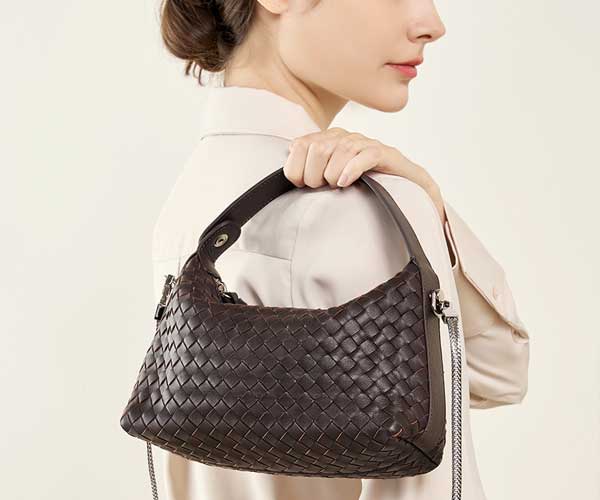
I had a Shopify seller request 150 crossbody bags with custom embossed logo hardware, Italian vegetable-tanned leather, and a unique curved-bottom panel design. The quote came back at $47/unit—$19 above her competitor research. When I showed her the breakdown, the issue became clear: custom logo zipper pulls required a $1,200 tooling fee (adding $8/unit at 150 pieces), and the curved bottom panel created 22% material yield loss compared to rectangular cutting (turning $6/sqm leather into $7.80/sqm effective cost). At 500 units, the same tooling fee drops to $2.40/unit, and bulk cutting optimization reduces yield loss to 14%. Her actual decision wasn’t "is this factory expensive?"—it was "do I order 500 units at $31/piece, or 150 units with stock hardware at $35/piece?"
The Three Cost Layers in Every Handbag Quote
Every FOB price splits into:
- Variable costs – Scale linearly with quantity (materials, direct labor, packaging)
- Fixed setup costs – One-time fees distributed across order size (pattern-making, dies, tooling)
- Efficiency variables – Change based on design complexity (material yield rate, cutting time, assembly difficulty)
The reason two factories quote different MOQs for identical designs often traces to different assumptions about which layer the customer will tolerate increases in. Factory A assumes you’ll accept higher per-unit material costs to lower MOQ. Factory B assumes you’ll increase order size to distribute tooling fees. Neither is "wrong"—they’re solving for different constraints.
| Cost Component | 200-Unit Order | 500-Unit Order | 1000-Unit Order |
|---|---|---|---|
| Custom zipper tooling fee ($800) | $4.00/unit | $1.60/unit | $0.80/unit |
| Material (consistent) | $8.50/unit | $8.50/unit | $8.50/unit |
| Labor (consistent) | $6.20/unit | $6.20/unit | $6.20/unit |
| Pattern/setup fee ($350) | $1.75/unit | $0.70/unit | $0.35/unit |
| Total pre-margin cost | $20.45 | $17.00 | $15.85 |
This table shows why "just lower your MOQ" isn’t a negotiation tactic—it’s asking the factory to sell at a loss or pass unsustainable per-unit costs to you.
How Material Yield Loss Increases Cost Per Bag (And Why Complex Shapes Amplify It)
Material yield is the percentage of purchased raw material that ends up in finished bags2. A 75% yield rate means 25% of your leather, fabric, or synthetic material becomes edge trim, cutting waste, or pattern-matching scrap3. This isn’t negligence—it’s geometric reality when cutting irregular shapes from rectangular hides or fabric rolls.
When I calculate material requirements for quotes, I don’t just measure the bag’s surface area—I map how many panels fit on standard material widths, account for directional grain on textured materials, and estimate edge-matching waste for patterns or embossed textures. Complex curved panels or small decorative pieces can drop yield from 82% (simple rectangular tote) to 63% (multi-curve crossbody with contrast trim).
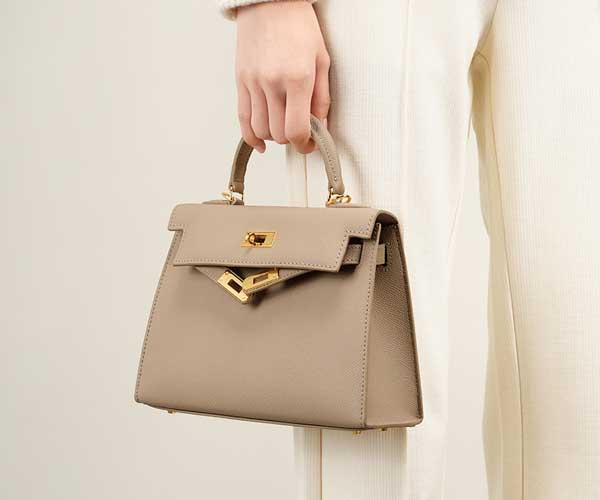
I recently compared two tote bag orders—both 38cm wide, both using 1.2mm PU leather. Design A had simple rectangular front/back panels and straight gussets. Design B featured a curved top edge, tapered side panels, and a contrast-color bottom insert. On paper, both bags use approximately 0.95 square meters of material based on pattern surface area. In production:
Design A (simple rectangles): Cutting optimization software nested 6 complete sets of panels on a 1.4m × 2.2m material sheet (3.08 sqm total). Actual consumption: 1.03 sqm per bag including 8% cutting tolerance. Yield rate: 92%.
Design B (curves + contrast panels): The curved top edge required 12cm additional height to avoid grain-direction mismatch. Tapered side panels left unusable triangular gaps. The contrast bottom insert came from separate material, creating its own edge waste. Same 6 bags consumed 1.9 sqm per bag. Yield rate: 67%.
The material cost difference wasn’t supplier pricing—it was geometric efficiency. At $7.50/sqm wholesale PU, Design A cost $7.73/bag in material. Design B cost $14.25/bag for objectively similar coverage.
Why Directional Materials Destroy Yield Rates
Textured leather, embossed PU, directional fabric weaves, and printed patterns can’t be rotated during cutting4. Every panel must align to the grain direction or visual pattern orientation. This transforms cutting optimization from a Tetris puzzle into a fixed-axis jigsaw where pieces can’t spin.
I had a brand owner request Saffiano-texture PU for a shoulder bag with eight separate panels (front, back, two gussets, flap, two inner pockets, base reinforcement). In smooth PU, I could rotate smaller panels 90° to fill gaps between large pieces—yield typically hits 84%. With directional Saffiano texture, every panel had to align vertically. Usable nesting dropped to 58% efficiency. Their material cost jumped from $9.20/bag to $15.80/bag despite using identical square-meter surface area.
This is why I ask design-stage customers: "Do you need directional texture, or can we use tumbled/pull-up leather that looks uniform in any orientation?" It’s not about compromising aesthetics—many premium bags use non-directional materials precisely because it’s a cost-control strategy that doesn’t affect perceived quality.
Small Batch Cutting vs. Volume Optimization
Material yield improves with order quantity because cutting becomes more efficient5. At 200 units (200 sets of panels), I’m optimizing material layout for 200 pieces. At 1,000 units, the cutting team can dedicate full material rolls to single panel types, align grain direction across bulk sheets, and minimize edge waste through pure volume math.
A laptop backpack order illustrates this clearly:
- 150-unit order: Cut in three separate batches over two weeks as material arrived. Each batch required new cutting die setup and edge alignment. Average yield: 71%.
- 800-unit order: Cut in one continuous production run with pre-sorted material staging. Yield: 79%.
The 8-point yield improvement translated to 0.19 sqm less waste per bag. At $11/sqm for the canvas/leather combination material, that’s $2.09/unit saved purely through volume cutting efficiency—with zero design changes.
The Real Cost Structure Behind Custom Hardware (And Why Stock Components Drop MOQ)
Custom metal hardware—branded zipper pulls, logo-embossed magnetic clasps, engraved buckles, unique D-rings—requires mold tooling before a single piece can be manufactured6. That tooling fee is a fixed cost, typically ranging from $600 to $2,500 depending on complexity and metal type7 (zinc alloy, brass, stainless steel).
When customers see "custom hardware available," they often think it’s a per-unit upcharge—like paying $0.80 more per zipper pull. The actual math is: (tooling fee ÷ order quantity) + (unit manufacturing cost × quantity). At 200 bags, a $1,200 tooling fee adds $6.00 per bag. At 800 bags, it adds $1.50 per bag. The hardware itself might only cost $0.90/unit—the tooling distribution is what moves your FOB price.
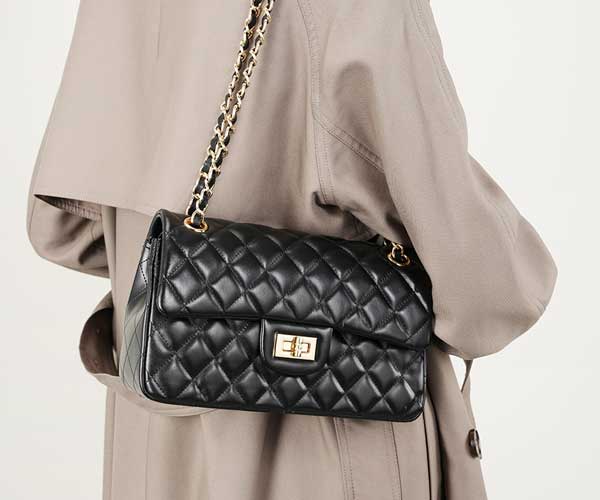
I worked with an accessories brand launching a belt bag line. They wanted custom matte-black rectangle buckles with recessed logo engraving. The hardware supplier quoted $1,850 tooling fee, $1.20/unit manufacturing cost, 500-piece hardware MOQ. At their planned 300-bag order, the math looked like this:
- Tooling fee: $1,850 ÷ 300 = $6.17/bag
- Hardware unit cost: $1.20/bag
- Total custom buckle cost: $7.37/bag
Comparable stock rectangle buckles with no logo: $0.75/bag, no tooling fee, no MOQ.
Their decision wasn’t "custom vs. stock"—it was "$7.37/bag for branded hardware at 300 units, or wait until we can order 1,000 units and get custom hardware for $3.05/bag, or use stock hardware now and upgrade later."
They chose stock hardware for the first production run and switched to custom buckles at reorder when volume justified the tooling investment. That’s not a compromise—it’s rational cost allocation that let them launch faster and preserve capital for marketing.
Hardware MOQ vs. Bag MOQ: Why They Don’t Always Match
Hardware suppliers have their own MOQs independent of bag production8. A zipper factory might require 1,000-piece minimum for custom pulls even if your bag factory accepts 300-unit orders. This creates three scenarios:
- Order bag MOQ, absorb hardware MOQ cost – You buy 1,000 custom zippers to make 300 bags, store the excess, and use them in future reorders
- Increase bag order to match hardware MOQ – Order 1,000 bags to fully utilize the hardware purchase
- Switch to stock hardware with no MOQ – Use catalog components available in any quantity
I recently helped a corporate client navigate this for branded laptop bags. Their internal approval was for 400 units. Custom logo zipper pulls required 1,200-piece hardware MOQ ($980 tooling + $0.95/unit). Options:
- Option A: Order 400 bags, buy 1,200 zipper pulls ($1,120 tooling cost distributed = $2.80/bag), store 800 spare pulls
- Option B: Order 1,200 bags ($0.93/bag for hardware tooling distribution), manage inventory/cash flow for 800 extra bags
- Option C: Use stock metal zipper pulls ($0.68/bag), no tooling fee, no excess inventory
They chose Option A—buying excess hardware was cheaper than financing 800 extra bags or sacrificing brand visibility. The decision came down to working capital, not manufacturing constraints.
When Stock Hardware Actually Elevates Design
There’s a misconception that stock hardware looks "generic." In reality, many premium bag brands use catalog components strategically. High-quality YKK zippers, solid brass D-rings, and well-designed magnetic snaps are stock items9 that perform better than cheap custom alternatives.
I’ve seen customers commission custom plastic buckles (because they could add a logo) that felt flimsy compared to metal stock buckles from established hardware suppliers. The custom route cost $4.20/unit after tooling distribution. Stock metal buckles cost $1.30/unit and felt more premium.
The question isn’t "custom vs. stock"—it’s "does logo visibility on this specific component justify the cost and MOQ increase, or does material quality and finish matter more?"
How to Reverse-Engineer Your Ideal MOQ from Target Unit Price
Most buyers approach MOQ backward—they ask "what’s your minimum?" when the productive question is "what order quantity produces my target price?" MOQ becomes a solvable equation once you know your budget constraints and which cost variables you’re willing to flex.
When I receive an inquiry stating "I need bags under $25/unit," my response is a worksheet showing: here’s base material cost ($9.80), here’s labor ($6.50), here’s our margin structure (18-22% depending on volume), now let’s calculate what customization scope and order quantity hit your $25 target. That conversation produces realistic MOQs, not arbitrary minimums.
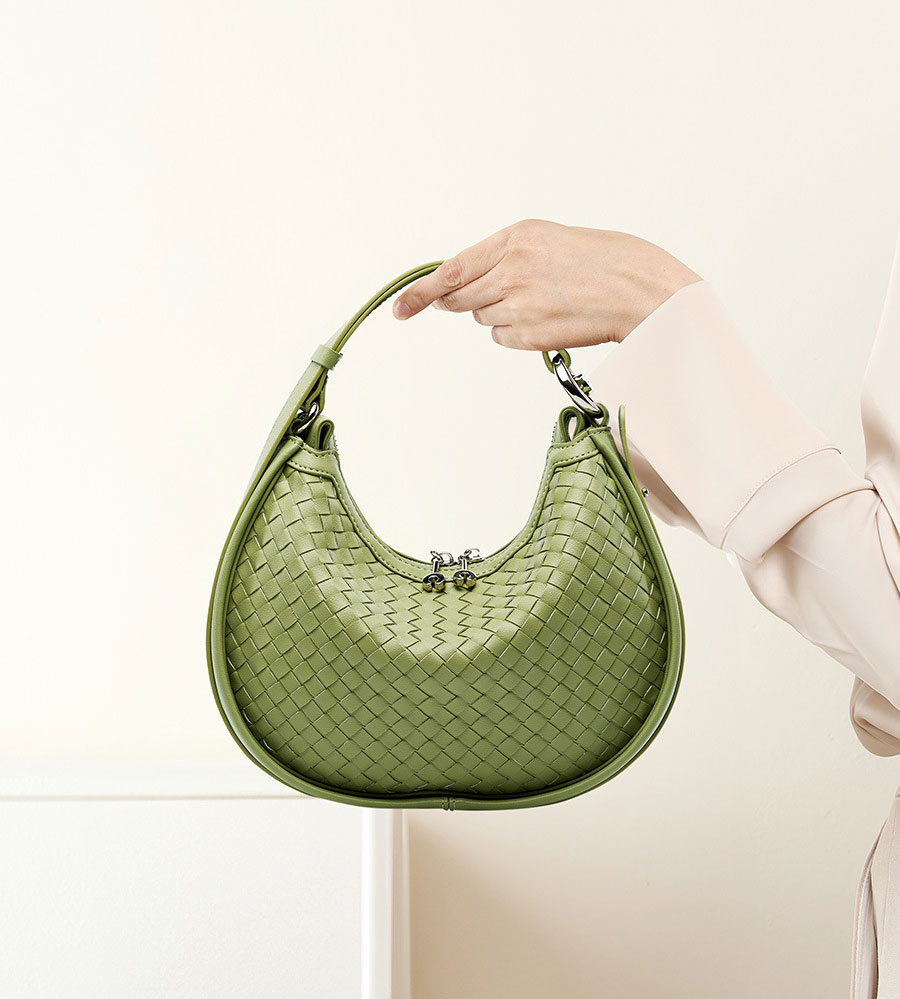
A yoga studio owner wanted branded gym bags with custom woven labels, contrast zipper tape, and interior key clips. Her total budget: $6,500. Her target retail price required staying under $22/unit wholesale. Working backward:
- Available budget: $6,500
- Target unit price: $22
- Initial calculated MOQ: 295 units ($6,490 total)
But the quote came back at $28/unit for 300 bags because:
- Custom woven labels: $420 tooling, $0.35/unit (adds $1.75/unit at 300 pieces)
- Contrast zipper tape: 40% material yield loss on the accent color (adds $2.80/unit)
- Interior key clip hardware: Small-batch sourcing premium (adds $1.90/unit)
We recalculated three scenarios:
| Scenario | Customization Changes | New MOQ | Unit Price | Total Cost |
|---|---|---|---|---|
| A | Keep all custom elements | 550 units | $22.40 | $12,320 |
| B | Switch to printed labels, stock zippers | 300 units | $21.80 | $6,540 |
| C | Printed labels, stock zippers, remove key clip | 280 units | $20.90 | $5,852 |
She chose Scenario C—not because she "settled," but because she realized the key clip (which tested poorly in customer surveys anyway) was consuming $1.90/unit that could go toward better main fabric. Her final order: 280 bags at $20.85/unit, delivering under-budget with the features her customers actually valued.
The MOQ Flexibility Matrix: What You Can Actually Negotiate
MOQ isn’t monolithic. Different customization elements have different flexibility:
High flexibility (easy to adjust):
- Material grade (premium vs. standard weight leather)
- Lining fabric (polyester vs. cotton)
- Packaging complexity (poly bag vs. custom box)
- Color count (1-color vs. 4-color orders)
Medium flexibility (requires redesign):
- Panel shape complexity (curves vs. straight edges)
- Hardware finish (polished vs. matte vs. antique)
- Stitching density (affects labor time)
Low flexibility (structural cost drivers):
- Custom hardware tooling (fixed mold fees)
- Directional material textures (yield loss is geometric)
- Technical features (RFID pockets, USB ports, complex closures)
When customers ask "can you lower MOQ?", I respond with "which elements can we simplify?" That shifts the conversation from negotiation to problem-solving.
-
"A Primer on Breakeven Analysis – Yale School of Management", https://som.yale.edu/sites/default/files/2025-04/A%20Primer%20on%20Breakeven%20Analysis.pdf. Minimum order quantities reflect breakeven calculations where per-unit costs (including distributed fixed costs) meet price points manufacturers can viably offer, with lower volumes increasing per-unit fixed cost burden beyond marketable price thresholds. Evidence role: mechanism; source type: education. Supports: Economic principles underlying minimum order quantity calculations including breakeven analysis and fixed cost distribution. ↩
-
"Examining Cut-and-Sew Textile Waste within the Apparel Supply …", https://bren.ucsb.edu/sites/default/files/2024-04/Examining%20Cut-and-Sew%20Textile%20Waste%20within%20the%20Apparel%20Supply%20Chain%204.10.24.pdf. Material yield (or material utilization rate) represents the proportion of input materials converted to finished product output, a standard efficiency metric in manufacturing operations including apparel and leather goods. Evidence role: definition; source type: education. Supports: Definition and calculation methods for material yield/utilization rates in manufacturing contexts. ↩
-
"RCRA in Focus: Leather Manufacturing", https://www.epa.gov/sites/default/files/2015-01/documents/k00002.pdf. Leather and textile cutting operations typically experience material waste ranging from 15-35% depending on pattern complexity and material characteristics, with irregular shapes and directional materials producing higher waste rates. Evidence role: statistic; source type: research. Supports: Industry-typical material yield rates and waste percentages in leather and textile cutting operations. Scope note: Ranges vary significantly by product type, material, and cutting technology employed ↩
-
"Analysis of Zero Waste Patternmaking Approaches for Application to Apparel", https://dr.lib.iastate.edu/server/api/core/bitstreams/6c9cec2e-af45-4458-ab94-315bc5c7aafe/content. Materials with directional properties (grain in leather, nap in velvet, pattern repeats in prints) require alignment during cutting to maintain visual consistency, constraining nesting optimization and typically reducing material utilization by 8-20% compared to non-directional materials. Evidence role: mechanism; source type: research. Supports: Technical requirements for grain direction alignment in leather and directional textile cutting and resulting efficiency constraints. Scope note: Specific yield impact varies with pattern complexity and material type ↩
-
"Economies of scale", https://en.wikipedia.org/wiki/Economies_of_scale. Larger production batches enable improved material utilization through optimized cutting patterns, reduced setup waste, and ability to dedicate full material widths to single components, with studies showing yield improvements of 5-15% as batch sizes increase from small-lot to volume production. Evidence role: mechanism; source type: research. Supports: How larger production batches enable cutting optimization and material yield improvements. Scope note: Actual improvement varies by product geometry, material type, and cutting methods employed ↩
-
"What are some common processes for mass-producing metal parts? – Orbit", https://orbit-kb.mit.edu/hc/en-us/articles/206442703-What-are-some-common-processes-for-mass-producing-metal-parts/. Custom metal components produced through die casting, stamping, or molding processes require initial tooling creation (dies, molds, or stamps) specific to the desired design, representing a fixed cost amortized across production volume. Evidence role: mechanism; source type: education. Supports: Manufacturing process requirements for custom metal component production including tooling and die preparation. ↩
-
"Tooling Dollars & Sense: Comparing Casting Molds", https://batesvilleproducts.com/resource/tooling-dollars-sense-comparing-casting-molds/. Tooling costs for small custom metal components vary widely based on complexity, material, and production method, with simple single-cavity molds for zinc alloy or brass components typically ranging from several hundred to several thousand dollars for low-to-medium complexity designs. Evidence role: statistic; source type: research. Supports: Typical cost ranges for small-scale metal component tooling across different metals and complexity levels. Scope note: Costs vary significantly by region, supplier, component complexity, and production method; precision or multi-cavity tooling may exceed these ranges ↩
-
"Raw Material Minimum Order Quantity Optimization", https://dspace.mit.edu/entities/publication/e43f520c-9951-4e8d-b867-36c7afb5234c. Multi-tier supply chains involve independent MOQ requirements at each level, with component manufacturers setting minimum quantities based on their own cost structures, which may not align with downstream finished goods production volumes. Evidence role: general_support; source type: education. Supports: Supply chain structure where component suppliers maintain independent MOQ requirements. ↩
-
"(PDF) Zipper and Global Standards", https://www.academia.edu/4892683/Zipper_and_Global_Standards. YKK (Yoshida Kōgyō Kabushikigaisha) is a Japanese manufacturer producing approximately half of all zippers worldwide, with products used across price segments from mass-market to luxury goods. Evidence role: general_support; source type: encyclopedia. Supports: YKK’s established position as a major zipper manufacturer known for quality products. ↩